
Cookware & Food Prep
A Simple Weeknight Food Prep Routine With Less Cleanup
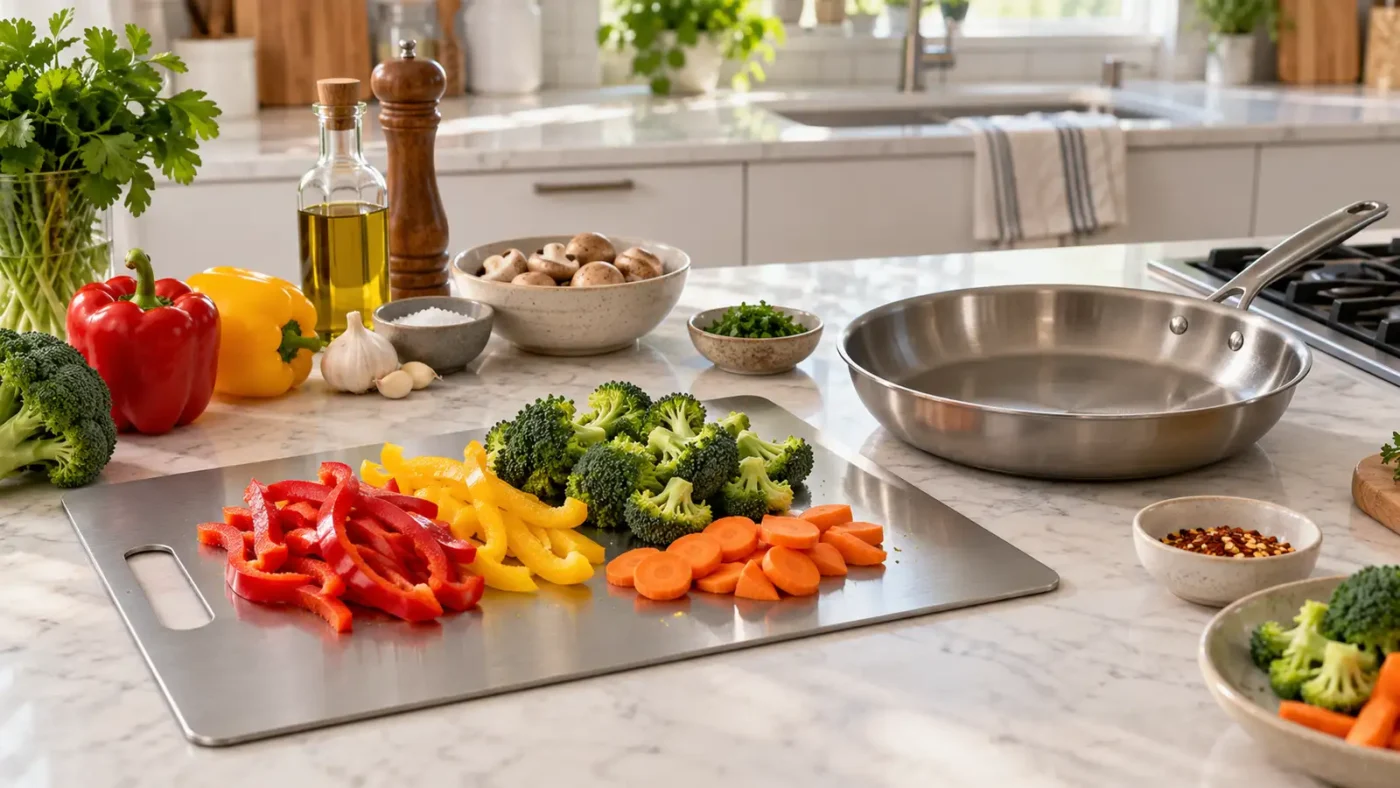
A practical weeknight food prep routine starts with a short plan: identify what needs cutting, arrange ingredients by cooking order, use the cookware the recipe requires, and clear finished tools during natural pauses.
Keep a clean serving area and prepare leftover containers before dinner is ready. These habits can reduce unnecessary dishes without forcing every meal into a one-pan recipe.
The goal is a routine you can repeat after work, with enough flexibility for different meals.
Plan the Meal Before Taking Out Tools
Decide what needs preparation, cooking, and storage before filling the counter with equipment.
For an ordinary dinner, ask:
- What needs washing or cutting?
- Which ingredients take longest to cook?
- Does anything need a separate pan or preparation area?
- Will part of the meal become tomorrow’s lunch?
Then take out the tools those tasks require. A vegetable sauté may need one board and one pan. A meal with raw chicken and a ready-to-eat salad needs separate preparation tools.
Planning does not require a detailed schedule. A quick read through the recipe can prevent discovering a missing step while food is already cooking.
Prepare Ingredients Around the Cooking Order
Prepare ingredients according to when they are needed, keeping anything required immediately within reach.
For a quick stir-fry, chopping and measuring before turning on the stove can make the cooking stage easier. For a slower meal, you may have time to prepare later ingredients while an earlier component cooks.
Avoid leaving a fast-moving recipe to search for seasonings or chop its next ingredient.
You do not need a bowl for every item. Compatible vegetables that enter the pan together can share a clean bowl. Keep garnishes and ingredients added later separate.
Keep raw meat, poultry, and seafood apart from produce and ready-to-eat food, even when they are scheduled for the same cooking stage.
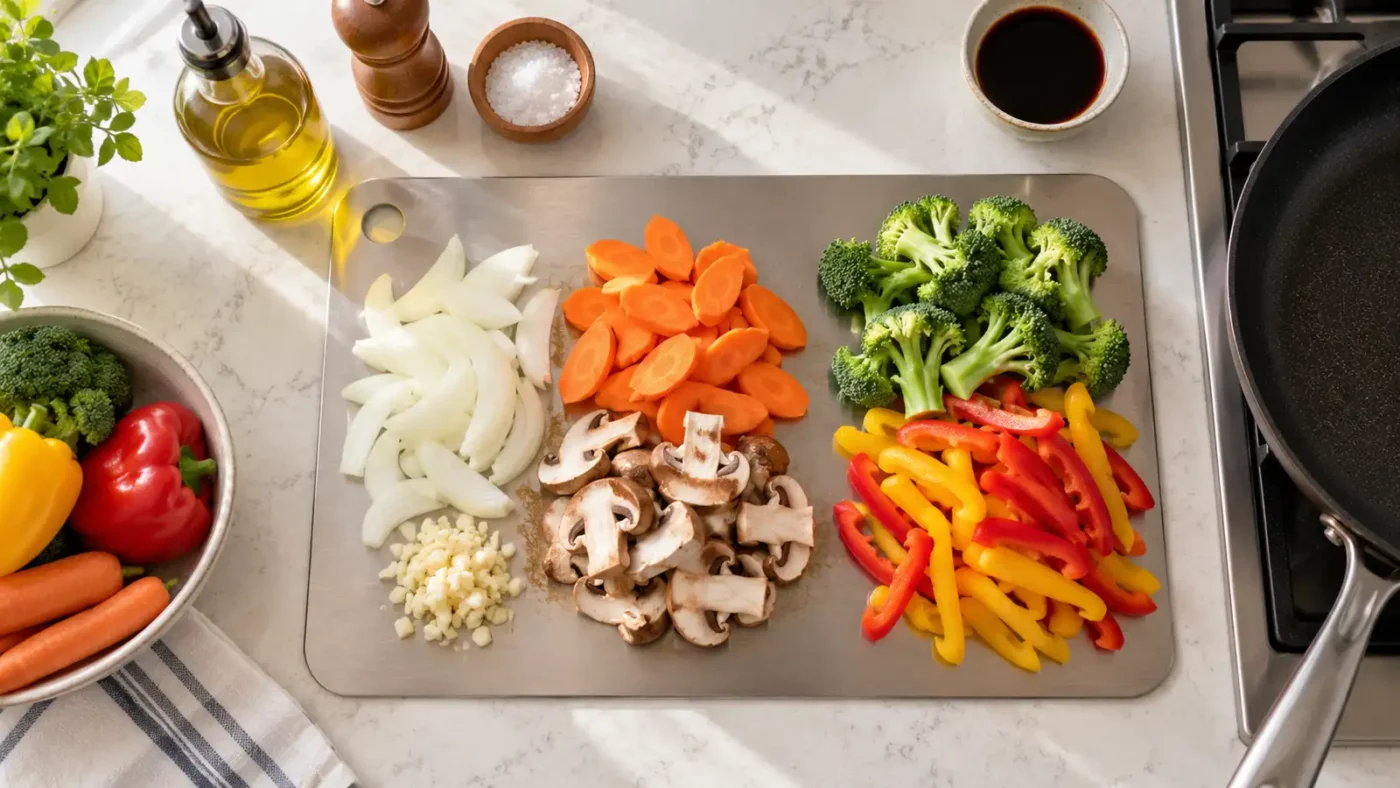
Keep the Prep Area Organized Without Skipping Separation
Use one defined preparation area, with separate boards and plates where food handling requires them.
A board keeps chopping in a manageable space. Choose enough working area for the ingredients, rather than spreading preparation across several plates and sections of the counter.
However, fewer dishes should not mean mixing raw and ready-to-eat food. Use a separate board for raw meat, poultry, or seafood and another for produce or foods that will be eaten without further cooking. This follows FoodSafety.gov’s food-handling guidance.
Wash tools and work surfaces after use. A quick rinse alone is not a substitute for cleaning equipment that has contacted raw ingredients.
For help choosing a suitable work surface, see How to Choose the Best Titanium Cutting Board for Your Kitchen.
Use Each Pan for a Clear Purpose
Use the fewest pans that let you cook the recipe properly, rather than trying to fit every dinner into one pan.
One pan may handle several stages of a meal. You might cook vegetables, transfer them to a clean serving dish, then finish another component before combining everything.
Other meals work better with separate cookware. Rice may need a saucepan while vegetables cook in a frying pan. A crowded pan can also make browning harder, so an extra batch may be more useful than squeezing everything together.
Before adding cookware, ask what it contributes. Keep it when it improves the meal; skip it when it only duplicates a task.
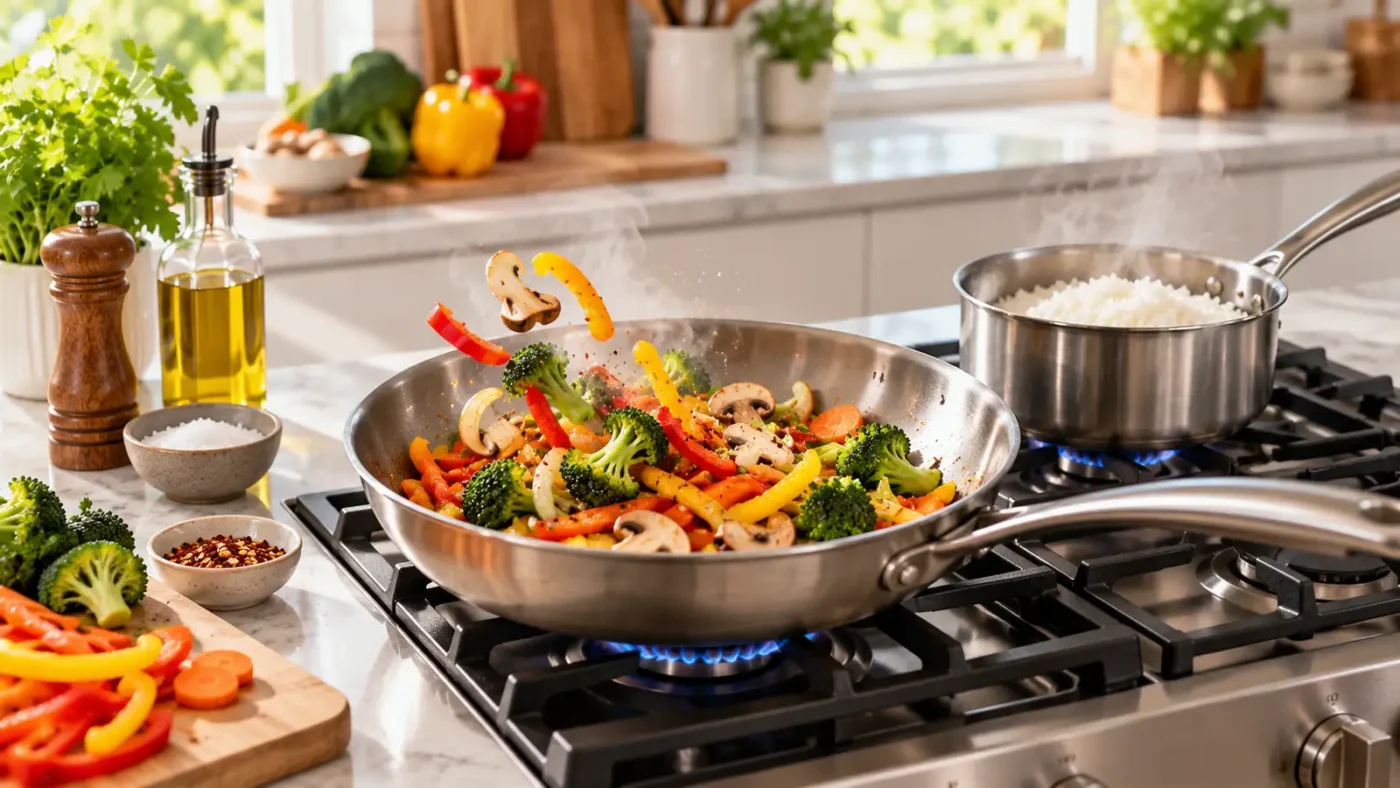
Clear Finished Tools During Natural Cooking Pauses
Use low-attention cooking periods to wash or put away tools that are no longer needed.
During a steady simmer or an oven stage, you may have time to:
- Return seasonings and unused ingredients.
- Discard packaging and collect scraps.
- Wash a finished prep bowl or knife.
- Clean the preparation surface.
- Make space for serving.
Keep your attention on the food when stirring, frying, or another active step requires it. Do not leave active cooking unattended to start a larger cleaning task.
Wash your hands after handling raw ingredients or waste before returning to clean food and utensils.
The useful rule is simple: clear what is finished while keeping what you still need accessible.
Keep a Clean Space for Serving
Reserve a clean part of the counter for plates and cooked food before the meal finishes.
Serving becomes awkward when every surface holds packages, prep tools, and unfinished ingredients. Clearing a small space early avoids moving everything while carrying hot cookware.
Use clean plates and utensils for cooked food. Do not reuse a plate that held raw meat unless it has been washed.
Your kitchen does not need to be spotless before dinner. It needs a clear, clean place to finish the meal.
Prepare Leftover Containers Before Serving
Have suitable containers ready before dinner, then refrigerate perishable leftovers promptly.
If you expect to save part of the meal, use a clean utensil to set aside the portion. Divide larger amounts into shallow containers so they can cool more quickly.
Refrigerate perishable leftovers within two hours, or within one hour when the surrounding temperature is above 90°F / 32°C. Do not wait for leftovers to become completely cold on the counter. These steps follow FoodSafety.gov’s refrigeration guidance.
Choose containers that fit the portion and follow their use instructions. Avoid assuming that every reusable lunch box is leakproof, insulated, or suitable for reheating.
Preparing containers early can turn dinner leftovers into tomorrow’s lunch without a second preparation session.
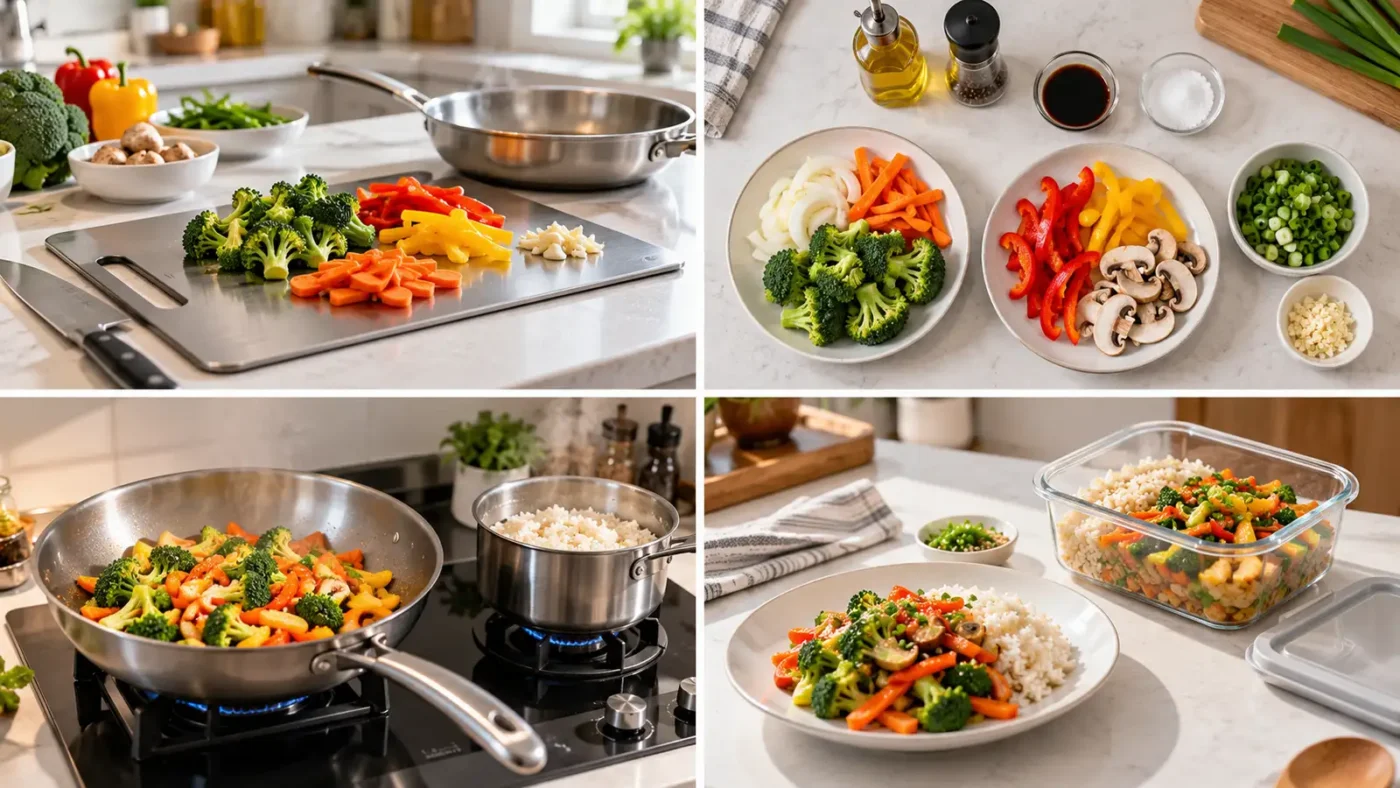
Example: Vegetables, Rice, and Tomorrow’s Lunch
For a vegetable-and-rice dinner, organize the work around cooking time and use containers only when they serve a purpose.
| Stage | What to do |
|---|---|
| Plan | Read the recipe and decide whether to save a lunch portion |
| Start | Begin the rice according to its cooking instructions |
| Prep | Wash and cut vegetables; group compatible ingredients by cooking stage |
| Cook | Sauté vegetables in manageable amounts and finish the recipe |
| Clear | Wash finished prep tools during suitable pauses |
| Serve and store | Serve dinner and refrigerate the saved portion promptly in a suitable shallow container |
This meal may need two cooking vessels. That is still a practical routine if each has a clear job.
If adding raw meat, poultry, or seafood, include the separate preparation tools and cooking steps required for that ingredient.
Which Tools Help Reduce Unnecessary Cleanup?
Choose tools that fit the portion size, preparation tasks, and storage needs of the meal.
A useful basic setup can include:
- A cutting board with enough working space.
- A separate board when raw ingredients require it.
- A knife and the utensils needed for the recipe.
- Appropriately sized cookware.
- Clean containers for leftovers.
TiRoam’s Integrated-Handle Pure Titanium Cutting Board is one option to compare when choosing your prep surface. Match its size and handling to your kitchen.
The material of a tool does not replace good organization or food handling. Fewer unnecessary transfers, sensible cooking order, and timely cleaning are what make the routine simpler.
A Repeatable Weeknight Food Prep Routine
Use this sequence as a starting point:
- Plan: Identify preparation, cooking, and storage tasks.
- Prep: Arrange ingredients by cooking order and keep required separation.
- Cook: Use appropriate cookware without overcrowding.
- Clear: Put away or wash finished tools during suitable pauses.
- Serve and store: Use clean serving equipment and refrigerate leftovers promptly.
Adjust the sequence to the recipe. Some nights need two pans, some need several preparation steps, and some produce no leftovers.
A useful routine removes avoidable work while keeping the steps the meal actually needs.
Frequently Asked Questions
How can I make weeknight food prep easier?
Read the recipe before cooking, identify the longest steps, and prepare ingredients before they are needed. Keep seasonings nearby and clear finished tools during natural pauses.
How can I prepare dinner with fewer dishes?
Let compatible ingredients share a clean prep container, avoid unnecessary transfers, and use each pan for a clear purpose. Keep separate tools where raw and ready-to-eat foods require them.
Should I chop every ingredient before cooking?
Not always. Fast recipes often benefit from preparation before the stove is on. Slower recipes may give you time to prepare later ingredients while earlier components cook.
Does one-pan cooking always mean less cleanup?
No. A single pan can reduce dishes, but crowding or awkward cooking stages can create more work. Use a second pan when it helps the recipe.
When should I put leftovers in the refrigerator?
Refrigerate perishable leftovers within two hours, or within one hour above 90°F / 32°C. Use shallow containers for larger portions and do not leave food on the counter until completely cold.
Do I need titanium tools for this routine?
No. The routine works with suitable kitchen tools you already own. Choose equipment by size, handling, care requirements, and the tasks it needs to perform.