
Cookware & Food Prep
How to Cook on a Titanium Surface: Heat, Oil, and Timing
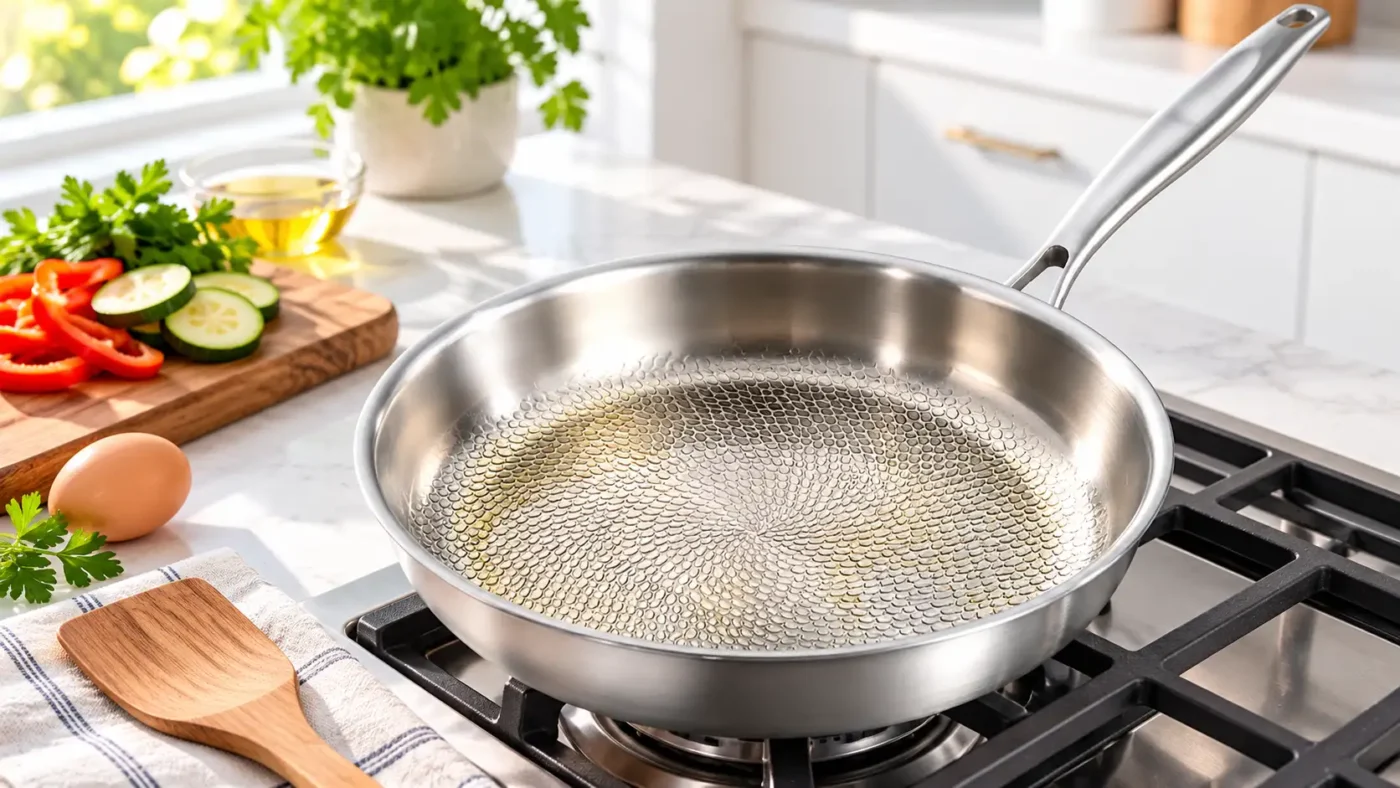
If you want to learn how to cook on a titanium surface, start with controlled heat, spread cooking oil across the cooking area, and adjust when you move the food according to the recipe.
For ordinary pan-frying, the simplest starting pattern is:
controlled heat → oil → food → adjust as it cooks
An uncoated titanium cooking surface does not behave like a coated nonstick pan. Food can still stick, and the result depends on the cookware, stove, ingredients, oil coverage, surface condition, and cooking technique.
This guide focuses on everyday pan-frying on an uncoated titanium cooking surface. Always follow the instructions for your exact cookware, because pan dimensions, construction, surface finish, and approved heat sources can vary.
How Should You Start Cooking on a Titanium Surface?
For ordinary pan-frying, begin with low to medium heat, warm the pan gradually, add oil, and then add the food.
A practical starting sequence is:
- Place the pan securely on a suitable burner.
- Begin with low to medium heat.
- Warm the pan briefly according to its instructions.
- Add cooking oil and spread it across the cooking area.
- Add the food when the oil is warm.
- Adjust the heat as the food cooks.
There is no universal preheating time.
A gas burner, electric coil, induction-compatible pan, different pan dimensions, and different cookware construction can all change how quickly the cooking surface warms.
Avoid prolonged empty heating. If cooking oil begins to smoke, reduce the heat or remove the pan from the burner before continuing.
Some recipes deliberately begin with a cold pan. Follow the method required by the recipe rather than treating preheating as a rule for every food.
How Much Oil Should You Use on a Titanium Surface?
Use enough cooking oil or cooking fat to cover the area where the food will contact the titanium surface.
Spread the oil across the cooking area instead of allowing it to remain pooled in one spot.
The amount needed depends on:
- the recipe;
- the amount of food;
- the size of the cooking area;
- the fat already present in the ingredients.
Eggs and lean fish may need different preparation from fatty meat or vegetables.
Oil helps manage direct contact between food and the cooking surface, but it does not guarantee effortless release.
Excessive heat, food residue, insufficient oil coverage, and turning technique can still contribute to sticking.
When Should You Turn Food?
Turn food when it has developed the texture or browning required by the recipe and can be lifted without excessive force.
For meat or fish, gently test an edge with a suitable spatula.
If the food resists but is not burning or darkening too quickly, allow a little more cooking time and test again.
Do not assume that every food will eventually release by itself.
If the underside is becoming too dark, reduce the heat instead of continuing to wait.
Different foods also require different movement:
- fried eggs generally need time to set before lifting;
- scrambled eggs require regular movement;
- vegetables may need stirring or turning throughout cooking;
- meat and fish may benefit from being left in place during part of the browning process.
The recipe still determines the correct technique.
How Do You Cook Eggs on a Titanium Surface?
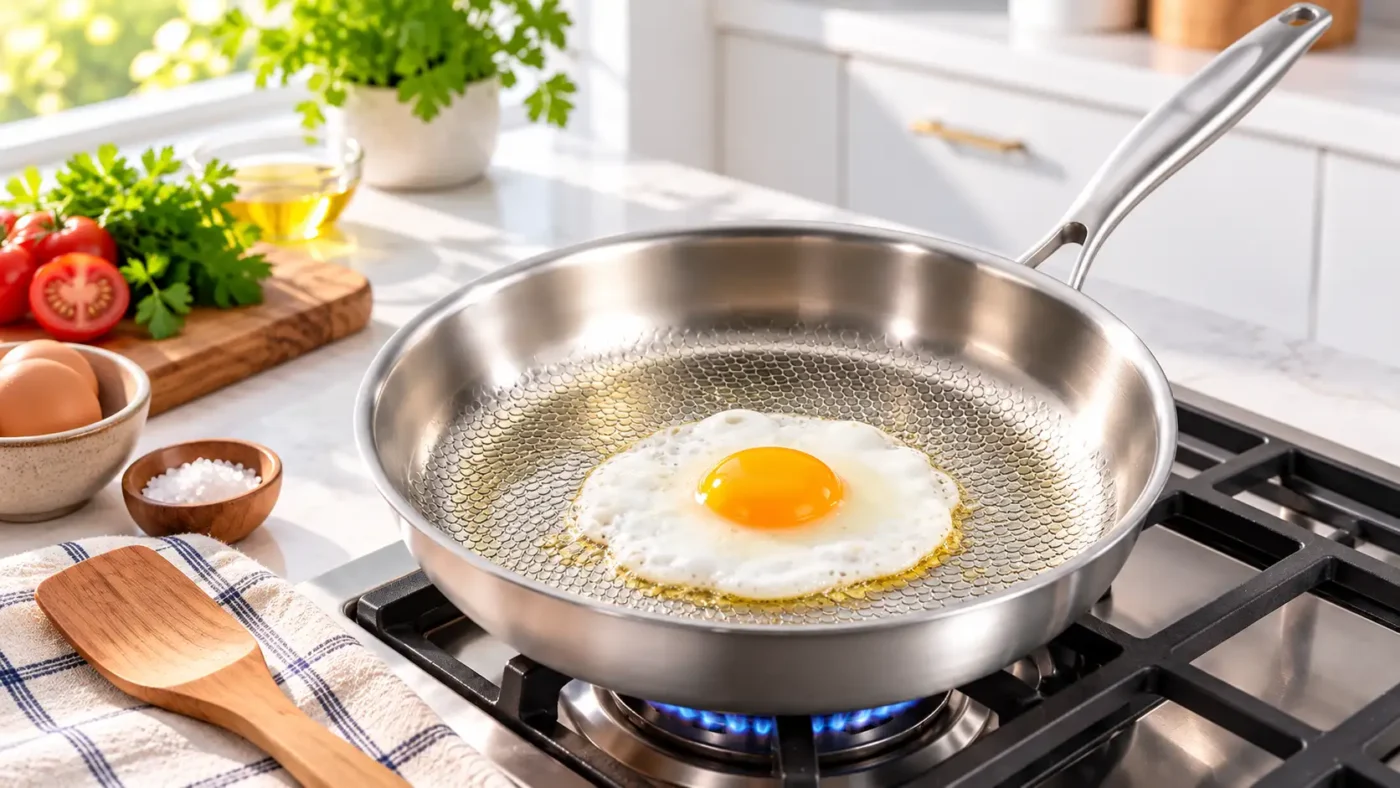
Start eggs over gentle heat with an evenly distributed layer of butter or cooking oil.
Eggs react quickly to heat, which makes them useful for learning how your stove and titanium cooking surface behave together.
For a fried egg:
- Warm the pan gently over low to medium-low heat.
- Spread butter or cooking oil across the cooking area.
- Add the egg before the fat overheats.
- Keep the heat controlled while the egg white sets.
- Test gently before sliding a spatula underneath.
For scrambled eggs, use gentle heat and stir or fold according to the recipe.
Scrambled eggs require a different movement pattern from a fried egg, so one technique should not automatically be applied to the other.
If eggs stick, change one variable at a time during the next attempt.
Check:
- pan cleanliness;
- oil coverage;
- preheating;
- burner setting;
- when you tried to move the egg.
For example, rapidly browned edges with an undercooked center suggest a different heat problem from an egg that barely cooks on a cool surface.
How Do You Cook Meat and Fish on a Titanium Surface?
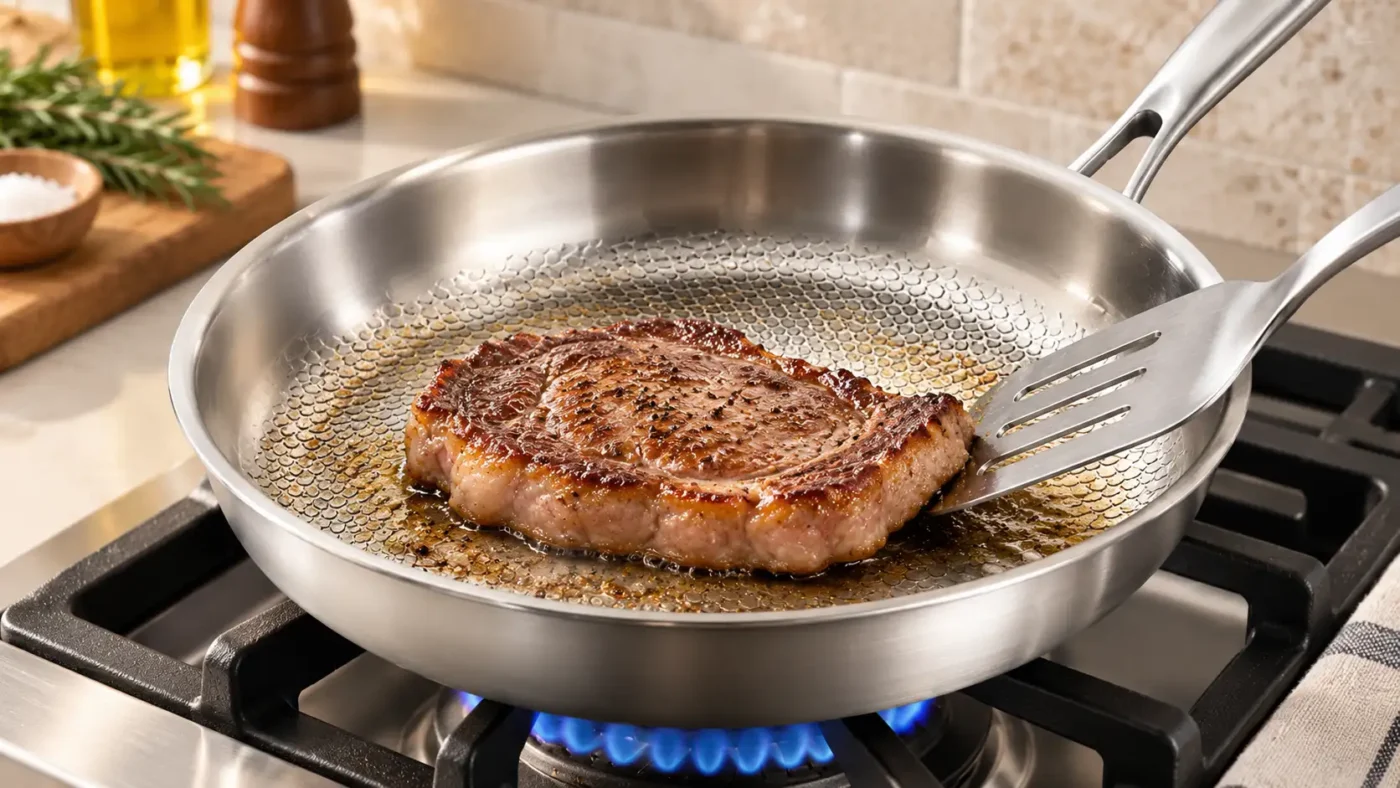
For pan-frying meat or fish, manage surface moisture, leave enough room between portions, and control the heat before turning.
Remove excess surface moisture where appropriate for the recipe.
Warm the pan, add cooking oil, and place the food into the cooking area without overcrowding it.
Crowding can make both heat and moisture harder to control.
If browning is the goal, cooking smaller batches may produce a different result from filling the entire pan at once.
Allow the first side to cook, then test gently before turning.
Fish can remain delicate even when cooked, so support the portion with a suitable spatula instead of pulling it away from the surface.
For thicker pieces of meat or fish, adjust the heat and continue cooking according to the recipe.
Visible browning or easier release from the pan does not by itself confirm that the center is fully cooked.
How Do You Cook Vegetables on a Titanium Surface?
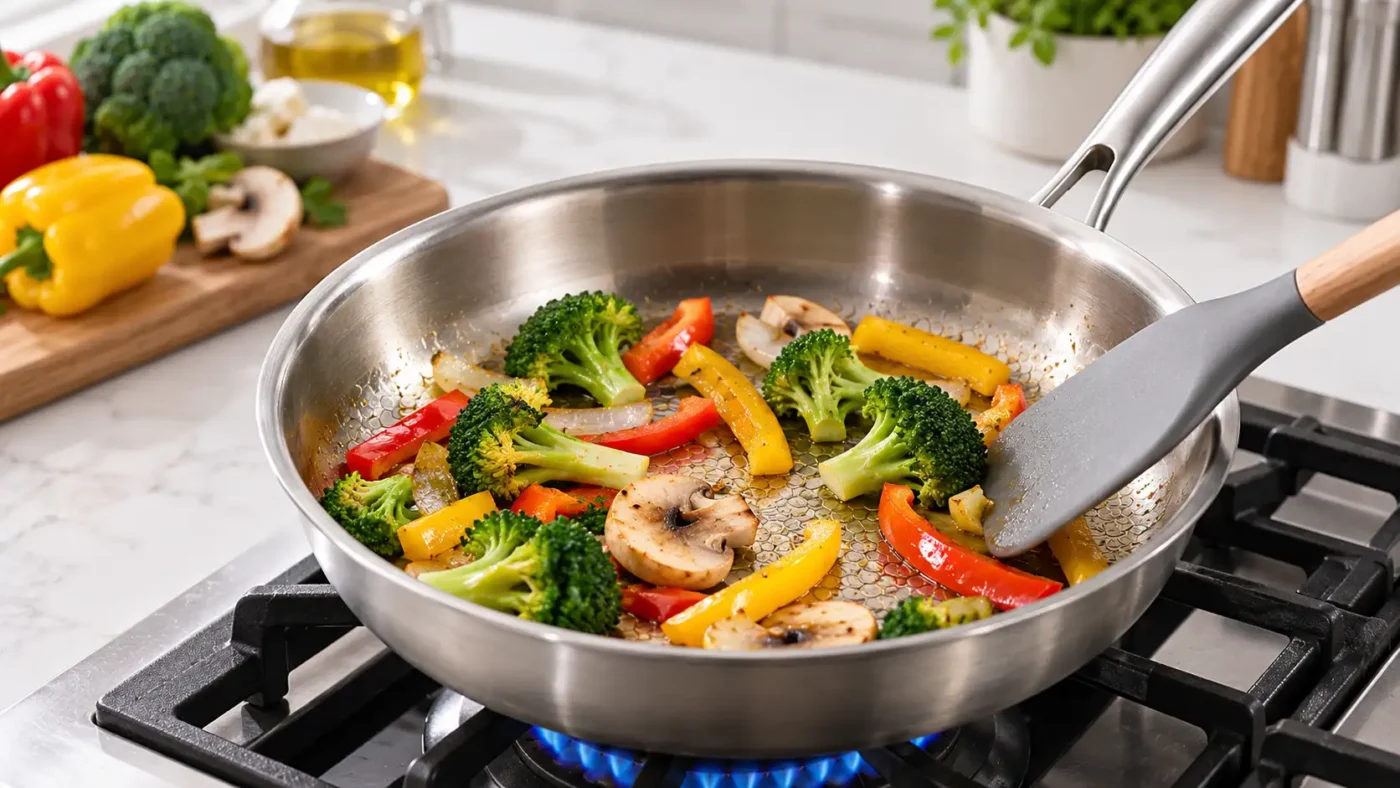
Cook vegetables with enough oil or recipe liquid and stir or turn them according to their size, moisture content, and desired texture.
After preparing the cooking surface, add a manageable amount of vegetables.
Give them space if browning is the goal.
Vegetables with a high water content may release liquid as they cook. A crowded pan can therefore shift the result toward steaming rather than browning.
Firmer or drier vegetables may behave differently.
Adjust the heat according to the cooking rate.
If vegetables darken before they soften, reduce the heat or add liquid when the recipe calls for it.
If they are cooking too slowly, increase the burner gradually.
There is no single heat setting that works for every vegetable.
What Should You Do If Food Starts Sticking?
Check the heat, oil coverage, residue, portion size, and turning method before assuming the cookware is defective.
Use what you see in the pan to decide what to adjust:
| What you notice | What to check | What to try |
|---|---|---|
| Food darkens rapidly or oil smokes | Heat is too high | Reduce the heat or remove the pan briefly |
| Parts of the cooking area look dry | Uneven oil coverage | Spread oil more evenly before the next portion |
| Meat or fish resists lifting but is not burning | Turning may be too early | Wait briefly, then test gently again |
| Food catches on old residue | Surface cleanliness | Clean the cooking surface before the next use |
| A crowded pan collects liquid | Portion size and moisture | Use smaller batches when browning is the goal |
These are troubleshooting starting points, not universal diagnoses.
When repeating the same meal, change one factor at a time. That makes it easier to understand how your stove, cookware, and technique interact.
For a deeper explanation of sticking, see Does Titanium Cookware Stick? What to Expect Before You Buy.
Is a Titanium Cooking Surface Nonstick?
An uncoated titanium cooking surface should not be treated as a guarantee of nonstick performance.
Food release depends on more than the material name.
Temperature, oil, ingredients, surface condition, residue, movement, and the specific cookware all affect the result.
A coated nonstick pan and an uncoated titanium cooking surface are different systems and can require different cooking habits.
A coated pan uses its coating to modify the contact surface between the food and the cookware.
An uncoated titanium surface does not rely on that type of nonstick coating, so cooking technique remains an important part of the result.
Choose cookware based on the cooking experience you actually want rather than assuming the word “titanium” automatically means nonstick.
Does High Heat Work Better With Titanium Cookware?
Higher heat is not automatically better.
For ordinary pan-frying, controlled heat usually gives you more time to observe how the food is cooking and make adjustments before the surface becomes excessively hot.
Start with a moderate setting unless your recipe and the cookware instructions call for something different.
Increase the burner gradually when necessary.
If oil begins smoking or food darkens much faster than expected, that is a reason to reassess the heat rather than simply continue cooking at the same setting.
Learning how to cook on a titanium surface is therefore less about finding one “perfect temperature” and more about learning how your specific stove and cookware respond together.
How Should You Clean Titanium Cookware After Cooking?
Let the cookware cool before washing, then follow the cleaning instructions for the exact model.
For routine residue, warm water, dish soap, and a soft sponge are a practical starting point where the cookware instructions permit them.
If food remains attached, soaking may help loosen the residue before cleaning.
Avoid aggressive scraping or abrasive cleaning tools unless the manufacturer specifically allows them.
Do not pour cold water into a very hot pan.
Allow the cookware to cool before normal washing and dry it as directed before storage.
For broader care guidance, see How to Clean Pure Titanium Kitchenware.
A Simple Titanium Cooking Checklist
For ordinary everyday pan-frying:
- Check the cookware’s approved heat source and instructions.
- Begin with controlled heat.
- Spread cooking oil across the contact area.
- Leave enough room between ingredients.
- Move or turn food according to the recipe.
- Reduce heat when food darkens too quickly.
- Clean away cooking residue before the next use.
Heat, oil, and timing are useful variables, but they work together with the recipe, stove, ingredients, and cookware.
If you are learning how to cook on a titanium surface, begin with one familiar meal and adjust only one variable at a time.
That makes it easier to understand what actually changed the result.
You can also explore TiRoam’s Titanium Cookware for cookware designed around everyday kitchen use.
Frequently Asked Questions
Do You Need Oil When Cooking on a Titanium Surface?
For many pan-frying recipes, oil or another cooking fat helps prepare the area where food contacts the titanium surface.
Use the recipe and the cookware instructions to determine how much is appropriate.
An uncoated titanium surface does not guarantee oil-free food release.
Should You Use High Heat With Titanium Cookware?
High heat is not the default starting point for every meal.
For ordinary pan-frying, begin with controlled heat and increase it only when the recipe and cookware instructions call for it.
Why Do Eggs Stick to a Titanium Surface?
Eggs can stick because of unsuitable heat, uneven fat coverage, existing food residue, surface condition, or trying to move the egg before it has set sufficiently.
Look at the cooking result and adjust one variable at a time.
Should You Wait for Food to Release Naturally?
For some proteins, additional cooking time can make turning easier.
However, food is not guaranteed to release automatically.
If the underside is burning or darkening too quickly, reduce the heat rather than simply waiting longer.
Do All Titanium Cookware Products Use the Same Cooking Method?
No.
Titanium cookware can differ in dimensions, construction, surface finish, approved heat sources, and intended use.
Follow the instructions for the exact cookware instead of transferring one pan’s method to every titanium vessel.