
Cookware & Food Prep
Does Titanium Cookware Stick? What to Expect Before You Buy
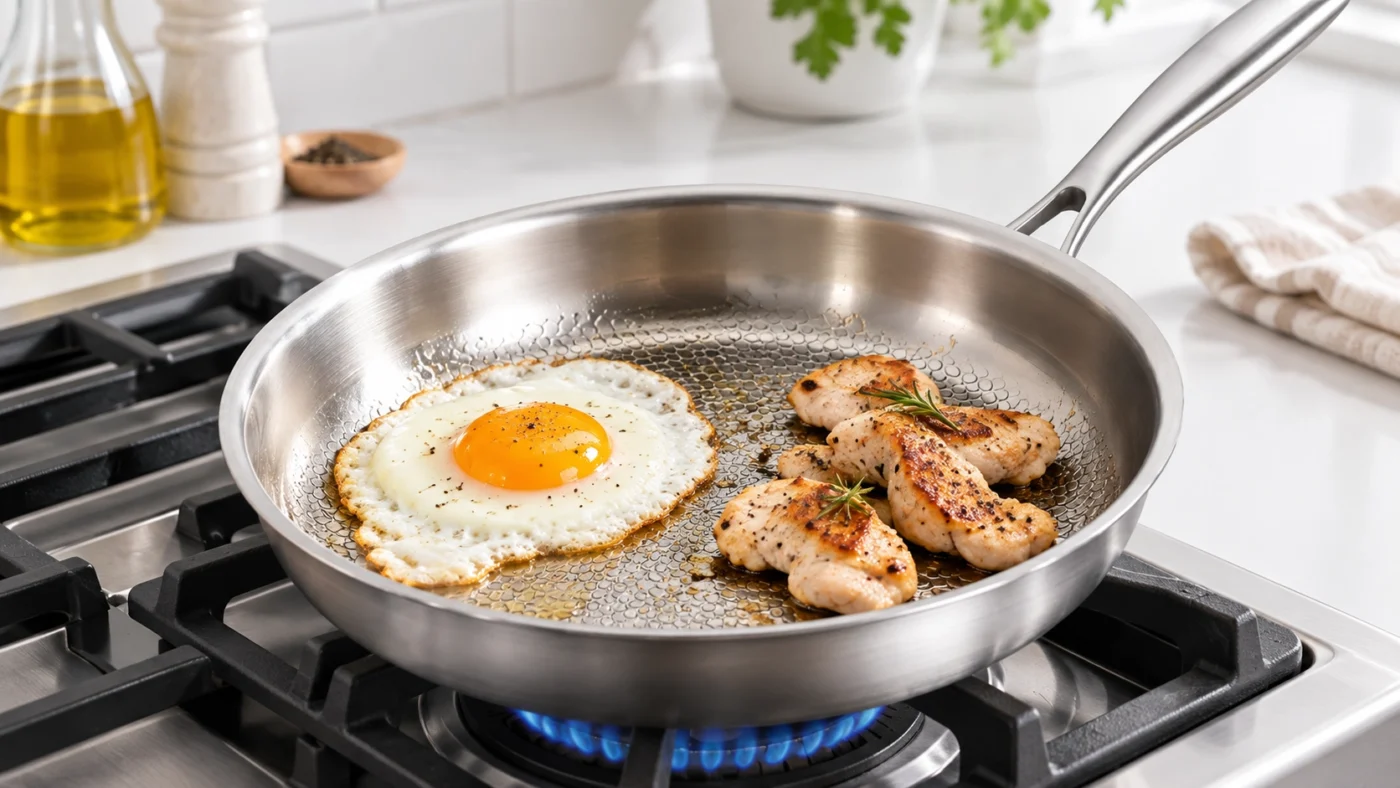
Yes, titanium cookware can stick. An uncoated pure titanium cooking surface is not a nonstick coating, so you should not expect every food to slide out with little oil or attention.
The word “titanium” alone does not tell you how a pan will cook. Food release depends on the cooking surface, the construction beneath it, and how you use heat, cooking fat, and timing.
Before buying, it helps to understand what kind of titanium cookware you are looking at—and what you expect it to do in your kitchen.
Is Pure Titanium Naturally Nonstick?
No. Pure titanium describes a material, not a guarantee of nonstick performance.
An uncoated pure titanium surface differs from a coating specifically designed to reduce food adhesion. It can develop stuck-on food, particularly when cooking delicate foods such as eggs or fish.
Product labels can make this confusing. A pan advertised as “titanium” may have a pure titanium cooking surface, or it may use titanium in a coating over another material. Those descriptions are not interchangeable.
Check what directly touches your food and whether that surface is coated or uncoated. Our guide to pure titanium, solid titanium, and titanium-coated products explains how to read these distinctions.
Why Does Food Stick to Titanium Cookware?
With an uncoated pan, several cooking conditions affect whether food releases cleanly:
- Heat: A temperature that works for searing meat may not suit eggs or a delicate fillet.
- Cooking fat: The amount and coverage of oil or butter can affect contact between the food and the surface.
- Moisture: Wet ingredients change the conditions at the cooking surface.
- Timing: Moving food before its surface has set or browned can cause it to tear or leave residue.
These factors interact. Adding more oil will not necessarily correct excessive heat, and waiting longer will not rescue food that is already burning.
Uncoated stainless steel can also stick. That is a useful comparison for setting expectations, but it does not mean every titanium and stainless steel pan behaves identically.
Does Pan Construction Make a Difference?
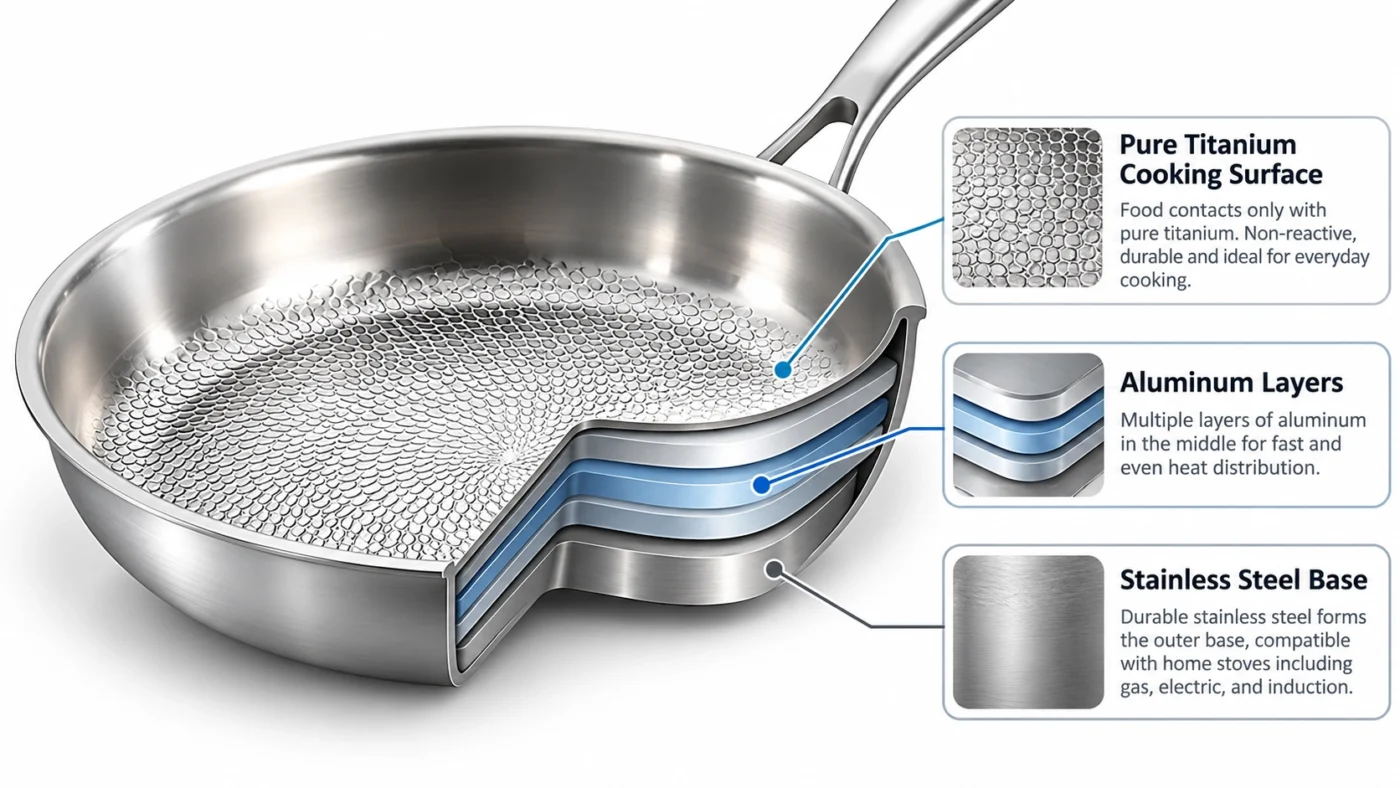
Yes. The cooking surface is only one part of the pan.
A lightweight, single-wall titanium pot and a home frying pan with a pure titanium surface over other metal layers are different constructions. You should not assume that a cooking demonstration or review of one describes the other.
For a frying pan, check:
- Whether the body uses one material or several layers.
- What the manufacturer says about its base and heating design.
- Which cooktops it supports.
- Whether the care instructions apply to the complete pan, including its handle and finish.
Construction helps explain how a pan manages heat. It does not turn an uncoated titanium surface into a nonstick coating.
For a broader material comparison, see our guide to pure titanium vs. stainless steel kitchenware.
Will Eggs Stick? What About Meat?
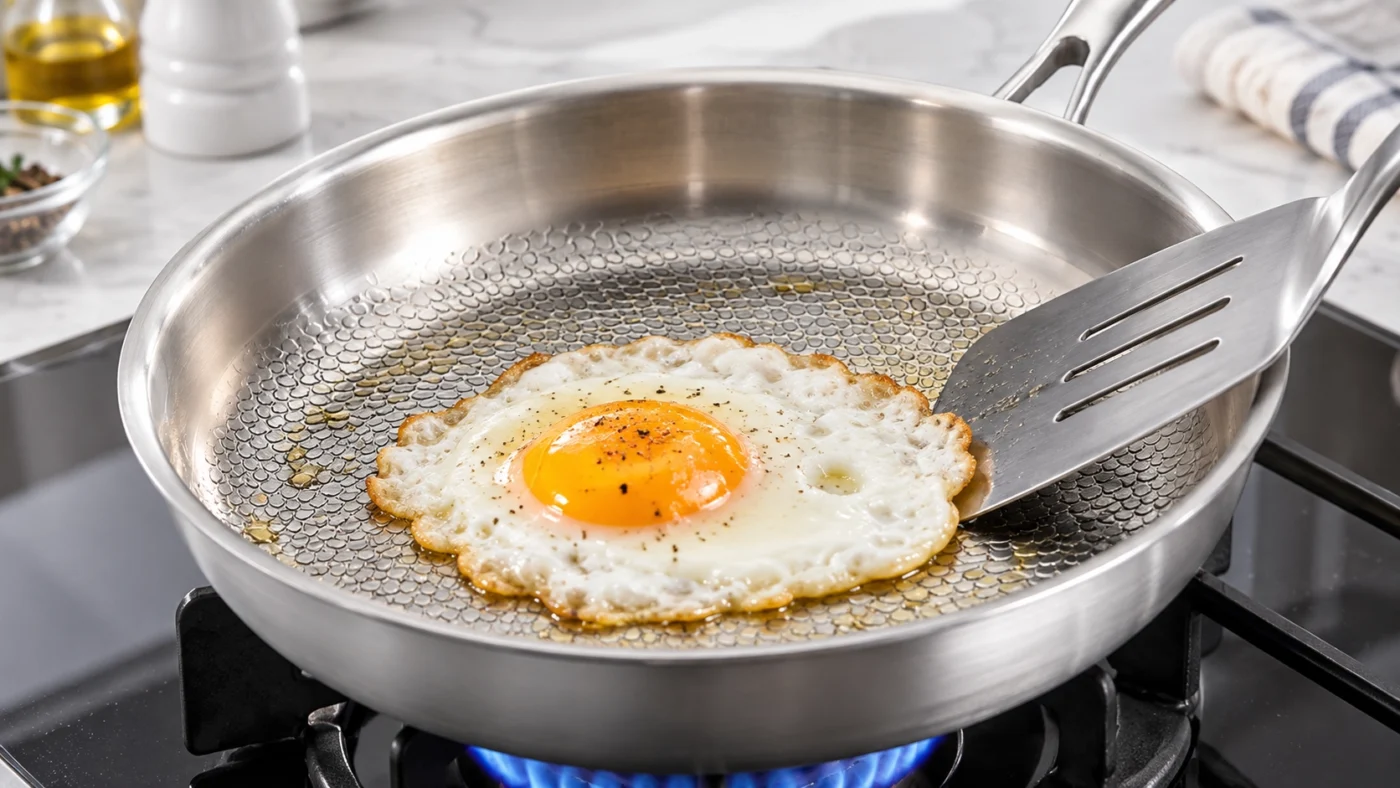
Eggs deserve realistic expectations. They are delicate, and their release can be sensitive to temperature, cooking fat, and when you try to move them. If easy egg release is your main reason for buying a pan, look for a demonstration of the exact model you are considering.
A useful demonstration shows more than the final slide onto a plate. It identifies the pan, heat source, cooking fat, and cooking process. One successful egg does not establish that the surface will perform the same way with every method.
Meat may initially adhere during searing. As a browned surface develops, it may release more readily. Pulling or turning it too early can leave food behind, although release still depends on the ingredient and cooking conditions.
For buyers, the practical question is whether this level of attention fits their usual cooking routine.
Does Titanium Cookware Need Oil?
For many foods, you should expect to use some cooking fat on an uncoated titanium surface.
There is no single amount that works for everything. Eggs, lean fish, fatty meat, and vegetables create different cooking conditions. A claim such as “only a few drops needed” is not very useful unless it names the food, pan, and method.
If you want to cook with minimal added fat, look for evidence that the specific pan performs acceptably with the meals you make most often. Do not assume that “pure titanium” means oil-free cooking.
Is It Easier to Clean?
Not automatically. Food that burns or dries onto an uncoated titanium surface can still require soaking or additional cleaning.
It helps to separate two questions when shopping:
- How readily does food release during cooking?
- What cleaning methods does the manufacturer recommend when residue remains?
An uncoated surface does not mean every scrubber, cleaning product, or dishwasher cycle is suitable for the complete item. Follow the instructions for the particular pan and its finish.
Is an Uncoated Titanium Pan Right for You?
An uncoated titanium pan may suit you if you specifically want a pure titanium food-contact surface and are comfortable adjusting heat, cooking fat, and timing.
It deserves a closer look if you already enjoy cooking with uncoated cookware and understand that some meals take more attention than others.
If your highest priority is effortless egg release with minimal attention, do not assume the titanium label will provide that experience. Choose based on demonstrated performance with your preferred cooking method.
Before buying, ask three questions:
- What is the actual cooking surface? Confirm whether it is uncoated pure titanium or a different surface marketed with titanium terminology.
- What evidence reflects my cooking? Look for the exact pan being used with familiar foods and clearly explained conditions.
- Am I comfortable with the care and technique required? Read the instructions before deciding, rather than discovering them after the first meal.
TiRoam’s titanium frying pan with a pure titanium cooking surface is one example of a composite pan: titanium forms the cooking surface, while additional layers form the pan body. Review its construction and care details against the way you cook.
You can also browse TiRoam titanium cookware to compare different pan designs and constructions.
So, Does Titanium Cookware Stick?
Yes, it can. An uncoated pure titanium surface should be purchased with the expectation that food release takes some attention—not that the material prevents sticking.
The useful buying decision is whether a particular pan’s surface, construction, and cooking requirements suit your meals.
If you want a pure titanium cooking surface and accept the technique it requires, it may fit your kitchen. If easy release is your overriding concern, make that the feature you verify before buying.
Explore Related Guides & Titanium Cookware
- Pure Titanium, Solid Titanium, and Titanium-Coated: What the Labels Mean
- Pure Titanium vs. Stainless Steel Kitchenware: Which Fits Your Routine?
- Explore TiRoam Titanium Cookware