
Cookware & Food Prep
Knife Marks on Titanium Cutting Boards: What Changes With Use?
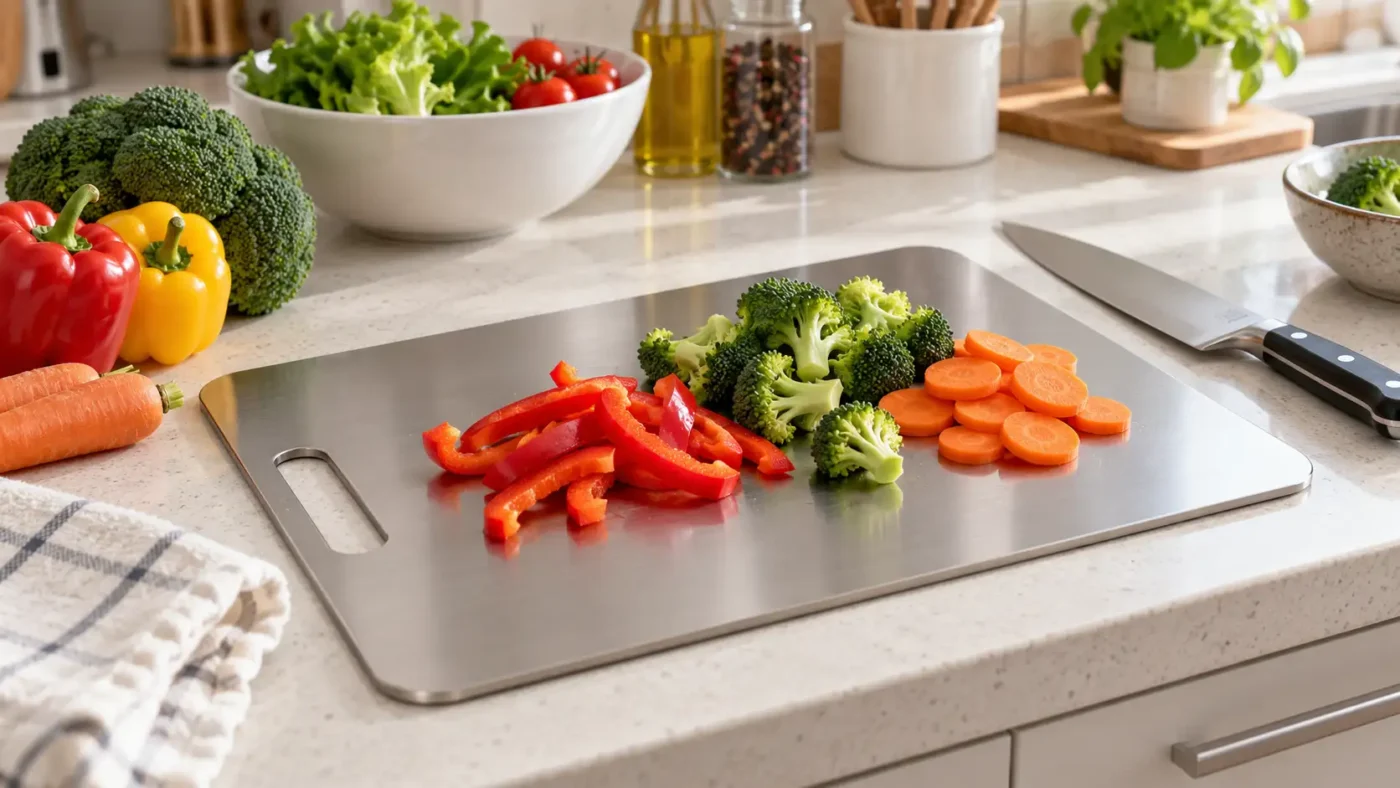
Titanium cutting board scratches and knife marks can develop during regular food preparation. A visible line alone does not establish that a board needs replacing, but sharp raised edges, cracks, deep gouges, or deformation deserve closer attention.
Start by cleaning and drying the board, then inspect the surface and edges under good lighting. If you find a physical defect or cannot determine whether a change affects normal use, pause use and contact the manufacturer.
This guide covers surface appearance and inspection. For the separate question of knife-edge wear, read Do Titanium Cutting Boards Dull Knives? What to Know Before Buying.
Do Titanium Cutting Boards Get Scratched?
Yes. Titanium cutting boards can show knife marks and scratches, so they should not be expected to remain visually unchanged.
TiRoam’s published care guidance for the Integrated-Handle Pure Titanium Cutting Board notes that knife marks, scratches, and some surface discoloration may develop with regular use.
That expectation does not mean every mark is harmless. Evaluate an unusual change by its condition and effect on use, rather than assuming all scratches belong in the same category.
Why Do Knife Marks Become Noticeable?
Repeated knife contact can change the appearance of a cutting surface, particularly in frequently used areas.
The visibility of a mark can vary with the board’s finish, cutting pressure, knife movement, frequency of use, and viewing angle.
On a brushed titanium surface, a line that interrupts the original finish may reflect light differently from the surrounding area. The center of a board may also look more used than its edges because it receives more cutting contact.
These observations explain why appearance can change. They do not establish the depth or significance of a particular mark.
How Do You Distinguish Surface Marks From Damage?
Look for changes in the board’s physical condition, rather than relying on how prominent a scratch appears.
Fine lines may be consistent with ordinary surface wear. A raised burr, crack, deep gouge, or bent section requires a different response.
| What you notice | What to do |
|---|---|
| Fine visible lines without an obvious raised edge or deformation | Clean, dry, and inspect; follow the model’s care guidance |
| A concentrated patch of marks | Check for accumulated residue and physical changes |
| A sharp raised edge, crack, or deep gouge | Pause use and contact the manufacturer |
| Bending or instability on a suitable flat counter | Pause use and contact the manufacturer |
| An unfamiliar change that remains after cleaning | Photograph it and ask the manufacturer for guidance |
This table is an inspection guide, not a test that certifies a board as safe.
Do not run a bare finger across a suspected sharp edge to check it. Visual inspection is the better starting point.
How Should You Inspect a Mark?
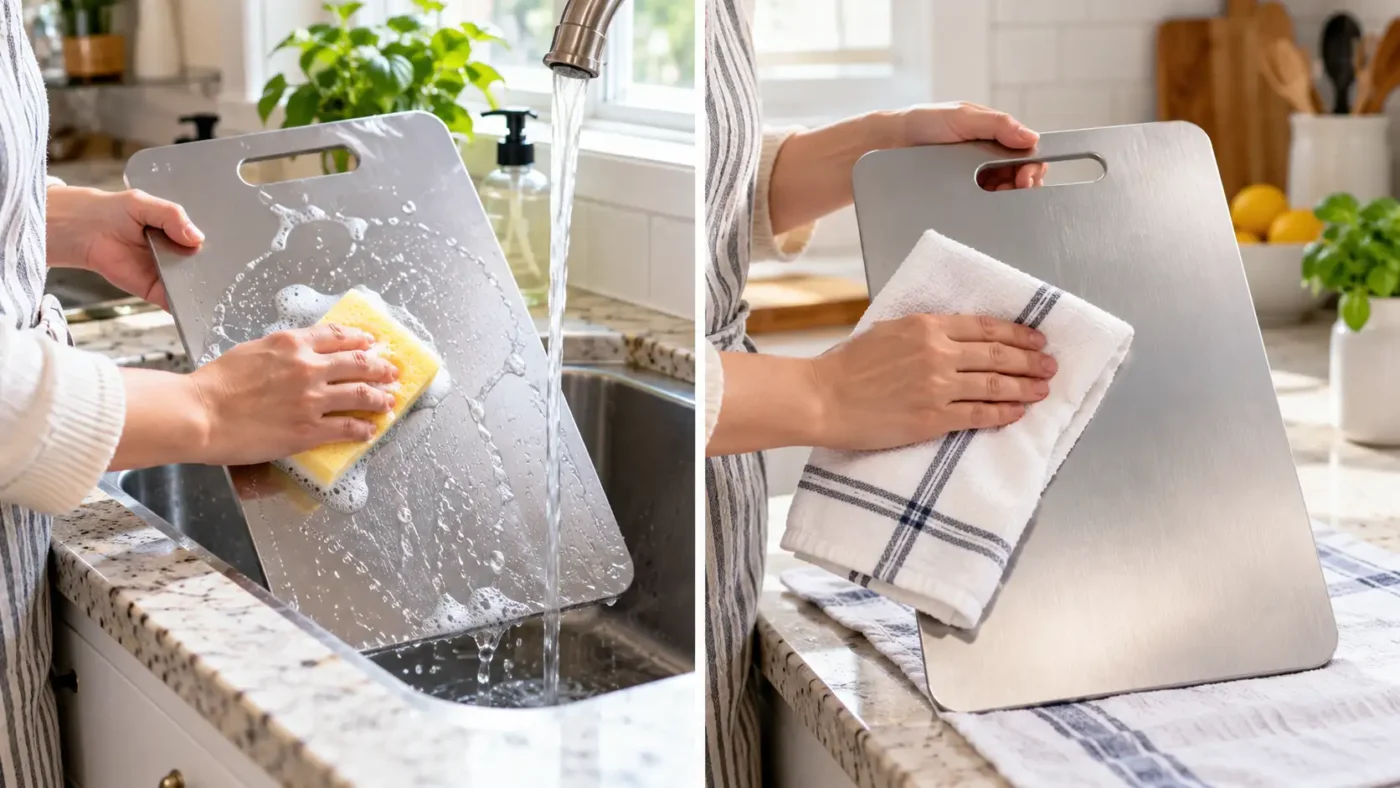
Clean and dry the titanium cutting board before inspecting the mark under good lighting.
Use this sequence:
- Remove food debris.
- Wash according to the product’s instructions.
- Rinse thoroughly.
- Dry the board.
- Inspect the marked area, edges, groove, and handle.
- Check whether the board sits normally on a clean, flat surface.
Food residue, water spots, and oil can obscure the surface. Cleaning helps you see what remains, but it does not repair physical damage.
Take an overall photograph and a close-up if you need help identifying the change. Avoid manipulating the board to conceal bending or other defects.
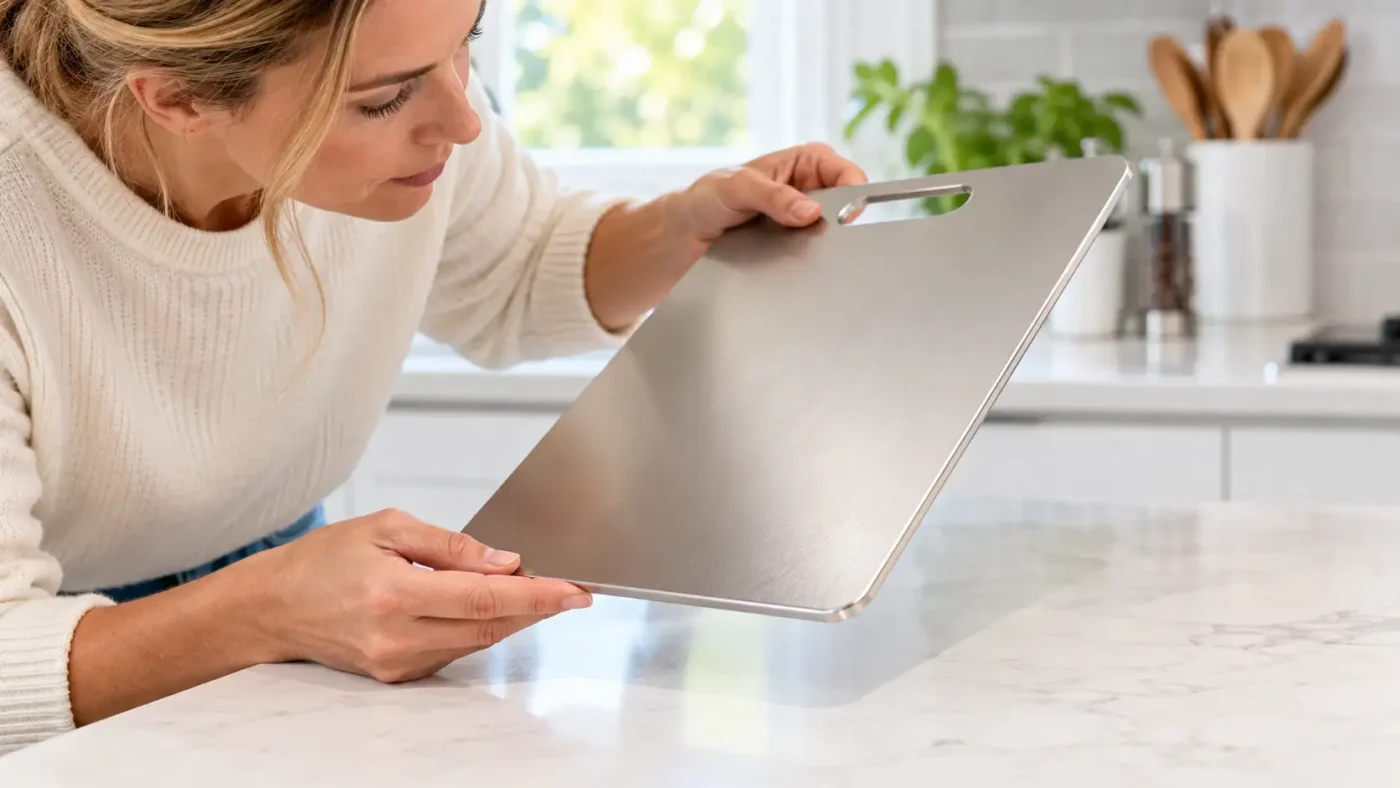
Why Can the Same Scratch Look Different in Different Light?
Lighting changes how a metallic surface reflects, so a scratch may appear more prominent from one angle than another.
A fine line can stand out under side lighting and become less noticeable when viewed from above. Wet and dry surfaces can also look different.
Inspect the board in normal kitchen lighting and from more than one angle. Use additional light when checking for raised edges or deformation.
A dramatic photograph does not establish serious damage. Equally, a mark that looks faint in one photograph should not be dismissed if it accompanies a physical defect.
Can You Polish Scratches Out of a Titanium Cutting Board?
Avoid polishing or sanding knife marks unless the manufacturer recommends that method for the exact product and finish.
Abrasive treatment can change the surrounding finish and leave a visibly different patch. Removing a mark’s appearance also does not establish that an underlying defect has been resolved.
For TiRoam’s Integrated-Handle model, the published care instructions recommend avoiding aggressive abrasives or steel wool when preserving the original finish.
Routine cleaning is the appropriate starting point. Do not use an improvised refinishing method to address a sharp burr, crack, or deep gouge.
For broader care guidance, see How to Clean Pure Titanium Kitchenware.
Can Cutting Technique Prevent Knife Marks?
Controlled cutting technique can avoid unnecessary impacts, but it cannot guarantee a mark-free surface.
Use the cutting board for the tasks described in its instructions. Normal slicing and chopping differ from striking bones or frozen food with a heavy cleaver.
TiRoam’s Integrated-Handle board guidance recommends normal cutting pressure and advises against heavy cleaver strikes on bones or frozen foods.
Do not increase force simply to work faster. Follow the board and knife instructions, and expect visible signs of use to remain possible.
When Should You Stop Using the Board?
Pause use of the entire board if you find a sharp burr, crack, deep gouge, deformation, or unexplained instability.
Continuing on another section does not resolve the defect. Avoid sanding, bending, or otherwise modifying the board before seeking guidance.
For a TiRoam board, use the Contact Us page and provide:
- The product model.
- An overall photograph of the board.
- Close-ups of the change.
- When you first noticed it.
- Relevant details about cutting and cleaning.
Photos can help explain the issue, although some conditions may require further inspection.
What Should You Expect Before Buying?
Expect a titanium cutting board’s appearance to change with use, and decide whether that fits your preferences.
New-product photographs show the original finish. They do not establish how a particular board will look after months of cutting.
When comparing products, look for clear material descriptions, care instructions, and authentic photographs of used examples where available. Do not treat another brand’s board or a different surface finish as proof of how your chosen model will wear.
Surface appearance is one part of the buying decision. Size, handling, knife use, and cleaning requirements matter too.
For help comparing those factors, read How to Choose the Best Titanium Cutting Board for Your Kitchen.
Frequently Asked Questions
Are knife marks on a titanium cutting board normal?
Visible knife marks can develop with regular use. However, the presence of ordinary wear does not make every scratch harmless. Inspect unusual changes for raised edges, cracks, gouges, or deformation.
Does a scratch mean the board needs replacing?
Not automatically. A visible line alone does not determine whether replacement is necessary. Pause use and ask the manufacturer if the mark accompanies a physical defect or you are unsure about its condition.
Can I remove scratches with steel wool?
Avoid steel wool unless the exact product’s instructions permit it. TiRoam’s Integrated-Handle board guidance advises against aggressive abrasives or steel wool when preserving the original finish.
Do knife marks show how much the board is dulling my knives?
Visible board marks alone do not measure knife-edge wear. For that separate question, see Do Titanium Cutting Boards Dull Knives? What to Know Before Buying.
What photographs should I take of an unusual mark?
Take an overall view and close-ups after cleaning and drying the board. Include different lighting angles and any affected edge, groove, or handle area. Do not touch a suspected sharp burr to demonstrate it.