
Cookware & Food Prep
Titanium vs Glass Food Containers: How Does Stainless Steel Compare?
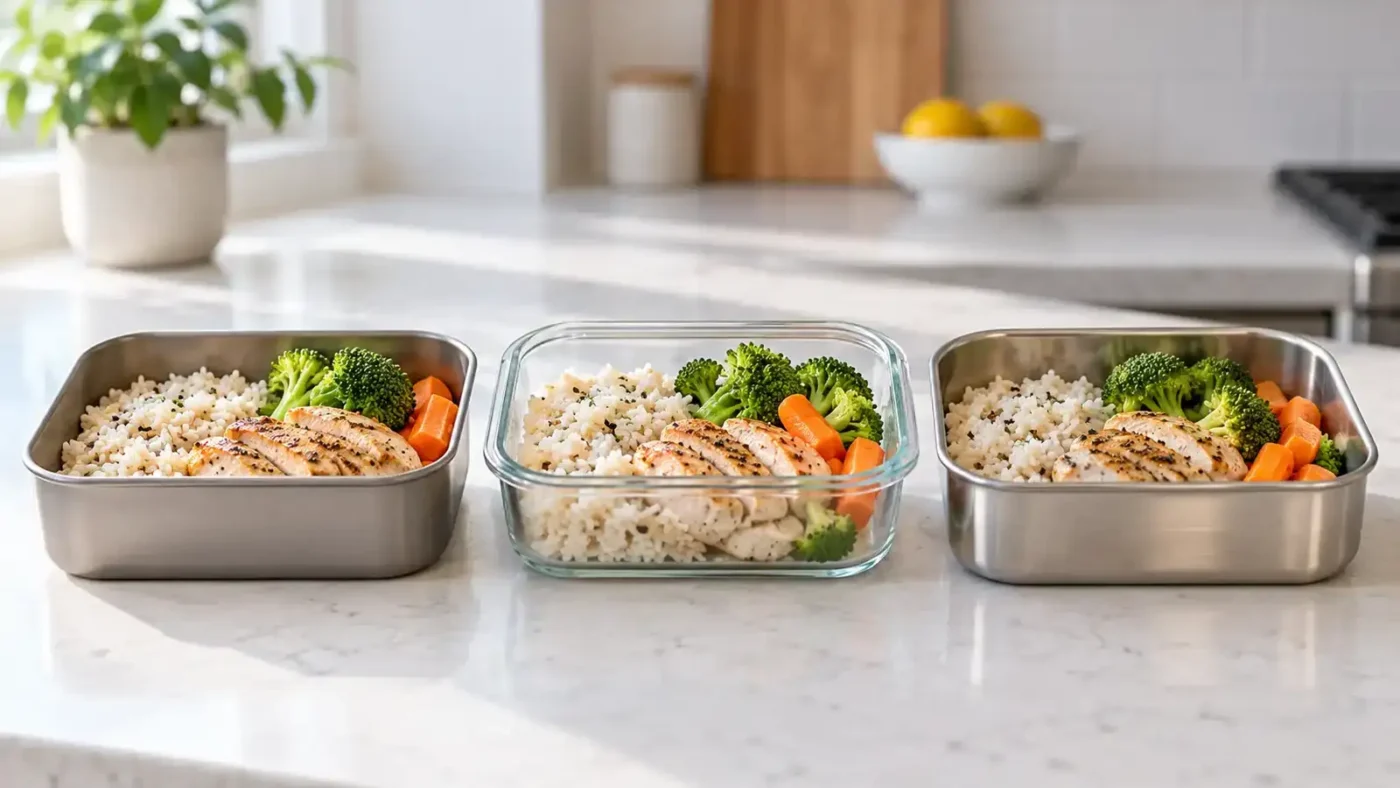
Titanium can be a good choice for lightweight work lunches, glass for visible refrigerator storage and microwave-safe reheating when the product is labeled for it, and stainless steel for durable everyday use. When comparing titanium vs glass food containers, start with how you carry, store, and reheat your meals. The lid, capacity, and finished weight matter as much as the body material.
There is no single material that wins every category. A glass container that works well at home may feel cumbersome on a walking commute. A light metal lunch box may be convenient to carry but require a separate microwave-safe dish at work.
Titanium vs Glass vs Stainless Steel: Quick Comparison
| Feature | Titanium | Glass | Stainless Steel |
|---|---|---|---|
| Carry weight | Often chosen for lightweight construction; check actual weight | Can add substantial weight, especially with a thick body and lid | Can be light or heavy depending on construction |
| Drop resistance | Does not shatter like glass; can dent or deform | Can chip, crack, or break | Does not shatter like glass; can dent |
| Visibility | Opaque | Clear glass lets you see the contents | Opaque |
| Microwave reheating | Do not use unless the product and microwave instructions explicitly permit it | Suitable only when labeled microwave-safe; check lid instructions | Do not use unless the product and microwave instructions explicitly permit it |
| Leak resistance | Depends on the lid, seal, and closure | Depends on the lid, seal, and closure | Depends on the lid, seal, and closure |
| Cleaning | Check finish, corners, lid parts, and care instructions | Clear surfaces make residue easier to see; check care instructions | Check finish, corners, lid parts, and care instructions |
| Practical fit | Lightweight everyday carrying | Visible meal prep and compatible reheating | Durable general-purpose lunches |
Note: This is a general material comparison, not a test of particular products. Compare containers of similar capacity and include the lid when comparing finished weight.
When Is Titanium a Good Choice for Food Containers?
Titanium is worth considering when reducing the weight of your lunch kit matters. That can be especially useful if you walk to work, take public transport, or already carry a laptop, charger, and water bottle.
A titanium container will not shatter like glass, although a hard impact can still leave scratches, dents, deformation, or damage to the closure. Titanium also has good corrosion resistance, but food residue and moisture around lids or crevices still require routine cleaning.
If you prefer an uncoated metal interior, check that the manufacturer actually specifies an uncoated titanium food-contact surface. The word “titanium” alone does not describe every component: a lid, seal, latch, handle, or divider may use another material.
For a closer look at material distinctions, see our guide to Pure Titanium, Solid Titanium, and Titanium-Coated: What the Labels Mean.
Do not assume every titanium lunch box is lighter than every stainless steel alternative. Compare the published weight, usable capacity, dimensions, and included components of the actual products.
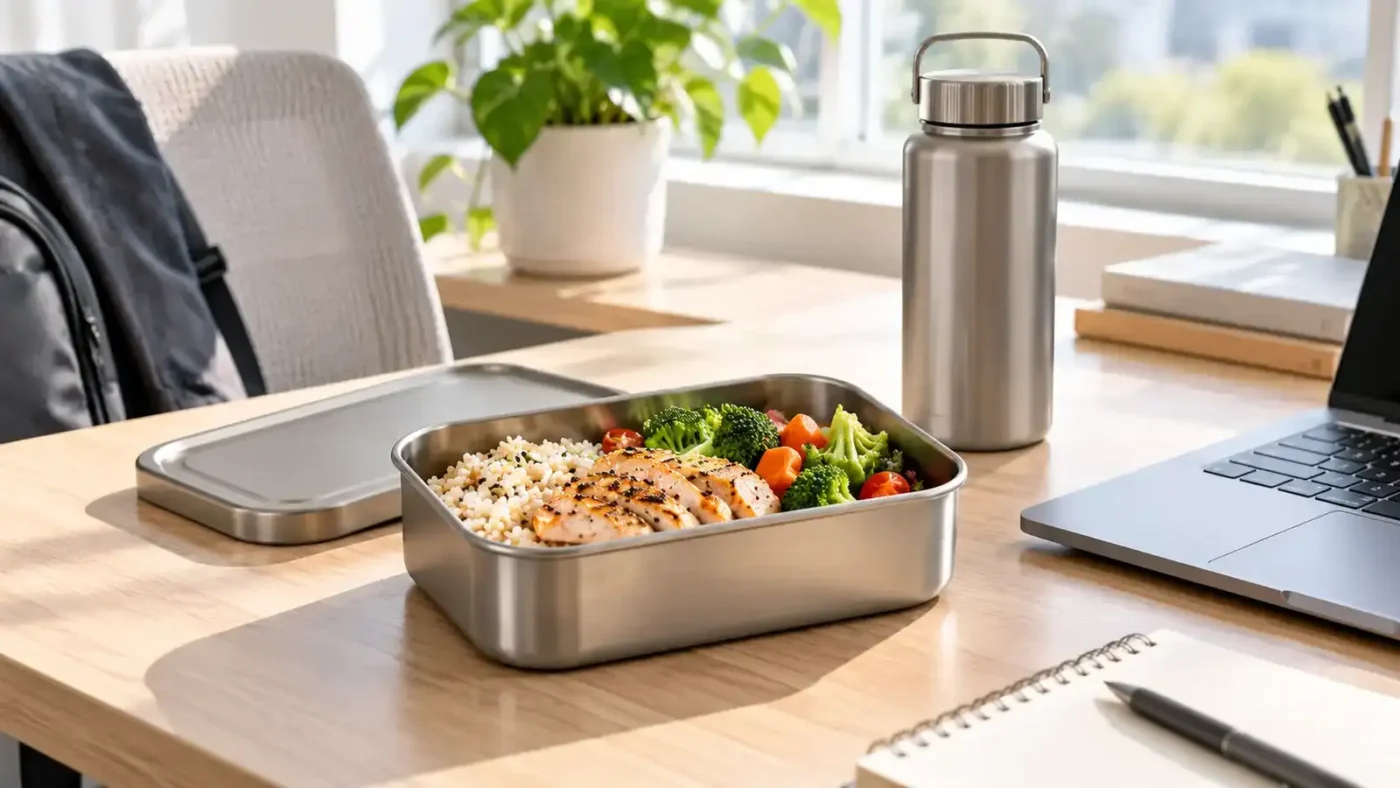
When Does Glass Make More Sense?
Glass is convenient when seeing stored food and reheating in the same container are priorities. Clear sides help you identify leftovers without opening each lid, which can make a refrigerator full of prepared meals easier to organize.
For meals that move mainly between the kitchen, refrigerator, and dining table, extra container weight may be a reasonable trade-off. A glass container labeled microwave-safe can also reduce the need to transfer food before reheating.
The main limitations are impact damage and product-specific heat restrictions. Check glass containers for chips or cracks and follow the manufacturer’s instructions on temperature changes.
Microwave-safe glass is not automatically safe for an oven, stovetop, direct flame, or sudden freezer-to-high-heat transition.
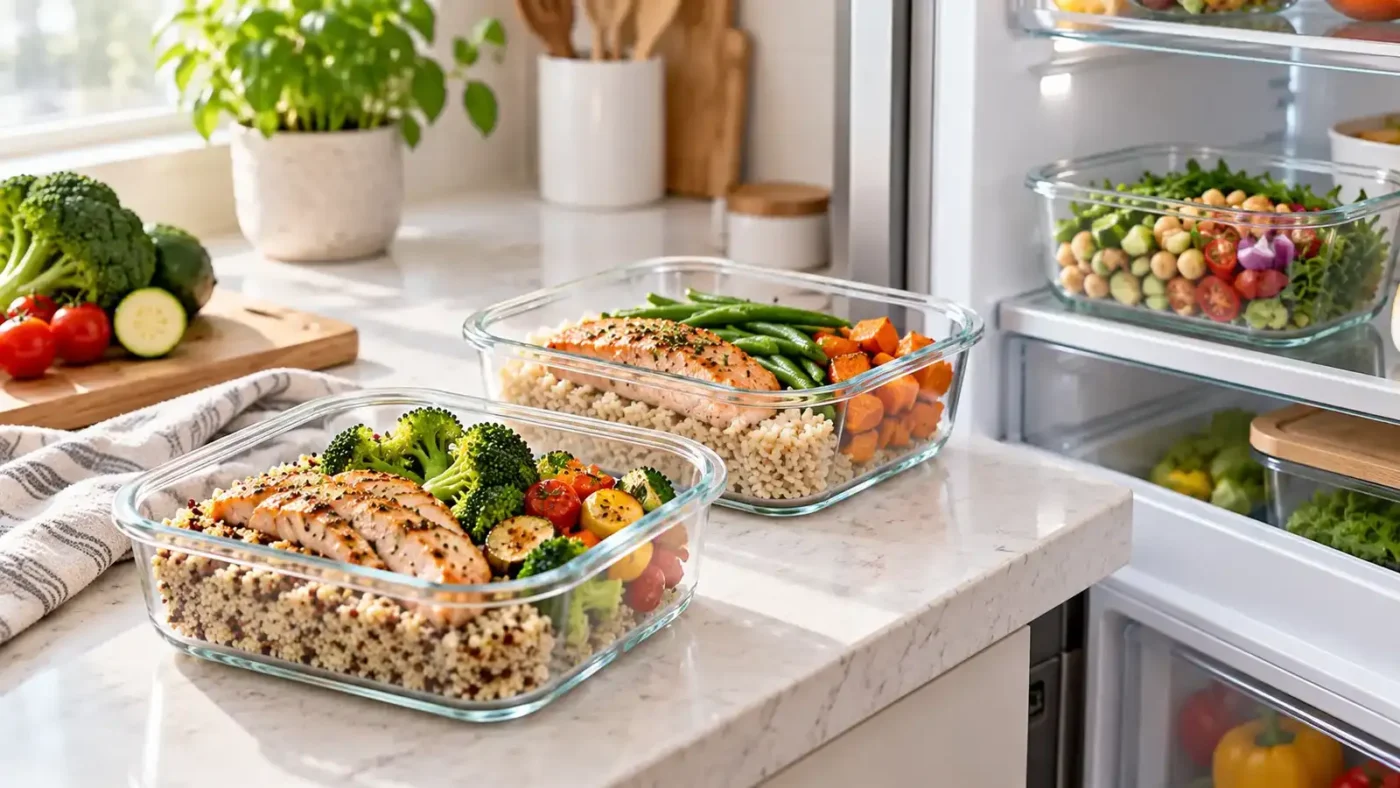
How Does Stainless Steel Compare With Titanium?
Stainless steel is a practical option when you want a durable metal container and a suitable layout matters more than minimizing carry weight. Compare compartment arrangements, dimensions, and closure designs rather than treating stainless steel as a fixed middle ground between glass and titanium.
Both titanium and stainless steel containers resist shattering. Their finished weight depends on wall thickness, capacity, lid construction, and hardware, so the material name alone cannot tell you which complete lunch box is lighter.
For either metal, check the specific cleaning and food-storage instructions. Corrosion resistance does not mean that every finish, closure, or seal needs the same care.
Which Food Containers Can Go in the Microwave?
For routine microwave reheating, use a container explicitly labeled microwave-safe.
Do not put an ordinary titanium or stainless steel lunch box in a microwave. Transfer the food to a microwave-safe container or dish unless the specific container and microwave instructions explicitly permit that use.
The FDA’s microwave guidance explains that metal reflects microwaves and generally should not be used as a microwave cooking container.
Glass also requires a compatibility check. Read the instructions for the body and lid separately. A microwave-safe glass base may have a lid that must be removed or vented before heating.
Oven, stovetop, and direct-flame use are separate questions. A metal body does not make a complete container suitable for those heat sources, especially when it includes seals, handles, coatings, or other components.
Does the Material Make a Container Leakproof or Insulated?
No. Leak resistance and insulation depend on the complete design, not simply on titanium, glass, or stainless steel.
For soup, dressing, or other liquids, check the seal, closure, lid design, and the manufacturer’s stated carrying conditions. A fitted lid alone does not prove that a container can travel sideways in a bag without leaking.
Likewise, a metal lunch box is not automatically insulated. If keeping food hot or cold is part of your routine, look for a product that is explicitly designed for temperature retention and follow appropriate food-storage guidance.
Choosing a material does not replace refrigeration or safe food handling.
What Should You Compare Before Buying?
Compare the complete container against one typical meal and one carrying routine.
- Capacity and usable space: Will your usual meal fit without needing several extra containers?
- External dimensions: Will the container fit your lunch bag and refrigerator shelf?
- Weight with the lid: Compare similar capacities and include all major components.
- Closure and seals: Check the stated leak resistance and whether removable parts can be cleaned thoroughly.
- Reheating instructions: Decide whether you need to transfer food to another dish.
- Cleaning and drying: Check care instructions for each part and look for corners or grooves that may trap residue.
A container that is easy to wash, dry, pack, and open may be more useful than one with extra features you rarely use.
Which Material Fits Your Meal-Prep Routine?
Choose around the task: a light carry container for commuting, visible storage for the refrigerator, and a microwave-safe container or dish for reheating.
Someone walking to the office with a laptop may prefer a lightweight titanium lunch box and keep a microwave-safe dish at work.
Someone preparing several meals to store and reheat at home may prefer glass labeled microwave-safe.
A stainless steel container may suit someone who wants a durable metal box with a particular compartment layout.
You do not need to replace every container in your kitchen with one material. A mixed setup can work well when each piece has a clear purpose.
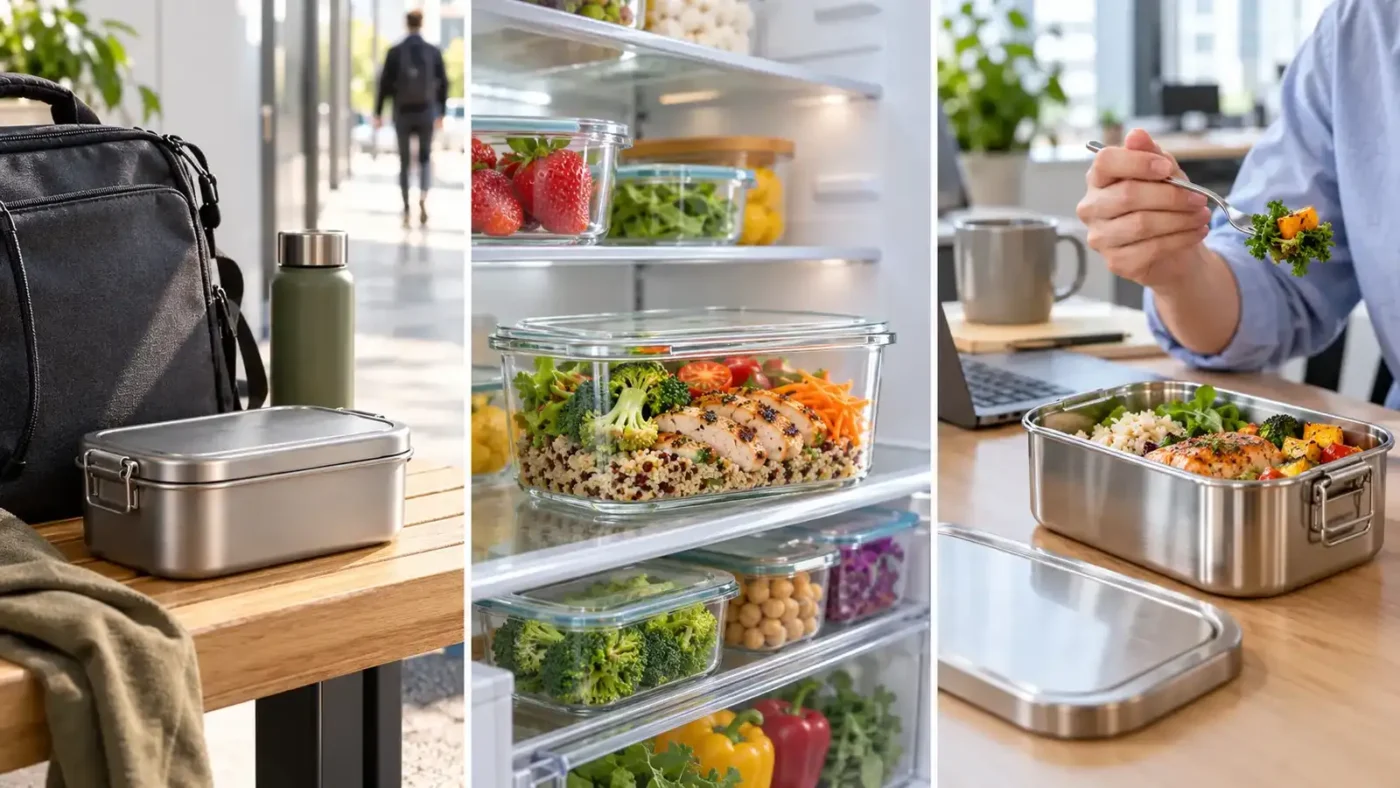
Explore the TiRoam Pure Titanium Lunch Box
If a lightweight titanium food container fits your daily routine, explore the TiRoam Pure Titanium Lunch Box and compare its current capacity, dimensions, closure, weight, and care instructions with your needs.
Frequently Asked Questions
Is titanium better than glass for food containers?
Titanium can be a better fit when low carry weight and resistance to shattering matter. Glass can be more convenient for visible storage and microwave reheating when the product is labeled microwave-safe.
Neither material makes every complete container better.
Is a titanium lunch box always lighter than stainless steel?
No. Titanium containers are often designed for low weight, but capacity, wall thickness, lid design, and other components affect the finished product.
Compare actual published weights for containers of similar capacity.
Can titanium food containers go in the microwave?
Ordinary titanium food containers should not be used in a microwave.
Transfer food to a microwave-safe container or dish unless the specific container and microwave instructions explicitly permit that use.
Are all glass food containers microwave-safe?
No.
Use glass labeled microwave-safe and follow the manufacturer’s instructions. Check the lid separately, and do not assume microwave compatibility also permits oven, stovetop, or direct-flame use.
Are titanium food containers leakproof?
The material does not determine leak resistance.
Check the product’s lid, seal, closure, and stated carrying conditions before packing liquids.
Which material is easiest to clean?
There is no universal winner.
Smooth corners, accessible lid parts, removable components, and clear care instructions can matter more than the body material. Check the cleaning instructions for both the container body and lid components.