
Tableware & Everyday Dining
Titanium vs Glass Food Containers: How Does Stainless Steel Compare?
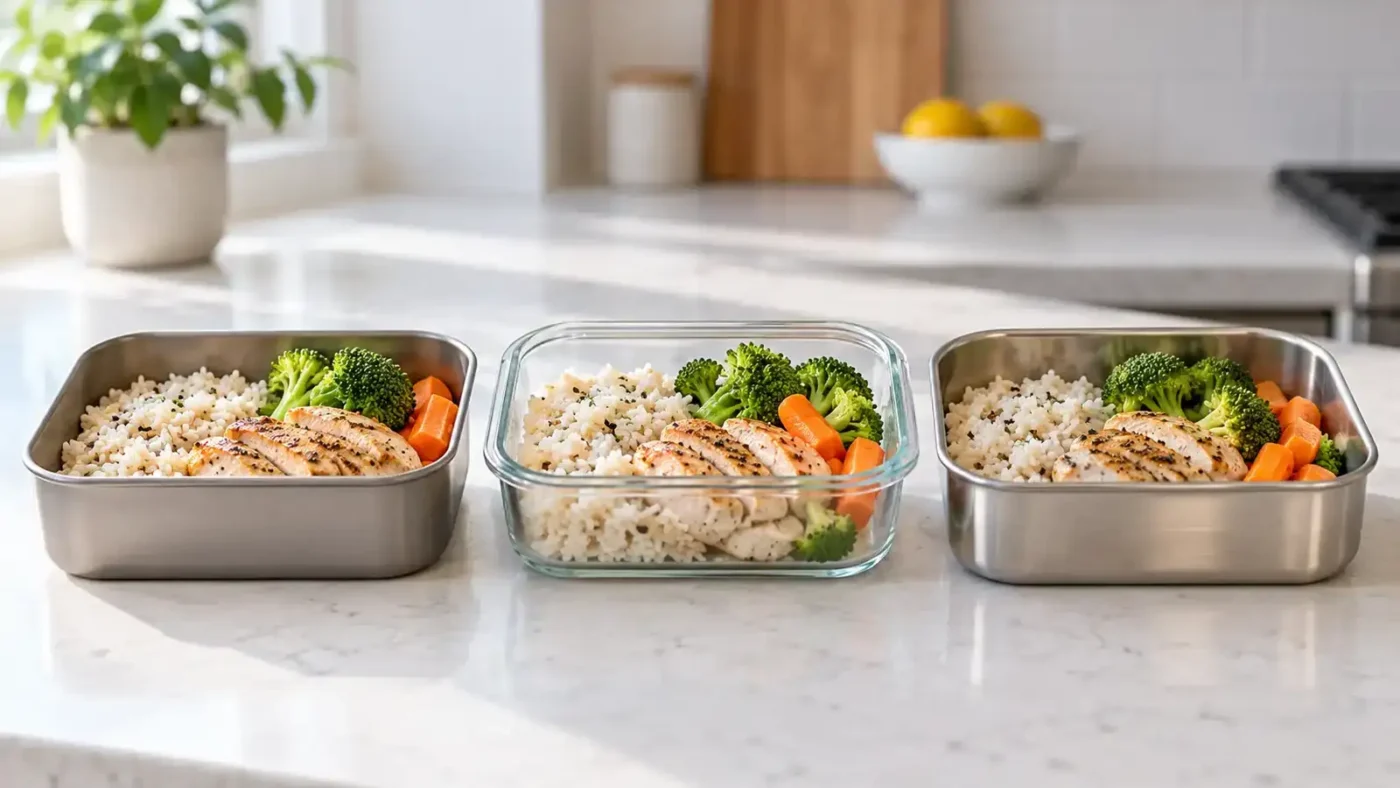
When comparing titanium vs glass food containers, start with how you carry, store, and reheat your meals. Titanium can suit a lightweight lunch kit. Clear glass makes stored food easier to identify and can support reheating when the exact product is labeled microwave-safe. Stainless steel offers another durable metal option.
The complete container matters as much as the body material. Capacity, dimensions, lid construction, and finished weight determine whether it fits your routine.
A container used mainly at home has different requirements from one carried through a commute. Choose around those tasks rather than expecting one material to perform best in every situation.
Titanium vs Glass Food Containers: Quick Comparison
| Feature | Titanium | Glass | Stainless steel |
|---|---|---|---|
| Carry weight | Can offer low finished weight; compare actual specifications | Thick glass bodies and lids can add substantial weight | Varies with thickness, capacity, lid, and hardware |
| Impact damage | Does not shatter like glass, but can dent or deform | Can chip, crack, or break | Does not shatter like glass, but can dent or deform |
| Visibility | Opaque | Clear glass lets you see the contents | Opaque |
| Microwave reheating | Normally requires transferring food to a microwave-safe dish | Suitable when the exact product is labeled microwave-safe | Normally requires transferring food to a microwave-safe dish |
| Leak resistance | Depends on the lid, seal, and closure | Depends on the lid, seal, and closure | Depends on the lid, seal, and closure |
| Useful starting point | Work lunches where carry weight matters | Visible refrigerator storage and compatible reheating | Everyday lunches where durability and layout matter |
This is a general material comparison, not a test of particular products. Compare similar capacities and include the lid and other components when checking weight.
When Is Titanium a Good Choice?
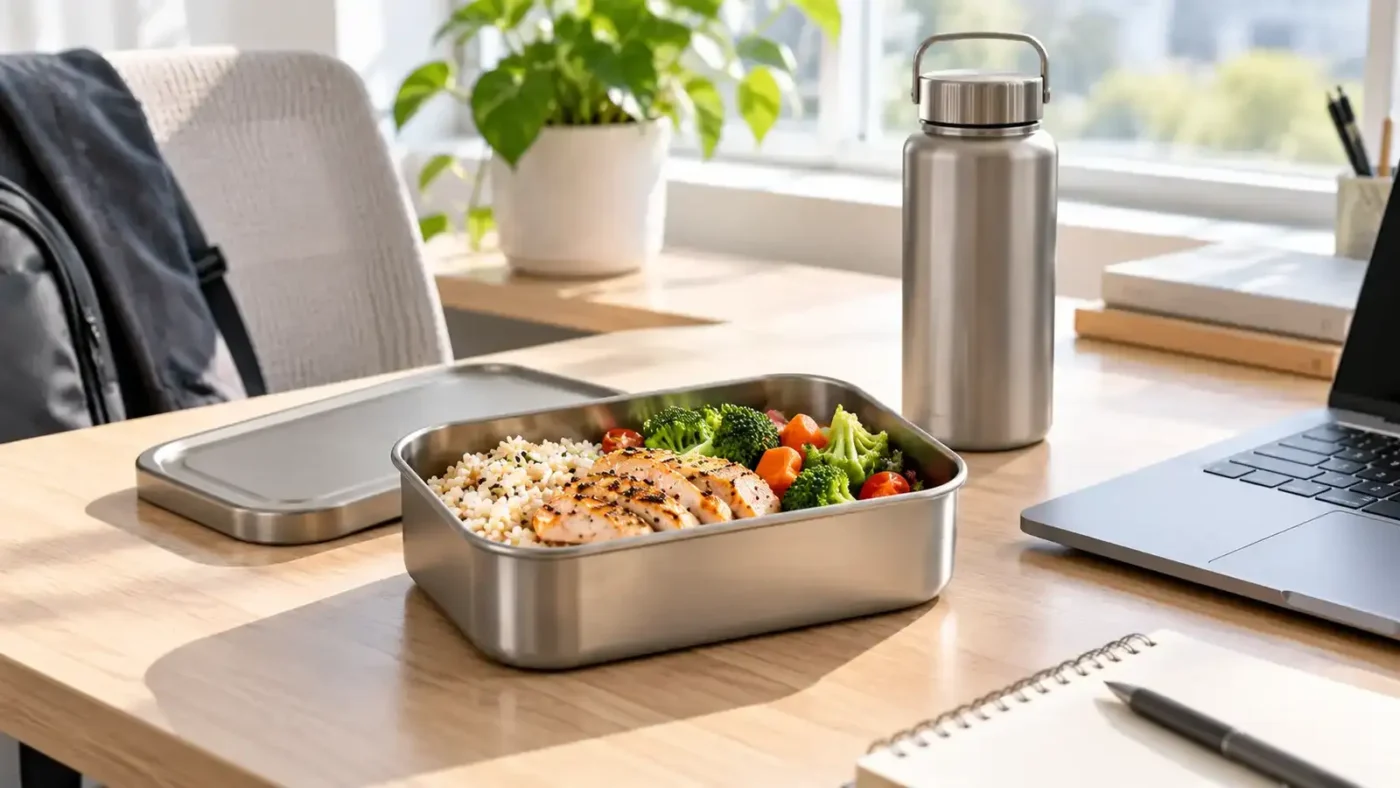
Consider titanium when reducing the weight of your lunch kit matters. That may be useful if you walk to work, take public transport, or already carry a laptop and water bottle.
Check the complete product’s published weight. A small stainless steel box may weigh less than a larger titanium model, and lids, dividers, and closure hardware can change the comparison.
Titanium does not shatter like glass, although impacts can still damage the body or closure. It should not be treated as dent-proof or scratch-proof.
If an uncoated interior matters to you, look for an explicit material description. A titanium body does not establish the material of every lid, seal, latch, or divider.
For help reading those descriptions, see Pure Titanium, Solid Titanium, and Titanium-Coated: What the Labels Mean.
When Does Glass Make More Sense?
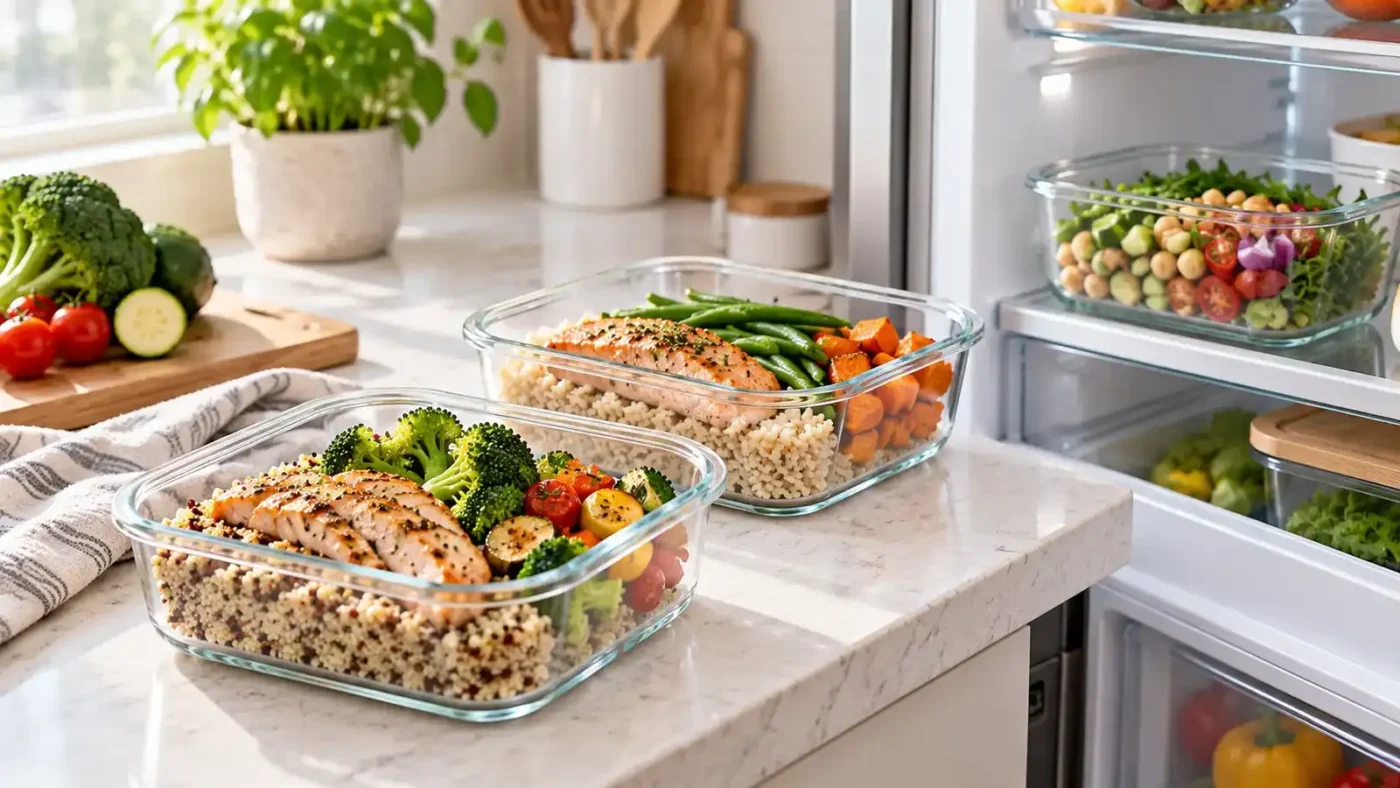
Glass can be convenient when visible storage and reheating in the same container are priorities.
Clear sides help you identify leftovers without opening each lid. For meals that move mainly between the refrigerator, microwave, and dining table, extra container weight may be an acceptable trade-off.
The main considerations are impact damage and the exact product’s heating instructions. Check for chips or cracks and follow the manufacturer’s guidance on temperature changes.
A glass container labeled microwave-safe is not automatically approved for an oven, stovetop, direct flame, or sudden freezer-to-high-heat transition. Check the body and lid separately before choosing it for those uses.
How Does Stainless Steel Compare?
Stainless steel is worth considering when you want a durable metal container with a layout that suits your meals.
Compartment arrangements, lid designs, and dimensions may matter more than a small difference in empty weight. A divided box can suit meals you prefer to keep separate, while an open interior may accommodate larger portions more easily.
As with titanium, finished weight depends on the complete construction. Compare containers of similar capacity instead of assuming that stainless steel always occupies a fixed middle ground between titanium and glass.
Its metal body also does not establish microwave compatibility, insulation, or leak resistance.
Which Containers Can Go in the Microwave?
Use a container explicitly labeled microwave-safe and follow the instructions for both the container and the microwave.
Metal food containers should not be placed in a microwave unless the specific container and microwave instructions explicitly permit that use. For an ordinary titanium or stainless steel lunch box, transfer the food to a microwave-safe dish before reheating.
Glass requires a compatibility check too. A microwave-safe base may have a lid that needs to be removed or vented before reheating.
Oven, stovetop, and direct-flame use require separate approval. Neither a metal body nor microwave-safe glass establishes that the complete container is suitable for another heat source.
Does the Material Make a Container Leakproof or Insulated?
No. Leak resistance and insulation depend on the complete design.
For soup, dressing, or other liquids, check the seal, closure, and manufacturer’s stated carrying conditions. A fitted lid alone does not establish that a container can travel sideways in a bag without leaking.
Look for explicit insulation specifications if temperature retention matters. Do not infer it from a titanium or stainless steel body.
An ordinary lunch box also does not replace refrigeration or appropriate food handling. Plan how the meal will be stored during the commute and before lunch.
What Makes a Food Container Easier to Clean?
Accessible corners, lid parts, and seals can matter more than the body material.
Before buying, check whether you can reach the areas where food collects. If a seal or divider is designed to be removable, follow the instructions for taking it out, washing it, drying it, and reassembling it.
Dishwasher compatibility should be checked for each component. Approval for the body does not automatically include the lid, finish, or seal.
For routine care, hand wash with mild dish soap and a soft sponge or cloth, then rinse and dry thoroughly. Avoid harsh abrasives when preserving the original finish matters.
For broader titanium care guidance, read How to Clean Pure Titanium Kitchenware.
Which Material Fits Your Meal-Prep Routine?
Compare titanium vs glass food containers against one typical meal and the way you will transport it.
For a walking commute, a lightweight titanium lunch box may be useful if you can transfer food to a microwave-safe dish at work.
For meals stored and reheated mainly at home, clear glass labeled microwave-safe may simplify the routine.
For lunches that benefit from a particular compartment layout, a suitable stainless steel model may be the more practical choice.
Then check the usable capacity, external dimensions, weight with the lid, closure instructions, and washing requirements. Include the food and any separate dressing containers when considering what your lunch kit will weigh and how much space it will need.
You can use different materials for different tasks. Visible storage at home and lightweight carrying to work do not have to rely on the same container. If you keep several types, organizing containers by task makes the right one easier to find.
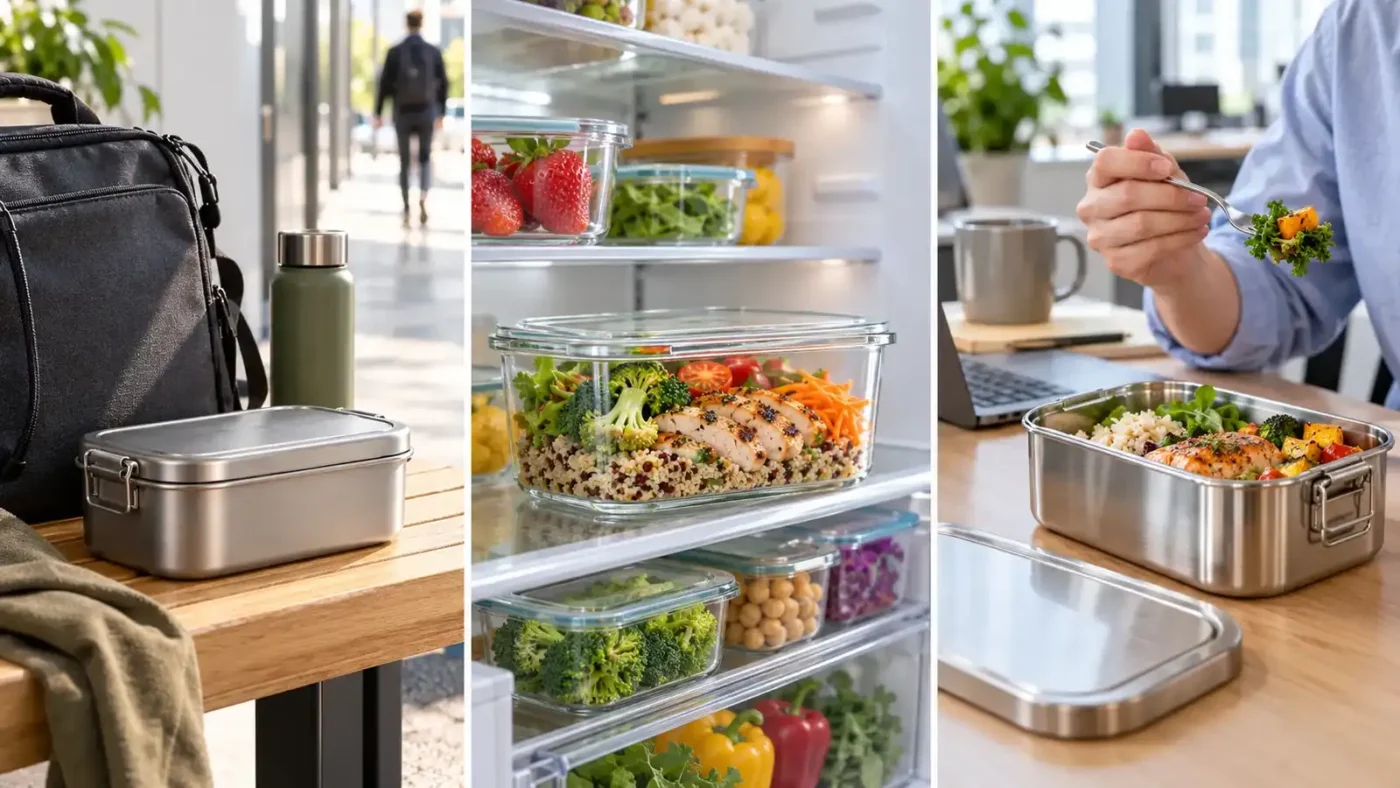
For a workflow that connects dinner preparation with the following day’s lunch, see A Simple Weeknight Food Prep Routine With Less Cleanup.
If titanium fits your carrying needs, explore the TiRoam Pure Titanium Lunch Box and compare its current specifications and care instructions with your routine.