
Cookware & Food Prep
Pure Titanium vs. Stainless Steel Kitchenware: Which Fits Your Routine?
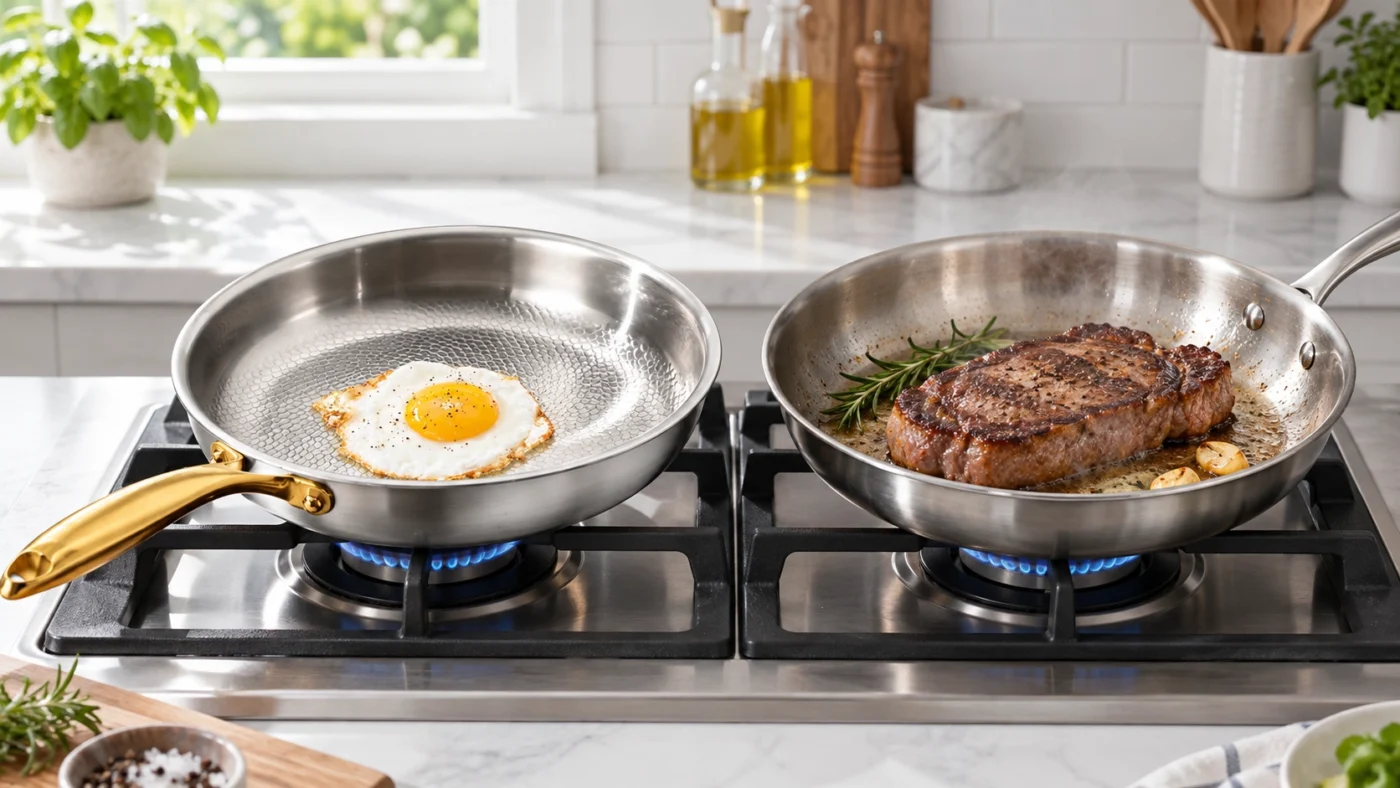
Pure titanium is worth considering when carrying weight or a pure titanium food-contact surface matters to you. Stainless steel may already offer the features you need. The better choice depends on the piece and how you use it.
When comparing titanium vs. stainless steel kitchenware, start with the job. For a frying pan, look at the cooking surface and the layers beneath it. For a bottle, bowl, or set of utensils, compare the finished weight, shape, and cleaning requirements.
You don’t need every item in your kitchen to use the same material. You need each one to earn its place.
Pure Titanium vs. Stainless Steel at a Glance
| What matters | Pure titanium | Stainless steel |
|---|---|---|
| Weight | Lower material density can help reduce weight; check the finished product. | Higher material density, though size and construction still determine finished weight. |
| Cooking performance | Depends on thickness, layers, and pan design. | Depends on thickness, layers, and pan design. |
| Food release | An uncoated pure titanium surface is not a nonstick coating. | An uncoated stainless steel surface is not a nonstick coating. |
| Cleaning | Check instructions for the surface, finish, and attached parts. | Check instructions for the surface, finish, and attached parts. |
| Everyday fit | Worth considering when a particular piece offers a useful weight or material choice. | A practical choice when the design, performance, and price meet your needs. |
This comparison explains what to look for. It does not replace a comparison of the actual products you’re considering.
Weight: Compare the Finished Product
Pure titanium has a lower density than common stainless steels. With the same dimensions and wall thickness, a titanium body can therefore weigh less. TIMET’s material guide and Outokumpu’s stainless steel data document this material difference.
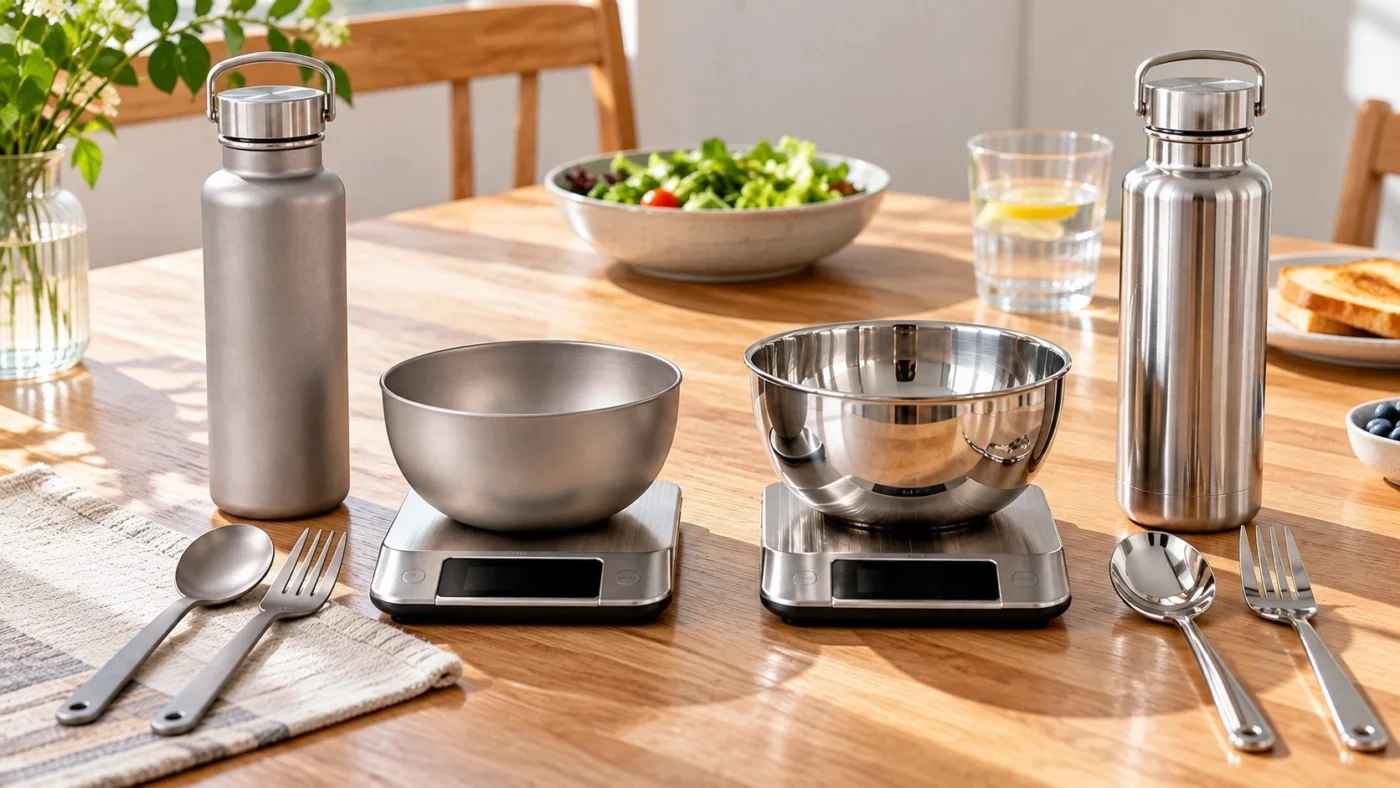
That can be useful for a water bottle in your work bag, utensils packed with lunch, or bowls you take on a trip. A weight difference matters most when it changes how comfortable the item is to carry or handle.
But a pure titanium label does not guarantee the lighter finished product. Capacity, wall thickness, lids, handles, and additional layers all contribute to weight.
Compare bottles of the same capacity and similar construction, including their lids. For cookware, compare the complete pan. A composite pan with a pure titanium cooking surface should not be assumed to weigh less than a stainless steel alternative.
Titanium vs. Stainless Steel Cookware: Construction Comes First
For titanium cookware, the food-contact surface is only part of the story.
Many stainless steel pans combine a stainless steel interior with an aluminum or copper core to help spread heat. All-Clad’s cookware guide shows how different combinations of layers serve different cooking needs.
A pan with a pure titanium cooking surface can also have a composite body. TiRoam’s titanium frying pan with a pure titanium cooking surface, for example, lists a five-layer construction that includes aluminum and a stainless steel base. Pure titanium describes the food-contact cooking layer, not the entire pan.
Before choosing a pan, check:
- The cooking surface: What directly touches your food, and is it coated or uncoated?
- The body: Is it a single-material construction or a combination of layers?
- The fit: Does the cooking area, handle, weight, and stove compatibility suit your kitchen?
If the labels are unclear, our guide to pure titanium, solid titanium, and titanium-coated products explains the differences.
Will Pure Titanium Make Food Less Likely to Stick?
An uncoated pure titanium cooking surface is not a nonstick coating. Neither is an uncoated stainless steel surface.
Heat, cooking fat, timing, surface finish, and pan design all affect food release. Switching materials alone does not guarantee easier eggs or less cleanup.
If sticking is your main concern, consider the specific pan and the cooking technique it requires before buying.
Drinkware and Tableware: What Will You Notice Every Day?
For cups, bowls, bottles, and utensils, small design details can matter as much as the material.
A lighter piece may make your lunch kit easier to carry. You might also prefer the balance or feel of a particular cup or bowl. Check the finished weight and shape rather than assuming every titanium item will feel light or every stainless steel item will feel substantial.
For drinkware, insulation deserves a separate comparison. “Pure titanium” does not mean vacuum-insulated. If keeping coffee hot is your priority, look at the wall construction, lid, and stated thermal performance.
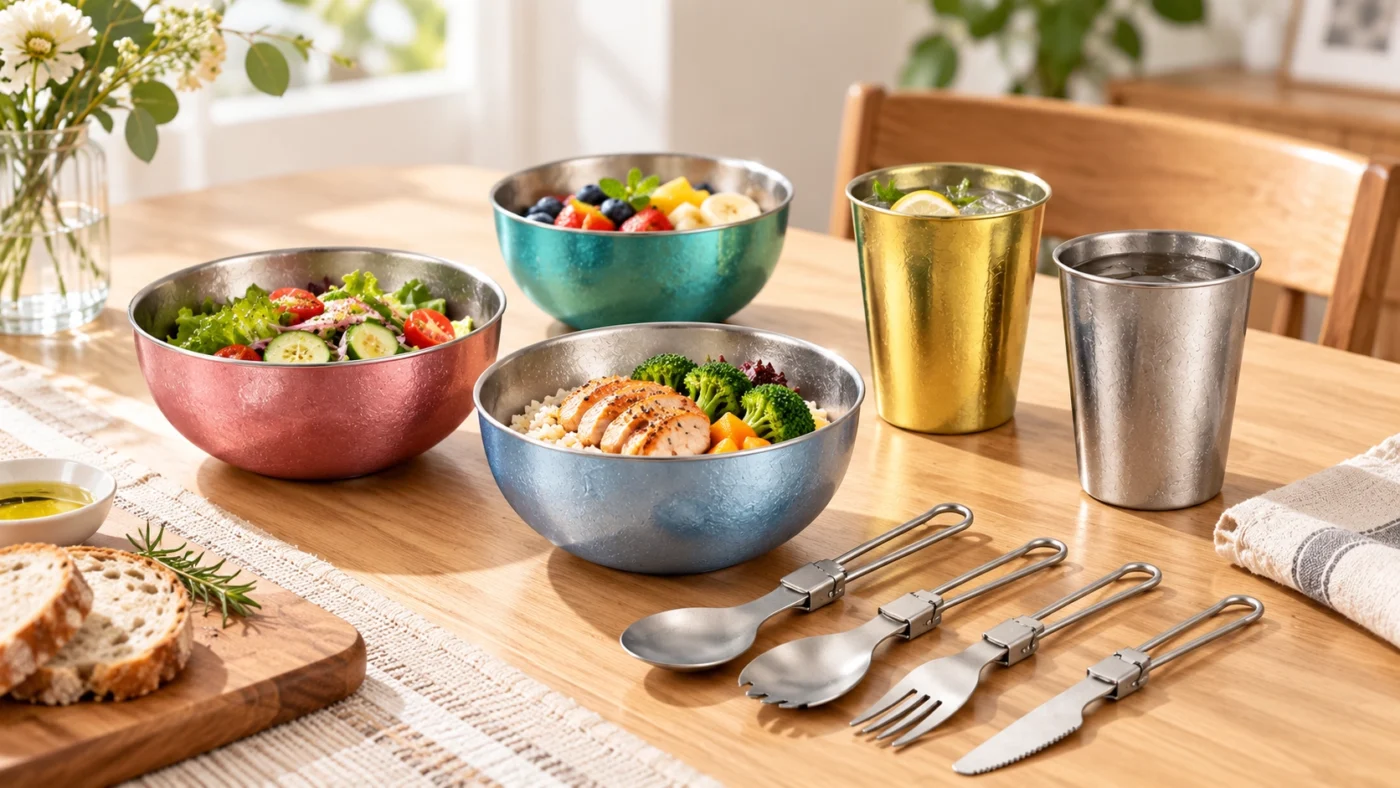
For tableware, consider the meals you actually eat. Is the bowl deep enough for soup? Does the plate fit your usual portions? Will the utensils pack comfortably with lunch?
TiRoam’s pure titanium drinkware and pure titanium tableware collections let you compare these practical details across individual pieces.
Cleaning and Care: Look Beyond the Metal Body
For routine washing, mild dish soap, water, and a soft sponge are a sensible starting point, subject to the product’s care instructions. Cooked-on food, mineral deposits, and heat discoloration may need different treatment.
With either material, check the whole item. A bottle lid may have a removable seal. A pan may combine several materials. A surface finish may have its own cleaning requirements.
Do not assume an item is dishwasher-safe simply because its body is metal. Follow the instructions for the exact product, including its lid, handle, and seals.
Ease of cleaning also comes down to access: whether you can reach the bottom, clean around the rim, and wash and dry removable parts. Those details are worth checking before you buy.
Is Pure Titanium Worth Paying More For?
If the pure titanium option costs more, identify the benefit you expect to use.
For a bottle or eating kit, that might be a verified reduction in carrying weight. For cookware, it might be a preference for a pure titanium food-contact surface in a pan whose construction and handling suit your cooking routine.
Compare the actual price, included accessories, care requirements, and finished specifications. A higher price alone does not establish better heat distribution, easier cleaning, or longer service life.
If your stainless steel gear already works well, there is no need to replace it as a set. Start with one item whose weight, shape, or cooking surface you specifically want to change.
Which One Fits Your Routine?
Consider pure titanium when a specific product gives you a useful improvement in carrying weight, a design you prefer, or the pure titanium food-contact surface you want.
Choose or keep stainless steel when it delivers the features and cooking experience you need at a price you’re comfortable with.
For your next pan, compare the full construction. For your next bottle or bowl, compare the complete item.
The right purchase is the one that makes a familiar part of your day work better.