
Cookware & Food Prep
How to Clean Pure Titanium Kitchenware
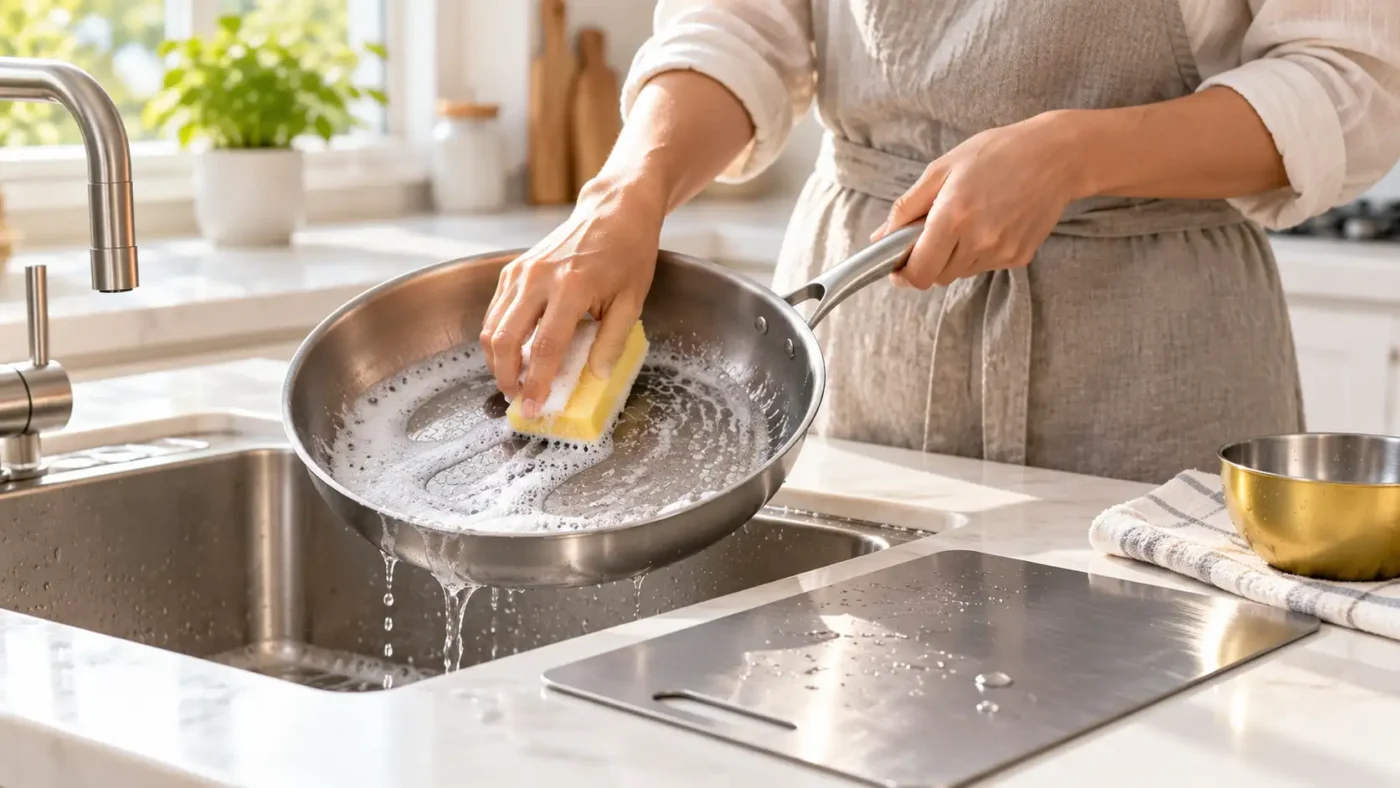
Pure titanium kitchenware is valued for its simple material, corrosion resistance, and durability in everyday use. But like any cookware, cutting board, bottle, bowl, or cup, it still needs regular cleaning to remove food residue, oils, mineral deposits, and stains.
For most everyday cleaning, warm water, mild dish soap, and a soft sponge are all you need.
This guide covers uncoated pure titanium food-contact surfaces. For coated or decorated products, insulated drinkware, lids, seals, and other components, follow the care instructions for the specific item.
Below, we’ll cover routine cleaning, stubborn residue, heat discoloration, scratches, cutting boards, bottles, and other common care questions.
The Best Way to Clean Pure Titanium
For routine cleaning, keep it simple.
After use:
- Let hot cookware cool to a safe handling temperature.
- Rinse away loose food residue.
- Wash with warm water and mild dish soap.
- Use a soft sponge or a non-scratch cleaning pad suitable for the product’s finish.
- Rinse thoroughly.
- Dry with a clean towel or allow the item to air-dry.
For most everyday titanium kitchenware, this is enough to keep the surface clean without unnecessary scrubbing.
Bare titanium does not need a seasoning layer or protective coating for routine care.
Cleaning Titanium Cookware After Everyday Cooking
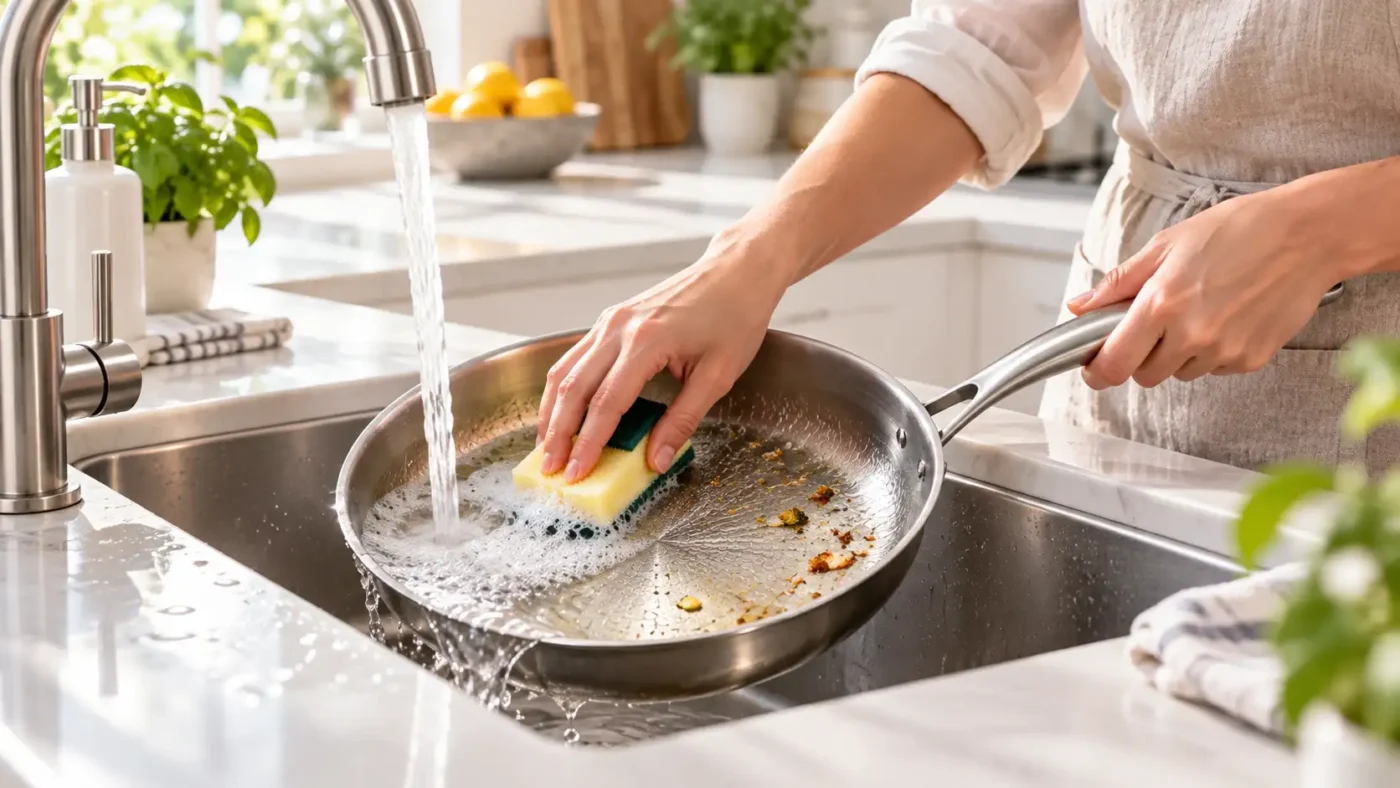
Pure titanium cookware can develop cooked-on residue, particularly when food sticks or cooking temperatures are too high.
This does not necessarily mean the cookware has been damaged.
If food residue remains after normal washing, fill the pan with warm water and let it soak for 10–20 minutes. Then loosen the residue gently with a soft sponge or a non-scratch cleaning pad suitable for the finish.
For cookware approved for stovetop use, add enough water to cover the residue and warm it gently to help loosen stuck food.
Do not let the cookware boil dry.
Allow it to cool to a safe handling temperature before washing.
Avoid aggressively scraping the cooking surface with sharp metal tools, since unnecessary force can leave visible scratches.
Why Food Can Stick to Titanium Cookware
An uncoated pure titanium cooking surface is not a synthetic nonstick coating.
Eggs, proteins, sauces, and starchy foods can stick depending on cooking temperature, oil, moisture, and technique.
That is a cooking characteristic rather than a cleaning defect.
If you are deciding whether uncoated titanium cookware fits your cooking style, see our guide to whether titanium cookware sticks and what to expect. TiRoam
How to Remove Stubborn Food Residue
For stubborn deposits, start with the least aggressive method.
Try this order:
- Warm-water soaking
- Mild dish soap
- A soft sponge
- A non-scratch cleaning pad suitable for the finish
- Gentle heating with water on stovetop-safe cookware
If the product’s care instructions allow it, try a small amount of baking soda mixed with water on stubborn residue.
Test an inconspicuous area first, rub gently with a soft sponge, and rinse thoroughly.
Avoid abrasive rubbing on polished, colored, or decorated surfaces.
The goal is to loosen residue, not grind or polish the surface.
What About Heat Discoloration?
Titanium may develop blue, gold, purple, bronze, or darker tones after exposure to heat.
This can happen because heating changes the thin oxide layer naturally present on the titanium surface.
The exact appearance may vary depending on temperature, heating time, surface finish, and repeated use.
However, heat tint should be distinguished from burnt food, soot, and removable surface deposits.
Clean away residue first rather than assuming every dark mark is simply a harmless color change.
A color change alone does not necessarily indicate damage.
If overheating has also caused warping, loose components, damaged handles, or other functional changes, stop using the item and check its care guidance.
Are Scratches on Titanium Normal?
Fine scratches and surface marks can occur on frequently used titanium kitchenware.
Titanium is durable, but that does not mean every finish is scratch-proof.
Utensils, cleaning tools, stacked storage, knives, and normal contact with other kitchen items may gradually leave visible marks.
Light cosmetic scratches do not automatically mean the product has lost its normal function.
For titanium cutting boards in particular, visible cutting marks should be expected over time because the surface is used directly with knives.
If knife wear is a concern, see our guide on whether titanium cutting boards can dull knives. TiRoam
How to Clean a Pure Titanium Cutting Board
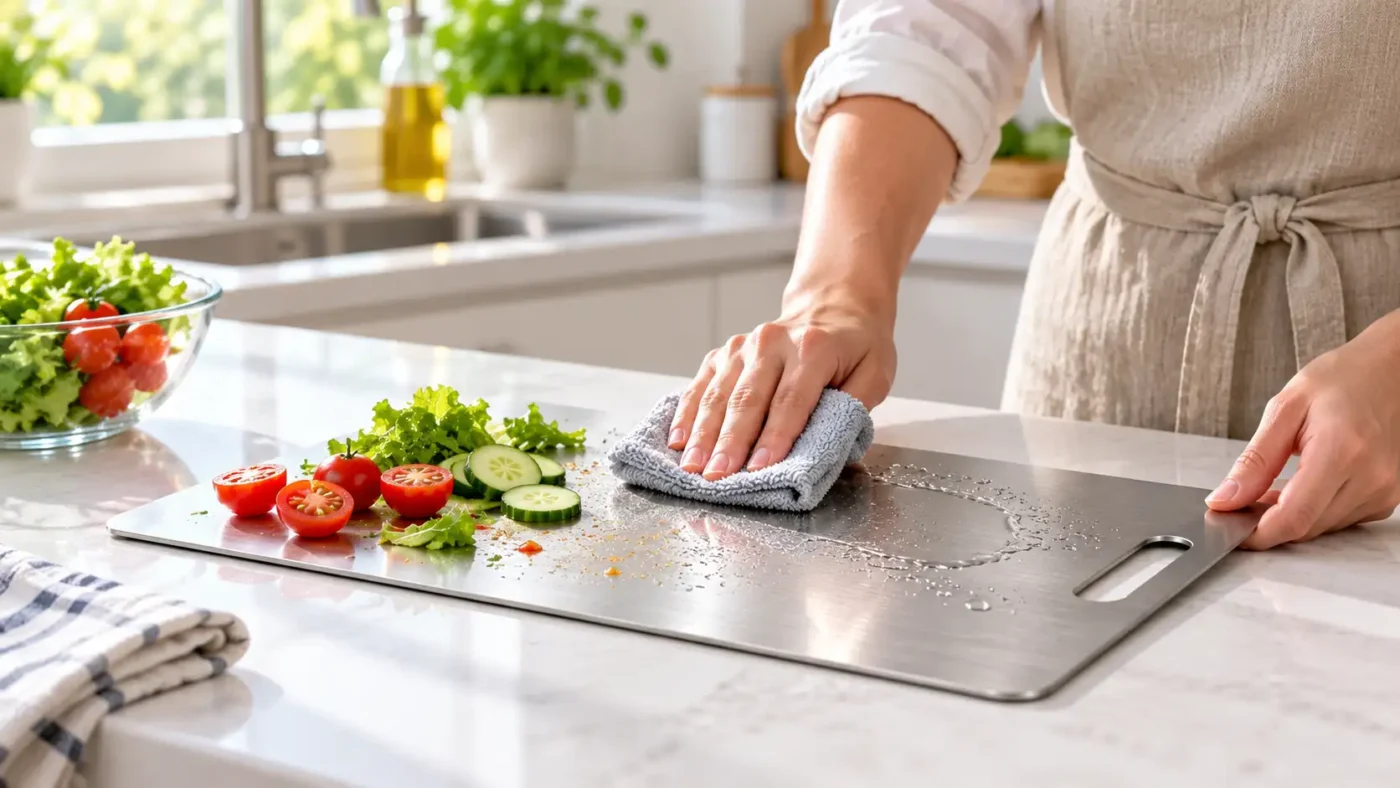
Titanium cutting boards are straightforward to clean after normal food preparation.
After use:
- Remove food particles promptly.
- Wash with warm water and mild dish soap.
- Clean both sides of the board.
- Pay attention to grooves, corners, and handle openings.
- Rinse thoroughly.
- Dry before storing.
For strongly colored or aromatic foods, washing soon after use helps prevent dried-on residue and lingering odors.
After Preparing Raw Meat, Poultry, or Seafood
Food safety matters regardless of cutting-board material.
After preparing raw meat, poultry, or seafood, wash the board thoroughly with hot, soapy water before using it for ready-to-eat foods.
Using a separate board for raw foods can also help reduce the risk of cross-contamination.
If sanitizing is needed, use a method compatible with the complete product and follow the sanitizer’s food-contact instructions.
How to Clean Titanium Bottles and Lids
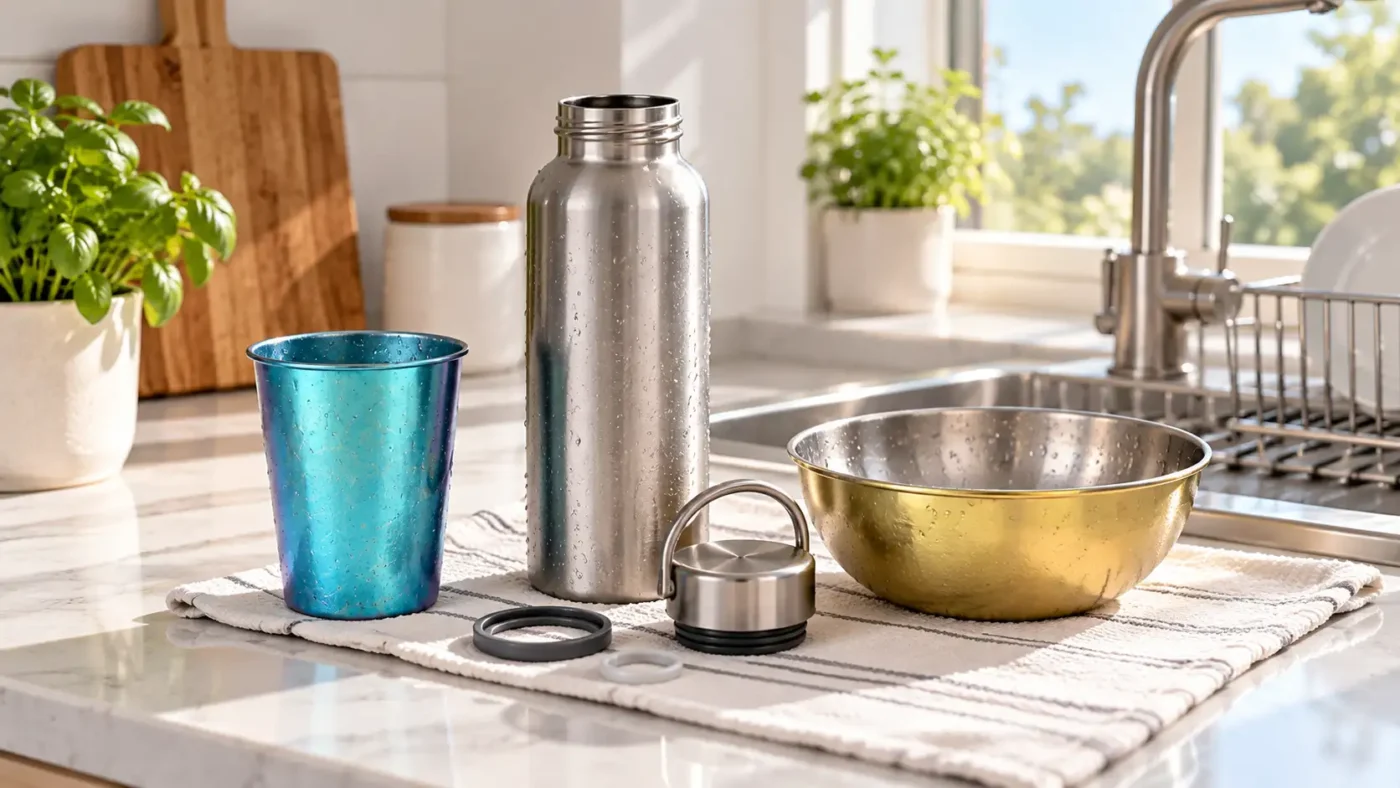
Wash the bottle interior with warm water and mild dish soap.
Use a soft bottle brush where needed to reach the bottom and interior walls.
Also clean areas where residue can collect, including:
- Bottle threads
- Drinking openings
- Lid threads
- Removable seals and gaskets
Follow the product instructions for removable parts.
Rinse the bottle, lid, and removable components thoroughly, then allow them to dry separately before reassembly.
Do not force apart components that are not designed to be removed.
For bottles used with beverages other than water, cleaning soon after use can help prevent residue and odors from building up.
How to Clean Titanium Cups, Bowls, and Tableware
Titanium drinkware and tableware usually require little maintenance.
For everyday use, wash them with warm water and mild dish soap after meals or drinks.
Coffee, tea, soup, sauces, and other strongly colored foods may leave visible residue if allowed to dry on the surface, so cleaning soon after use is preferable.
Water minerals may also leave spots after drying.
These are often reduced simply by drying the item with a clean towel after rinsing.
For more persistent deposits, follow the care instructions for the specific finish before using stronger cleaning methods.
Can Pure Titanium Go in the Dishwasher?
The titanium body itself may tolerate dishwasher cleaning, but dishwasher compatibility depends on the complete product, not just the titanium.
A product may also contain:
- Silicone seals
- Plastic lid components
- Adhesives
- Handles
- Insulated assemblies
- Decorative finishes
- Anodized or colored surfaces
Always check the care instructions for the specific item rather than assuming every titanium product is dishwasher-safe.
Hand washing is also a simple way to reduce cosmetic wear and help preserve the appearance of polished or decorative finishes.
What Cleaners Should You Avoid?
Pure titanium is corrosion resistant, but aggressive cleaning is usually unnecessary.
For routine care, avoid:
- Highly abrasive scouring tools
- Steel wool unless specifically approved for the product
- Repeated heavy scraping with sharp metal objects
- Harsh cleaners not recommended by the manufacturer
- Abrasive polishing on colored or decorative surfaces
- Cleaning methods that may damage seals, lids, handles, or other non-titanium parts
Start with the mildest method that works.
More force does not necessarily mean better cleaning.
Do Titanium Products Need Special Maintenance?
Not much.
Bare titanium does not require the same maintenance routine as some traditional cookware materials.
For example, it does not need to be seasoned for rust prevention in the way traditional cast iron does.
And when the cooking surface is uncoated titanium, there is no synthetic nonstick layer to maintain.
For most products, the basic routine is simple:
Wash. Rinse. Dry. Store.
Product-specific instructions still take priority where lids, seals, insulation, decorative finishes, or other materials are involved.
How to Store Titanium Kitchenware
Before storing titanium cookware, bowls, bottles, or utensils, make sure they are clean and dry.
Metal-to-metal contact during stacking may cause cosmetic scratches.
If maintaining the finish matters to you, place a soft cloth or pan protector between larger cookware pieces.
For bottles and containers, allowing the body, lid, and removable seals to dry fully before reassembly can help prevent trapped moisture and odors.
When Should You Stop Using a Titanium Product?
Minor discoloration, light scratches, and ordinary signs of use do not automatically mean a titanium product must be replaced.
However, stop using the item and inspect it if you notice functional or structural damage such as:
- Severe deformation
- Cracks
- Damaged or loose handles
- Loose hardware
- Damaged seals
- A lid that no longer closes securely
- Sharp burrs
- Rough damaged areas
- Deep grooves that cannot be cleaned effectively
If you are unsure whether damage affects safe use, refer to the product’s care instructions or contact the manufacturer before continuing to use it.
A Simple Titanium Cleaning Routine
Most uncoated pure titanium kitchenware does not require complicated care.
Use warm water, mild dish soap, and a soft cleaning tool for routine washing. Soak stuck residue before scrubbing, treat decorative finishes more gently, and pay attention to non-titanium components such as lids and seals.
Heat tint, light scratches, and normal signs of use may develop over time, but they should always be distinguished from removable residue or functional damage.
With regular cleaning and product-appropriate care, titanium cookware, cutting boards, bottles, cups, bowls, and tableware can remain practical parts of an everyday kitchen for years.