
Tableware & Everyday Dining
Choosing a Titanium Dinner Plate for Everyday Meals
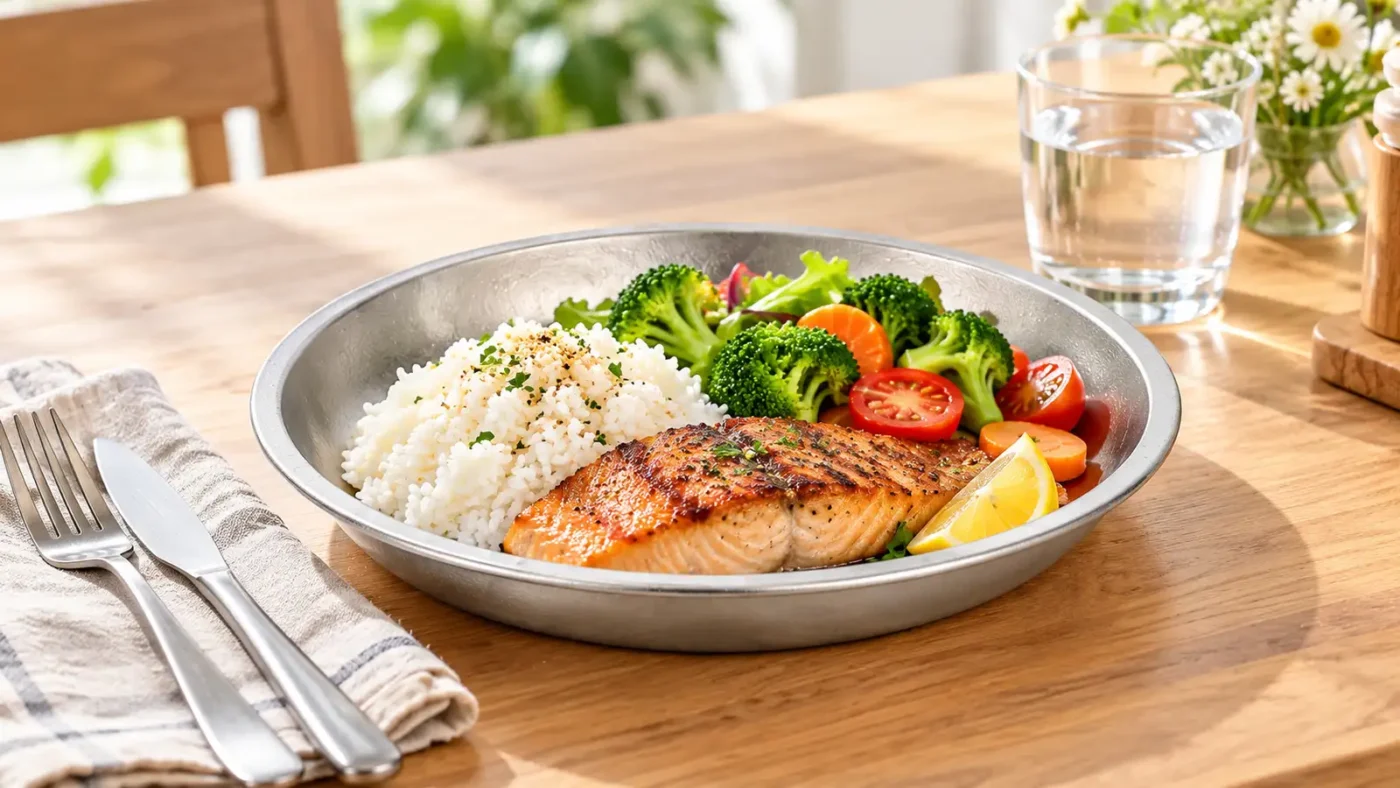
How to choose a titanium dinner plate starts with the meals you serve most often. Compare the plate’s diameter, shallow profile, usable eating area, finished weight, and storage requirements. A plate that looks large enough in a product photo may still feel crowded once a main dish, sides, and utensils are added.
For everyday dining, the most useful plate provides enough open area to arrange food without being unnecessarily wide for your table, cabinet, sink, or dish rack. If you regularly serve broth, deep portions, or foods that need substantial mixing space, an open dinner plate may not be the right format; a bowl may work better.
How to Choose a Titanium Dinner Plate for Your Meals
The right titanium dinner plate is the one that fits your normal meal without crowding the food or wasting table space. Begin with the meals you actually eat rather than choosing by appearance alone.
A dinner plate may work well for:
- Breakfast with toast, eggs, fruit, or other separate items
- Sandwiches with a side
- Rice, vegetables, and protein arranged separately
- Pasta or other foods that do not require a deep vessel
- Main dishes with modest amounts of sauce
- Shared snacks, fruit, or small table servings
A plate may be less practical for:
- Broth-based meals
- Large servings of soup
- Noodles that need to remain submerged
- Meals that require vigorous stirring
- Foods that depend on a deep wall to contain liquid
The distinction is about shape, not whether one format is universally better. An open plate makes different parts of a meal easy to see and reach. A bowl provides more vertical containment.
If you are deciding between the two formats, read How to Choose a Titanium Bowl for Rice, Soup, and Everyday Meals. That guide covers bowl capacity, depth, headroom, and meals that need more containment.
How Much Plate Diameter Do You Need?
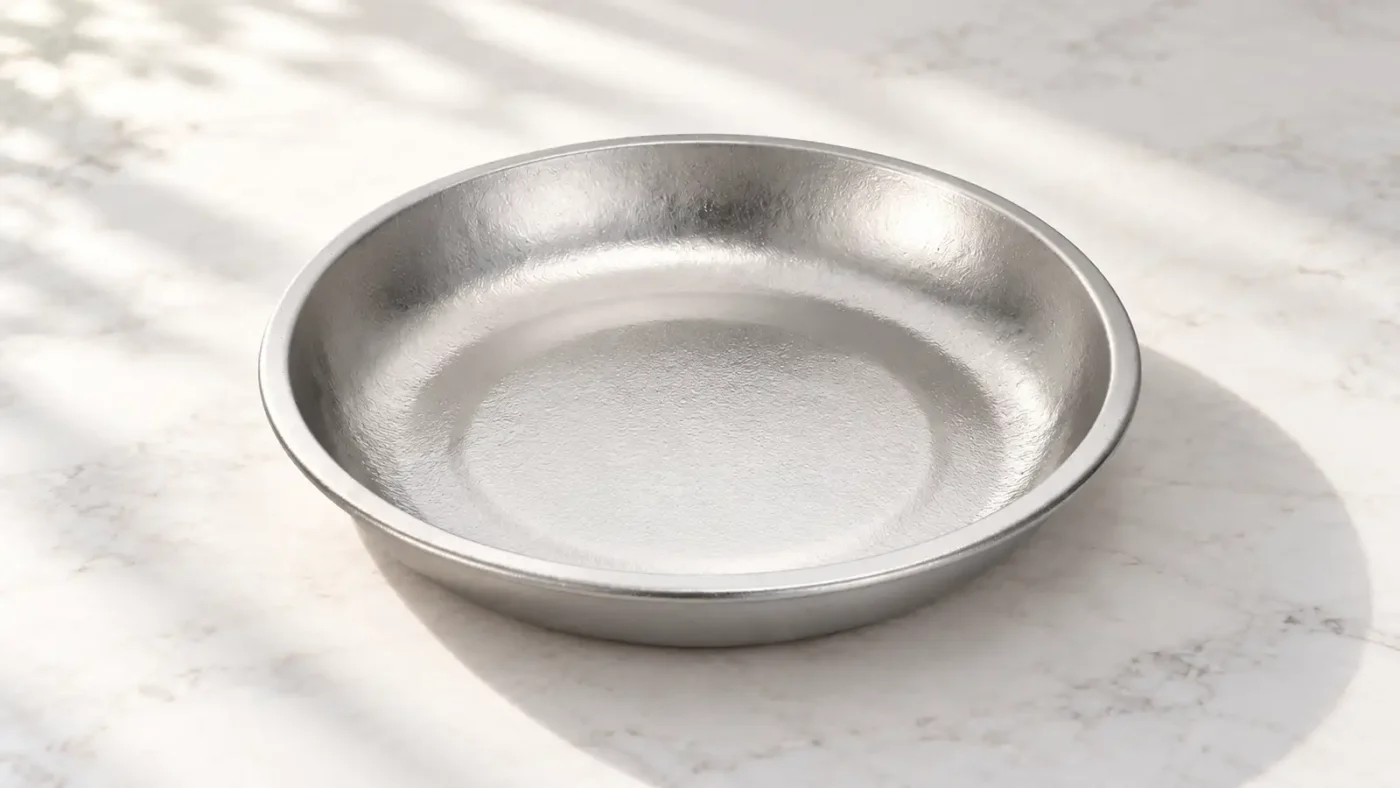
Plate diameter determines how much table space the plate occupies, but it does not tell you the exact size of the flat eating area. A raised rim or curved edge uses part of the total diameter.
When comparing plates, separate these measurements:
- Overall diameter: the complete width from edge to edge
- Usable center area: the flatter portion available for arranging food
- Total height: how high the plate rises from its base to its upper edge
- Rim shape: how much of the outer area curves upward
Manufacturers do not always publish the diameter of the flat center separately. If only the overall diameter is listed, do not assume that the full measurement is available for food.
TiRoam’s current Pure Titanium Plate has a listed diameter of 20.3 cm / 7.99 in and a total height of 2.5 cm / 0.98 in. The product page does not separately list the diameter of the flatter center area.
Those dimensions describe a relatively compact, shallow-profile plate. Whether it suits your main meal depends on how many foods you place on it and how much separation you prefer between them.
Match the Plate Size to Your Meal Pattern
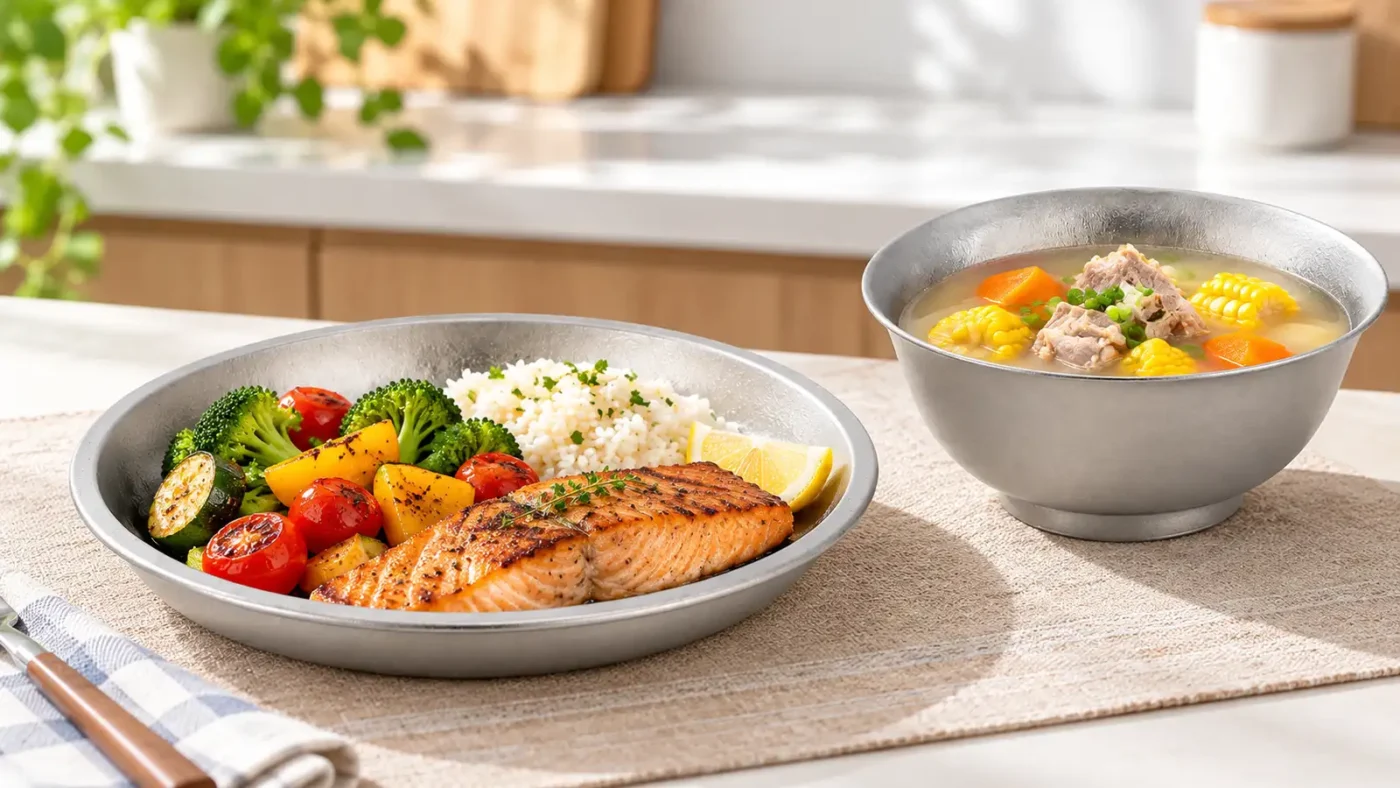
Choose the plate around food arrangement as well as portion size. Two meals with similar amounts of food can require different areas depending on whether the ingredients are stacked, mixed, or kept separate.
| Meal pattern | What the plate needs | What to watch for |
|---|---|---|
| Toast, eggs, and fruit | Enough open area for separate items | Food reaching the raised edge |
| Sandwich and side | Space for the sandwich without covering the side | Whether a compact plate feels crowded |
| Rice, vegetables, and protein | Several usable sections across the center | How much flat area remains inside the rim |
| Pasta or sauced food | A shallow edge that helps contain modest sauce | Whether the meal needs more depth |
| Fruit, snacks, or shared sides | Easy access from different angles | Whether a smaller plate would be sufficient |
| Soup or broth-heavy meal | More vertical containment | A bowl is usually the more appropriate format |
These are practical examples, not fixed serving rules. Portion size, food shape, and personal preference vary.
If you often arrange several components separately, usable center area may matter more than total volume. If your meal is usually a sandwich, pastry, fruit, or another compact food, a smaller plate may be easier to handle and store.
How Does the Plate’s Edge Affect Everyday Use?
A shallow raised edge can help keep food and modest amounts of sauce away from the outer edge, but it does not turn a dinner plate into a bowl. The edge also reduces the amount of completely flat space available in the center.
Look at the side profile as well as the overhead product photograph. A top-down image may show the overall diameter clearly while hiding how much the edge curves upward.
Consider how you normally eat:
- Do you use a fork to gather food against the edge?
- Do you prefer foods arranged in separate sections?
- Do you frequently cut food on the plate?
- Do your meals include sauces that can spread?
- Do you need enough depth to carry the plate from the kitchen without food moving toward the edge?
The current TiRoam plate is listed at 2.5 cm / 0.98 in high. Treat that number as the product’s total height, not as a guaranteed measurement of the rim depth or food capacity.
A plate with a shallow profile can work well for ordinary solid meals and modest sauces. For substantial broth, deep portions, or meals that need stirring, use a bowl designed for that task instead.
Consider the Finished Weight—and the Food
Check the listed product weight, but also think about the plate after food is added. The complete weight in your hands includes the plate, the meal, and any utensil resting on it.
TiRoam lists the Pure Titanium Plate at approximately 115 g / 4.06 oz. The product page notes that dimensions and weight may have a tolerance of ±5%.
The empty weight helps you compare products, but it does not describe the whole experience. A plate carrying a full dinner will weigh considerably more than the plate alone.
Think through the complete route:
- Remove the plate from storage.
- Carry it to the kitchen counter.
- Add the meal.
- Move it to the dining table or desk.
- Reposition it while eating.
- Carry it to the sink.
- Wash, dry, and store it.
A lightweight plate may be easy to lift when empty, but grip and balance still matter when it is filled. Hold the plate with appropriate support, especially when it contains hot food or sauce.
Check How the Plate Works With Your Cutlery
A dinner plate should work with the utensils you use most often. Its diameter, raised edge, and center area can affect how easily you cut, gather, and lift food.
A fork may benefit from a shallow edge that provides light resistance when gathering food. A spoon may work for rice or modest sauce, but a plate is less suitable when the meal requires deep scooping. If you frequently use both a knife and fork, make sure the plate provides enough stable area for the task.
Utensil length also affects the table setting. A compact plate paired with unusually large utensils may feel crowded, especially at a small desk or narrow dining area.
For work lunches and reusable dining setups, How to Choose Titanium Cutlery for Work Lunches explains utensil length, folding designs, packed size, and cleaning access. Keep the decisions separate: the plate determines the eating surface, while the cutlery guide addresses how you handle the food.
Think About Table, Sink, and Storage Space
A plate needs to fit more than the meal. Confirm that it works with your table, cabinet, sink, drying area, and any storage stack you plan to use.
Before buying, check:
- Available cabinet width and depth
- Shelf height if plates will be stacked
- The size of your dish rack
- Whether the plate can turn comfortably inside the sink
- The amount of space available at your dining table or desk
- Clearance around nearby bowls, cups, and utensils
Do not assume plates will stack securely merely because they have the same diameter. Rim shape, curvature, and finish affect how pieces sit together. Confirm stackability from product information or test the actual plates before storing several in a tall stack.
A 20.3 cm / 7.99 in plate has a more compact footprint than many larger dinnerware formats, but the relevant comparison is your available space and normal meal—not a generic plate-size rule.
What Should You Expect From a Pure Titanium Plate?
Material tells you what the plate is made from, but shape and finished specifications determine how it works during a meal. TiRoam identifies its current plate as pure titanium with no interior coating.
The product is intended for hot and cold foods, but that does not mean its exterior will remain at a particular temperature. Food temperature, contact time, and how you hold the plate all affect what you feel.
Check the plate before picking it up after adding very hot food. Use appropriate support rather than assuming that the material or low empty weight makes every hot plate comfortable to hold.
Normal use may also change the appearance of a working surface. Utensils, stacking, washing, and drying can leave visible marks depending on the finish and the way the plate is used. Cosmetic changes are not automatically evidence of structural damage.
Stop using the plate and contact the manufacturer if you find:
- A sharp raised edge
- A crack
- Significant deformation
- A deep gouge that creates a rough or unsafe-to-handle area
- Damage that makes the plate unstable on a flat surface
Do not sand or polish a food-contact surface unless the manufacturer specifically recommends that treatment for the exact product and finish.
How Should You Clean and Store It?
Follow the care instructions for the exact plate. TiRoam currently recommends washing its Pure Titanium Plate before first use, hand washing it for the best long-term finish, and drying it thoroughly before storage.
For routine care:
- Allow hot food residue to cool to a safe handling temperature.
- Wash the plate with warm water, mild dish soap, and a soft sponge or cloth.
- Pay attention to the transition between the center and raised edge.
- Rinse away soap and loosened food.
- Dry the plate thoroughly before putting it away.
- Store it where the edge will not be struck or forced against heavier cookware.
Avoid aggressive abrasives when preserving the surface finish matters. If food has dried onto the plate, soak it briefly rather than immediately using a harsh scrubbing tool.
For broader care guidance, read How to Clean Pure Titanium Kitchenware. That article covers routine washing, drying, finish care, and the distinction between cosmetic surface changes and damage.

A Practical Buying Checklist
Before choosing a titanium dinner plate, verify these points on the exact product page:
- Meal type: Decide whether the plate is mainly for breakfast, sandwiches, rice with sides, pasta, main dishes, or shared snacks.
- Overall diameter: Confirm that the complete plate fits your table, cabinet, sink, and dish rack.
- Usable eating area: Look at how much of the plate remains relatively flat inside the raised edge.
- Total height and profile: Decide whether the shallow edge fits the foods and sauces you normally serve.
- Finished weight: Consider the empty plate and its weight after adding a complete meal.
- Material and coating status: Verify how the manufacturer describes the complete plate and its food-contact surface.
- Hot-food handling: Do not assume a specific exterior temperature; check before lifting a plate carrying very hot food.
- Cutlery compatibility: Make sure your usual fork, spoon, or knife works comfortably with the diameter and edge.
- Care instructions: Check the recommended washing tools, drying requirements, and finish guidance.
- Storage: Do not assume secure stacking unless the shape and product information support it.
For the current TiRoam model, the confirmed specifications are a 20.3 cm / 7.99 in diameter, a 2.5 cm / 0.98 in total height, an approximate weight of 115 g / 4.06 oz, and pure titanium construction. Dimensions and weight may vary by ±5%.
The best titanium dinner plate is not simply the widest or lightest option. It is the plate whose usable area, shallow profile, weight, and storage footprint fit the meals you serve most often.
Browse the TiRoam Titanium Tableware collection to compare the current plate with bowls, cutlery, and other everyday dining pieces.
Frequently Asked Questions
Is a Titanium Dinner Plate Suitable for Soup?
A shallow dinner plate is not the most practical format for substantial soup or broth. Choose a bowl when the meal needs greater depth, liquid containment, or room for stirring.
Does the Listed Diameter Equal the Flat Eating Area?
Not necessarily. The overall diameter includes the raised or curved edge. Unless the manufacturer publishes the center-area measurement separately, do not assume the entire diameter is flat and usable for food.
Can a Titanium Plate Be Used for Hot Food?
TiRoam identifies its current plate as suitable for hot and cold foods. Check the plate’s temperature before lifting it because the exterior feel depends on the food temperature, contact time, and handling conditions.
Are All Titanium Dinner Plates the Same Size?
No. Size, height, edge shape, weight, finish, and construction vary among products. Check the specifications for the exact plate rather than applying one model’s dimensions to all titanium plates.