
Cookware & Food Prep
How to Clean Pure Titanium Kitchenware
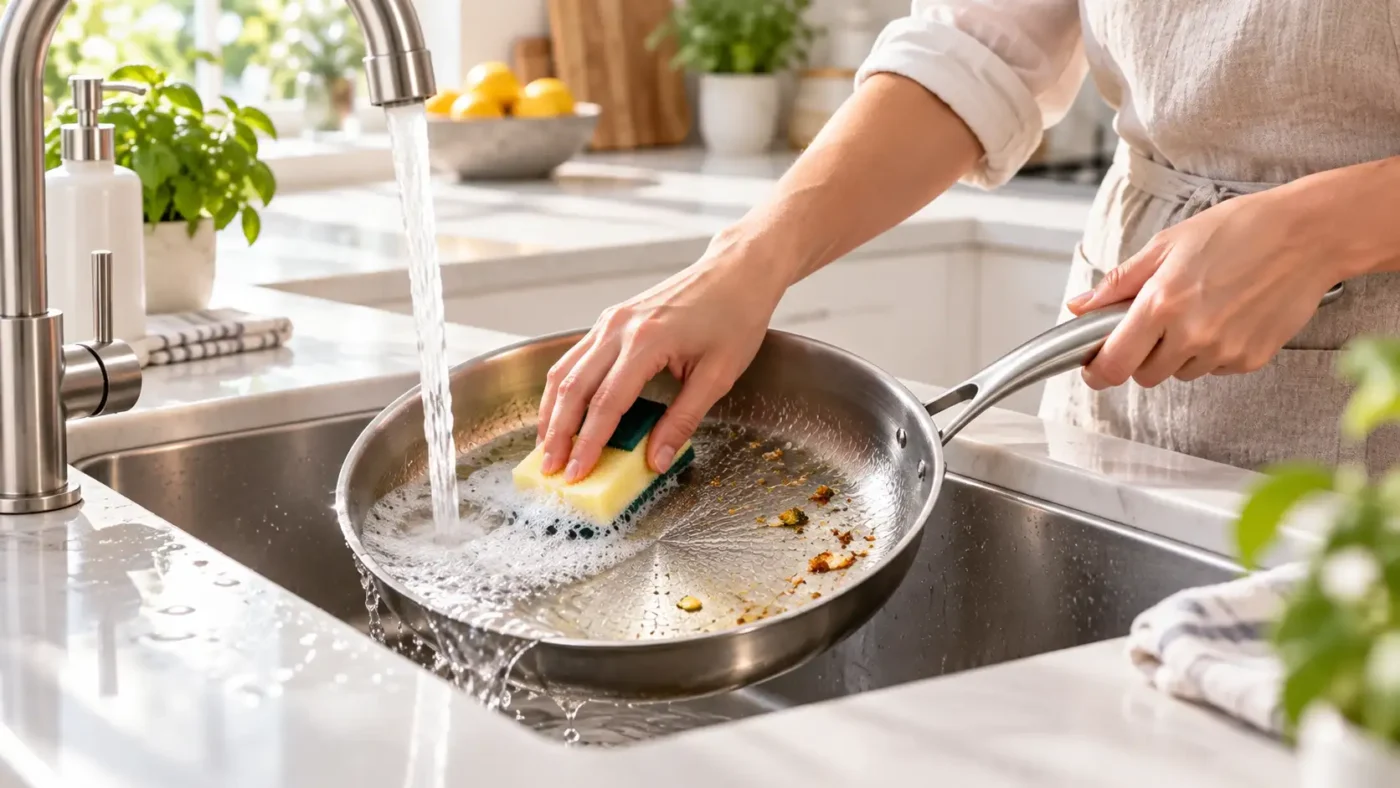
To clean pure titanium kitchenware, use warm water, mild dish soap, and a soft sponge for routine washing. Soak stuck food before scrubbing, rinse thoroughly, and dry before storage. Check the care instructions for lids, seals, handles, and decorative finishes.
If you are wondering how to clean titanium kitchenware, start with the gentlest method that removes the residue without unnecessarily altering the surface finish.
Good cleaning starts with identifying what needs removing. Dried sauce, cooked-on oil, and water deposits are different from scratches or changes in surface color. Treating every visible mark as dirt can lead to unnecessary scrubbing without improving cleanliness.
This guide covers uncoated pure titanium food-contact surfaces, including those used in composite cookware. The cleaning limits of the complete item still depend on its construction and attached parts.
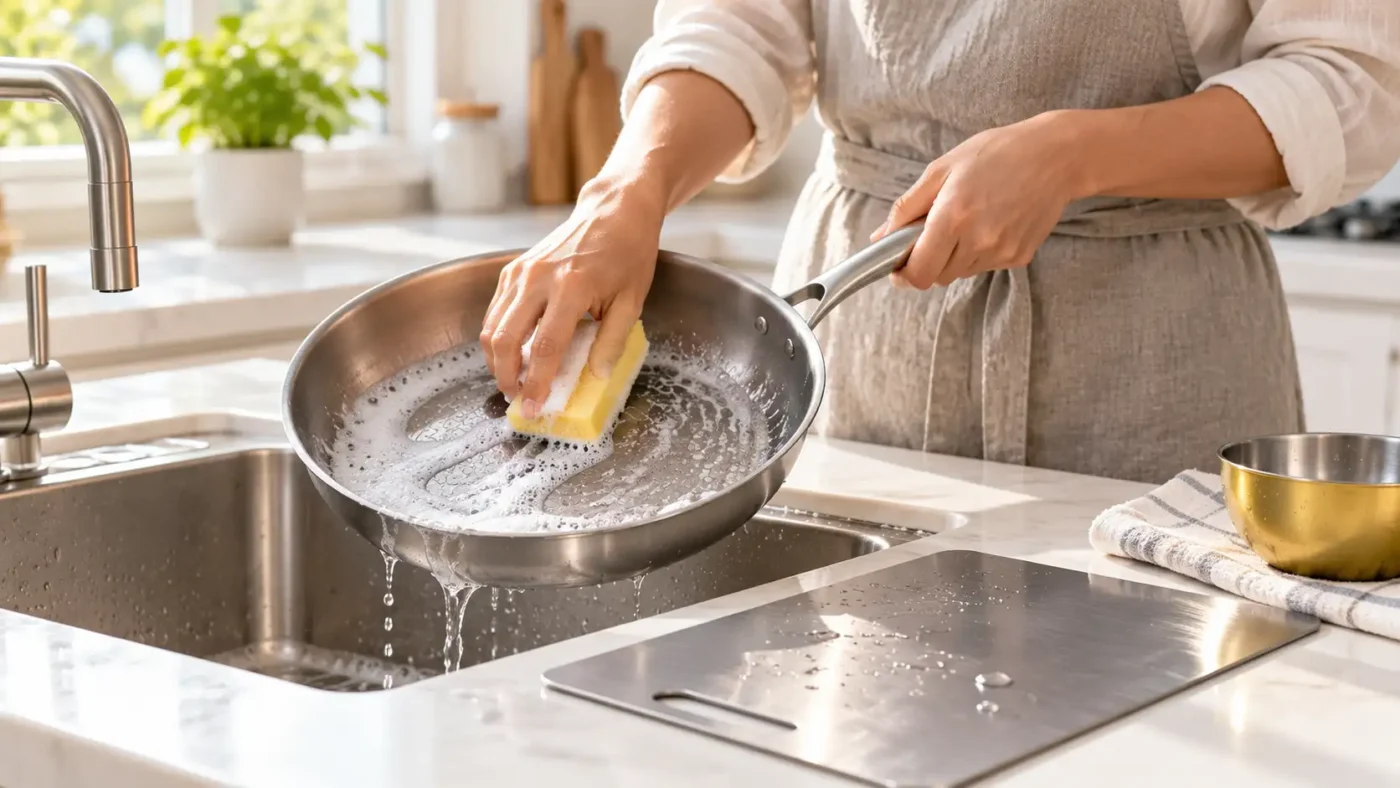
How to Clean Pure Titanium Kitchenware: The Daily Routine
Wash away food and grease, rinse off detergent, and let the item dry completely. Most everyday cleaning does not require polishing compounds or aggressive tools.
- Let hot cookware cool before washing. Avoid placing a hot pan directly into cold water.
- Remove loose food particles.
- Wash with warm water, mild dish soap, and a soft sponge or cloth.
- Clean accessible rims, grooves, and joints where residue can collect.
- Rinse thoroughly.
- Dry with a clean towel or allow the item to air-dry.
Choose cleaning tools according to the finish. A pad labeled “non-scratch” may still be unsuitable for a highly polished or decorative surface.
Bare titanium does not need periodic oiling or seasoning for rust prevention. The purpose of routine washing is to remove residue, rather than preserve a layer of cooking oil.
How Do You Remove Stuck Food from Titanium Cookware?
Soften stuck food with water before trying to lift it from the cooking surface. Dried starch, cooked egg, and browned residue often need soaking rather than additional force.
Fill the cooled pan with warm water and leave it until the deposits begin to soften. Wash with dish soap and a soft sponge, repeating the soak if necessary.
For cookware approved for stovetop use, gently warming water in the pan can help loosen stubborn residue. Add enough water to cover the affected area, use low heat, and keep the pan from boiling dry. Let it cool before handling and washing.
Avoid digging at deposits with a knife or another sharp metal edge. Scraping may leave permanent marks while doing little to soften the food.
If soaking does not resolve the problem, choose a cleaning method approved for that cookware. Baking soda pastes, abrasive powders, and polishing compounds should not be treated as universal titanium cleaners.
To understand why residue develops during cooking, read Does Titanium Cookware Stick? What to Expect Before You Buy.
How Should You Handle Stains and Discoloration?
Identify whether the mark is a removable deposit or a change in the surface before choosing a stronger treatment. The same cleaning method will not necessarily address both.
| What you notice | What to check | What to try first |
|---|---|---|
| A greasy or sticky film | Whether cooking oil or food remains | Wash the affected area with mild dish soap |
| Raised or crusted patches | Whether food has dried onto the surface | Soak, then gently loosen the residue |
| Pale spots after drying | Whether water deposits are recurring | Dry after rinsing; check care guidance for persistent deposits |
| Color remaining after washing | Whether the surface itself has changed | Check the item’s condition before attempting further treatment |
Heat-related color changes may remain after food residue has been removed. A color change alone does not establish damage, but it also does not tell you everything about the item’s condition.
Check whether cookware sits flat and whether handles and attached parts remain secure. If the surface is clean and the item functions normally, further scrubbing may only change its appearance.
Cleaning does not always restore the original showroom finish.
How Do You Clean a Titanium Cutting Board?
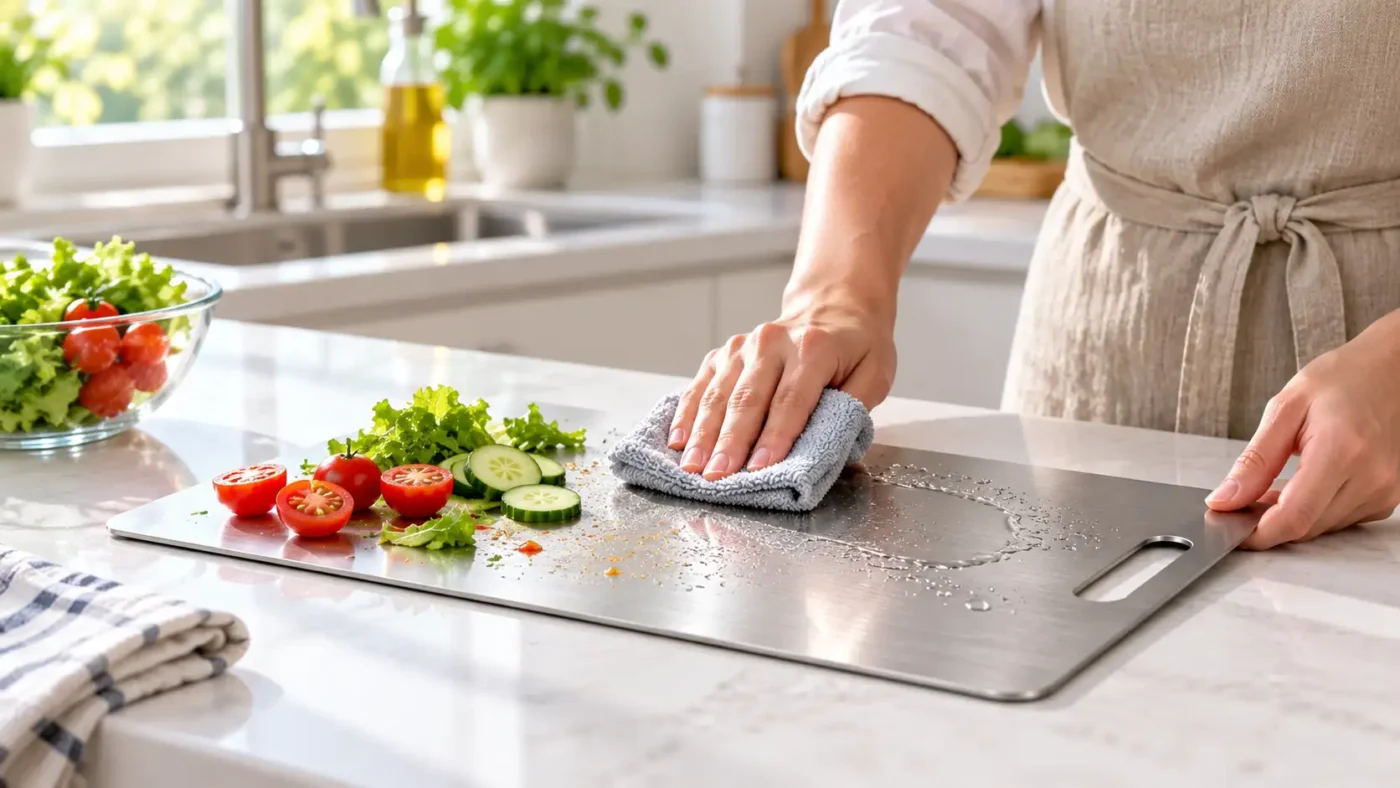
Wash both sides of the board and clean its grooves, corners, and handle openings after food preparation. Rinsing only the central cutting area can leave residue elsewhere.
Remove food particles, wash with soapy water, and rinse thoroughly. Let the board dry before placing it in a storage slot or against another board.
Washing soon after preparing strongly colored or aromatic ingredients also reduces the chance of food drying onto the surface.
What Should You Do After Cutting Raw Meat, Poultry, or Seafood?
Wash the board thoroughly before using it for ready-to-eat food, and use separate boards for raw ingredients where practical. Titanium does not replace normal food-separation practices.
Use warm, soapy water and clean the knife and surrounding surfaces that contacted raw juices.
If sanitizing is needed, clean first, then use a food-contact sanitizer only if it is suitable for the board and used according to its label directions. Follow the directions for concentration, contact time, and rinsing.
A quick wipe should not replace thorough cleaning between raw-food preparation and ready-to-eat food.
Should You Scrub Away Knife Marks?
No. Routine cleaning removes residue; it does not erase scratches. Heavy polishing to remove ordinary cutting marks can alter the original finish.
Wash the marked area and inspect whether it remains easy to clean and comfortable to handle. For more detail, read Knife Marks on Titanium Cutting Boards: What Changes With Use?.
How Do You Clean Titanium Bottles and Lids?
Clean the bottle interior, drinking opening, threads, and accessible lid parts—not just the visible exterior. These areas can retain beverage residue even when the outside looks clean.
Use a soft bottle brush to reach the bottom and interior walls. Wash around the rim and lid threads, then rinse carefully so detergent is not left inside.
If the lid has a removable seal and the instructions permit removal, clean underneath it and wash the seal separately. Do not force apart fixed components. Allow the body, lid, and removable parts to dry fully before reassembly.
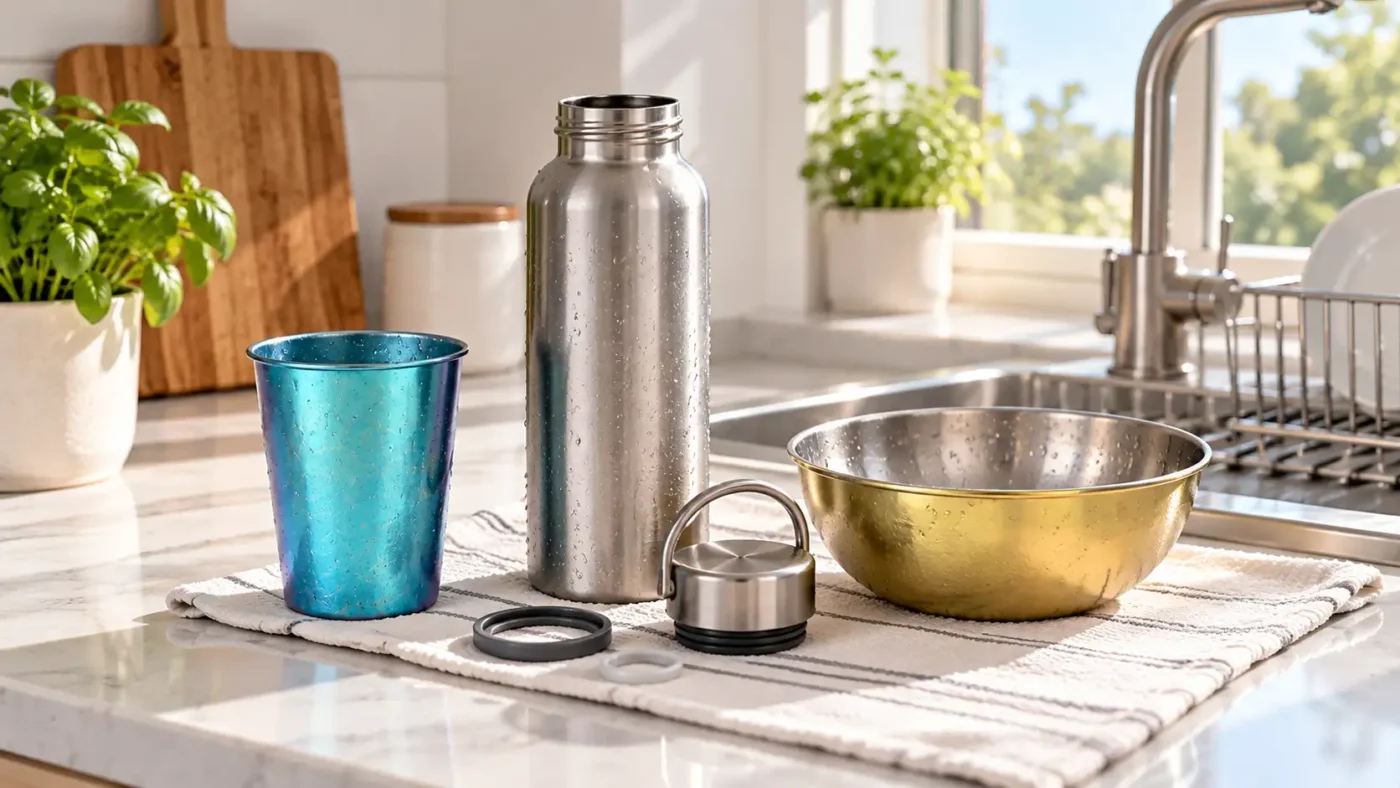
For persistent odors, inspect the lid and seal as well as the titanium body. Rewashing only the bottle interior may miss the area holding the residue.
Cleaning promptly after drinks other than water can make this routine easier.
How Do You Clean Titanium Cups, Bowls, and Utensils?
Use the daily washing routine, paying attention to rims, textured areas, and accessible joints. Coffee, tea, sauces, and starchy foods are easier to remove before they dry.
For utensils with folding or detachable parts, clean the accessible connections according to the product instructions.
Drying cups and bowls after rinsing can reduce visible water spots. If deposits persist, check which treatment is suitable for that finish rather than automatically using a stronger cleaner.
Can Pure Titanium Kitchenware Go in the Dishwasher?
Use a dishwasher only when the complete product is identified as dishwasher-safe. A titanium body does not establish the cleaning limits of its lid, seal, handle, decorative finish, or insulated assembly.
Check removable parts separately. A dishwasher-safe bottle body may still have a lid that requires hand washing.
When compatibility is unspecified, hand washing is a conservative starting point. It also lets you inspect small parts and clean areas where residue may collect.
Which Cleaning Tools and Products Should You Avoid?
Avoid aggressive tools and unapproved cleaners, especially when soaking and ordinary washing can resolve the problem.
Common sources of unnecessary cosmetic wear include:
- Steel wool and coarse scouring pads
- Sharp tools used to scrape food from the surface
- Abrasive powders or polishing compounds unsuitable for the finish
- Strong cleaners that may affect seals, handles, or other components
Do not mix cleaning products. When an approved cleaner is needed, follow its directions and rinse as instructed before returning the item to food use.
When Does Titanium Kitchenware Need More Than Cleaning?
Stop using an item and seek product-specific advice when damage affects handling, sealing, stability, or cleanability.
Examples include cracks, sharp burrs, loose handles, severe deformation, damaged seals, and a lid that no longer closes securely. Rough or deeply damaged areas that retain food also deserve attention.
Light cosmetic marks are different. Assess them by the item’s condition and function rather than appearance alone.
Once clean, store kitchenware dry. Leave bottle components separate until fully dry to avoid trapping moisture. The aim is a clean, usable item that fits your daily routine, even as its appearance changes with use.