
Cookware & Food Prep
Best Cutting Board Material: Wood, Plastic, Titanium, or Steel?

For everyday slicing and chopping, a suitable wooden or food-use plastic board is a practical starting point, especially when your knife manufacturer recommends those surfaces. Titanium and stainless steel offer alternatives for people who prefer a metal cutting surface, but knife compatibility, stability, and the exact board’s care requirements still matter.
The best cutting board material depends on what you prepare, the knives you use, and how you wash and store the board. Start with those tasks rather than expecting one material to do everything equally well.
Best Cutting Board Material: Four Options at a Glance
| Material | Worth considering when… | Check before buying |
|---|---|---|
| Wood | You want a traditional cutting surface for regular slicing and chopping. | Your knife maker’s advice, the wood and construction, washing instructions, drying space, and any required conditioning. |
| Plastic | You want a practical board that is easy to identify by task and, where approved, wash in a dishwasher. | The exact product’s dishwasher instructions, resistance to slipping or warping, and when surface wear makes replacement necessary. |
| Titanium | You prefer a metal cutting surface without routine wood-conditioning oil. | Whether the board is solid titanium, coated, or layered; your knife’s compatibility; finished dimensions; support; and cleaning instructions. |
| Stainless steel | You prefer a metal board and a particular model fits your budget and workspace. | Its construction, finished weight, surface, stability, care instructions, and compatibility with your knives. |
These are buying criteria, not a performance ranking. Thickness, surface finish, attached feet, and the complete design can change how two boards made from the same material behave.
Which Material Fits Your Daily Prep?
Regular vegetable prep and repeated knife work
Start with a surface approved by your knife manufacturer. Suitable wood and synthetic boards are common choices; a metal board should not be assumed to preserve an edge equally well.
Think about the motion you repeat most. Dicing onions, slicing fruit, and finely chopping herbs involve repeated contact between the edge and the board. Cutting feel and knife maintenance may matter more here than a board’s appearance.
For a delicate or finely sharpened knife, follow its manufacturer’s guidance. If metal cutting surfaces are excluded, use a recommended alternative. Our guide to titanium cutting boards and knife-edge wear explains why material hardness alone cannot predict an edge’s service life.
Raw meat and ready-to-eat ingredients
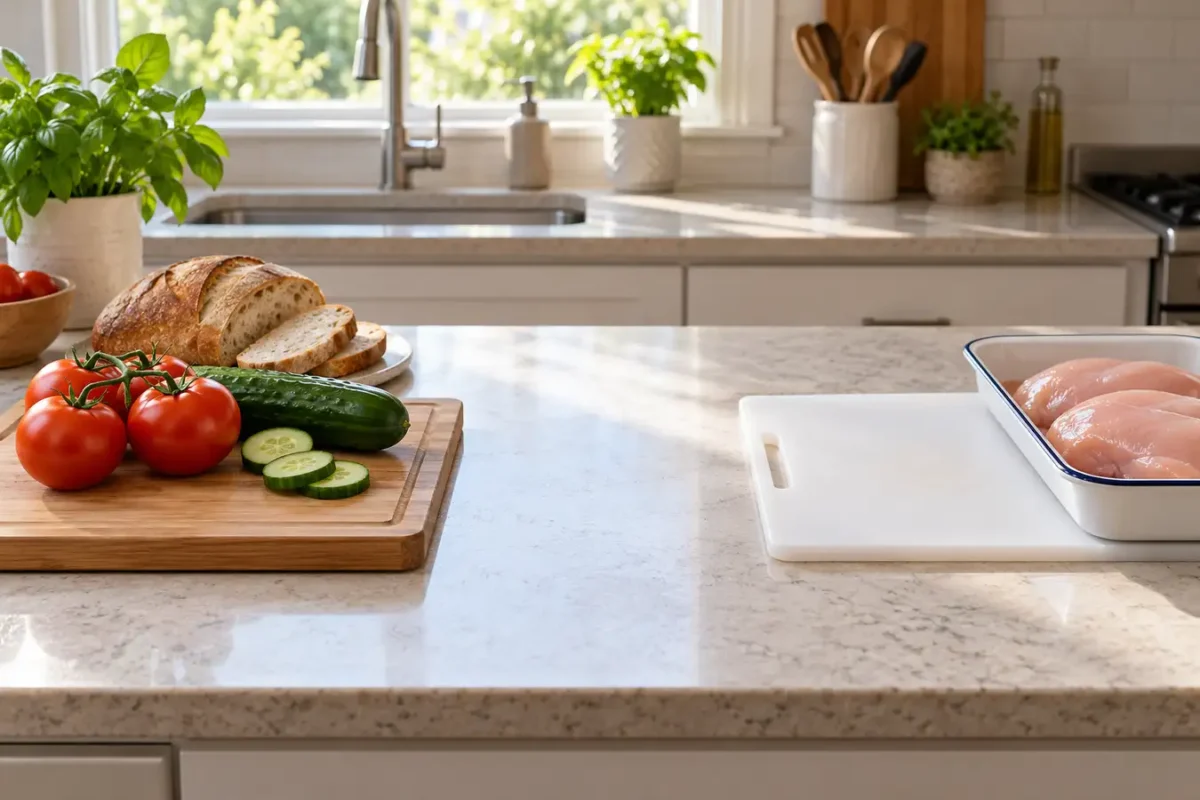
Separate the tasks first; then choose boards you can clean properly. Use a dedicated board for raw meat, poultry, or seafood and another for produce, bread, or foods that will be eaten without further cooking.
A dishwasher-approved plastic board can be convenient for a dedicated raw-food task. Wood can also be used with appropriate cleaning and care; the material name alone does not establish a safer workflow. Wash after use, rinse, and dry. Follow food-contact sanitizer directions and the board’s care instructions when sanitizing.
Turning a used board over does not provide the same separation as using another clean board. Hands, knives, the board’s edges, and the counter also need attention when changing tasks.
A cutting surface without plastic
Wood, titanium, and stainless steel are options if avoiding a plastic cutting surface is part of your buying preference. Compare their knife compatibility and maintenance requirements rather than treating the material choice as a health guarantee.
Also check the complete product. A board described by its cutting-surface material may still have a different backing, frame, feet, or attached components.
Titanium vs. Wood: Which Trade-Off Matters More?
Wood is worth considering when cutting feel and your knife manufacturer’s preferred surface are priorities. Titanium is worth considering when you prefer a metal surface and want to avoid routine wood-conditioning oil, provided the board suits your knives and prep tasks.
Neither choice removes care work. Wooden boards need the washing, drying, and conditioning specified for their construction. A titanium board still needs food residue removed, appropriate cleaning, drying, and a stable setup.
Storage depends on the actual product. A thin titanium model may fit a narrow slot, but material alone does not tell you the board’s thickness, weight, or usable cutting area. For titanium-specific advantages and limitations, see our practical titanium cutting board pros and cons.
What Changes If You Choose Stainless Steel Instead?
Compare the complete board’s handling, cost, surface, and support rather than assuming one metal is the better choice in every kitchen. Both titanium and stainless steel are metal cutting surfaces, so the knife-compatibility question remains.
If you have already narrowed your choice to those two materials, use the more detailed titanium vs. stainless steel cutting board comparison instead of making the decision from material names alone.
What About Bamboo, Glass, and Stone?
Do not treat every wood-looking board as the same product. Bamboo and wood-fiber composites can have different surface characteristics and care requirements from a solid hardwood board.
Glass and stone may have uses for serving or presentation, but knife manufacturers commonly advise against them as cutting surfaces. Easy cleaning does not automatically make a surface a suitable partner for your knife.
Check These Details Before You Order
The right material still needs to work in your kitchen. Check the complete route from preparation to washing and storage:
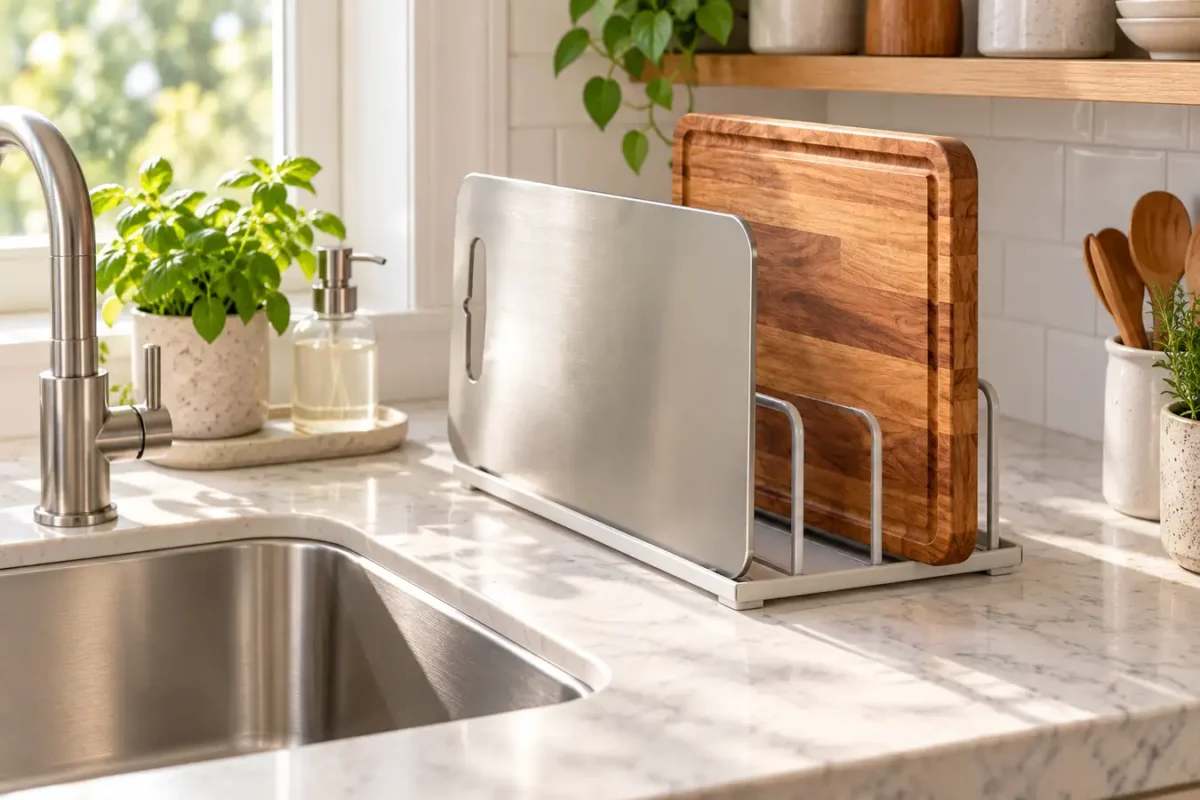
- Usable area: Leave enough room for the ingredient and cut pieces without crowding your cutting motion. A handle or groove can reduce the working area.
- A stable base: The board should sit flat without rocking or sliding. Evaluate its actual support arrangement, not just its weight.
- Sink and storage fit: Check whether you can turn the board in your sink and store it with room to dry. A larger board is useful only if you can manage it comfortably.
- Care and surface condition: Confirm the exact model’s dishwasher and cleaning limits. Replace a board when wear or damage leaves areas you cannot clean effectively; follow product-specific guidance for inspection and replacement.
If titanium fits those requirements, compare the sizes and designs in TiRoam’s titanium cutting board buying guide, then browse the titanium cutting board collection.