
Home, Work & Travel
How to Build a Reusable Eating Kit for Everyday Use
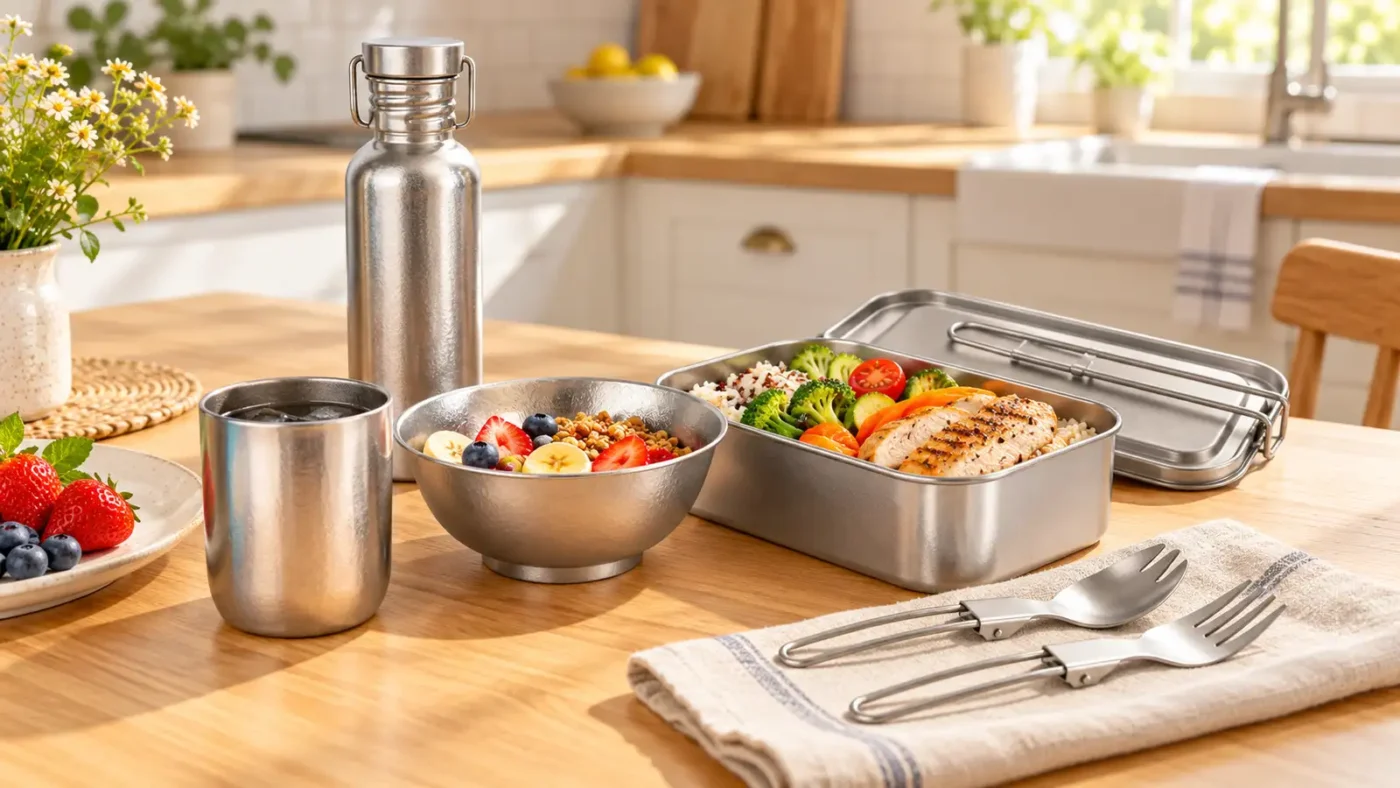
To build a reusable eating kit, start with one meal you eat regularly. Choose what you need to serve it, eat it, drink alongside it, and carry everything when necessary. Use suitable items you already own, then fill any practical gaps.
Learning how to build a reusable eating kit starts with your routine, rather than a fixed bundle. A bowl and spoon may cover breakfast at home. Lunch carried to work may need a container, fork, water bottle, and somewhere to put used utensils afterward.
Start With the Meals You Actually Eat
Think through a typical meal from preparation to cleanup. Identify four needs:
- Serving: What holds the food while you eat?
- Eating: Which utensils does that meal actually require?
- Drinking: Will you use a cup already available or carry a drink?
- Carrying and storing: What must travel, and where will it go afterward?
Mark each item as essential or optional for that meal. A separate plate is optional when you can comfortably eat from your lunch container. A bottle may be unnecessary if a suitable cup and drinking water are available where you eat.
Check what your workplace or accommodation provides before adding duplicates.
Build a Simple Reusable Eating Kit
Choose components by their jobs, leaving out anything your routine does not use.
- Plate or bowl: Pick the shape that accommodates your food and feels comfortable on the available table.
- Utensils: Carry the pieces you use. Our guide to choosing titanium cutlery for work lunches covers utensil selection in more detail.
- Cup or water bottle: A cup suits drinking in one place; a bottle can carry water between stops. Check closure and temperature requirements for the specific product.
- Food container: Include one when food needs to travel or wait before eating. TiRoam’s Pure Titanium Lunch Box is one available option, with a listed uncoated interior. Verify its suitability for your food and transport conditions; a lid alone does not establish leakproof performance.
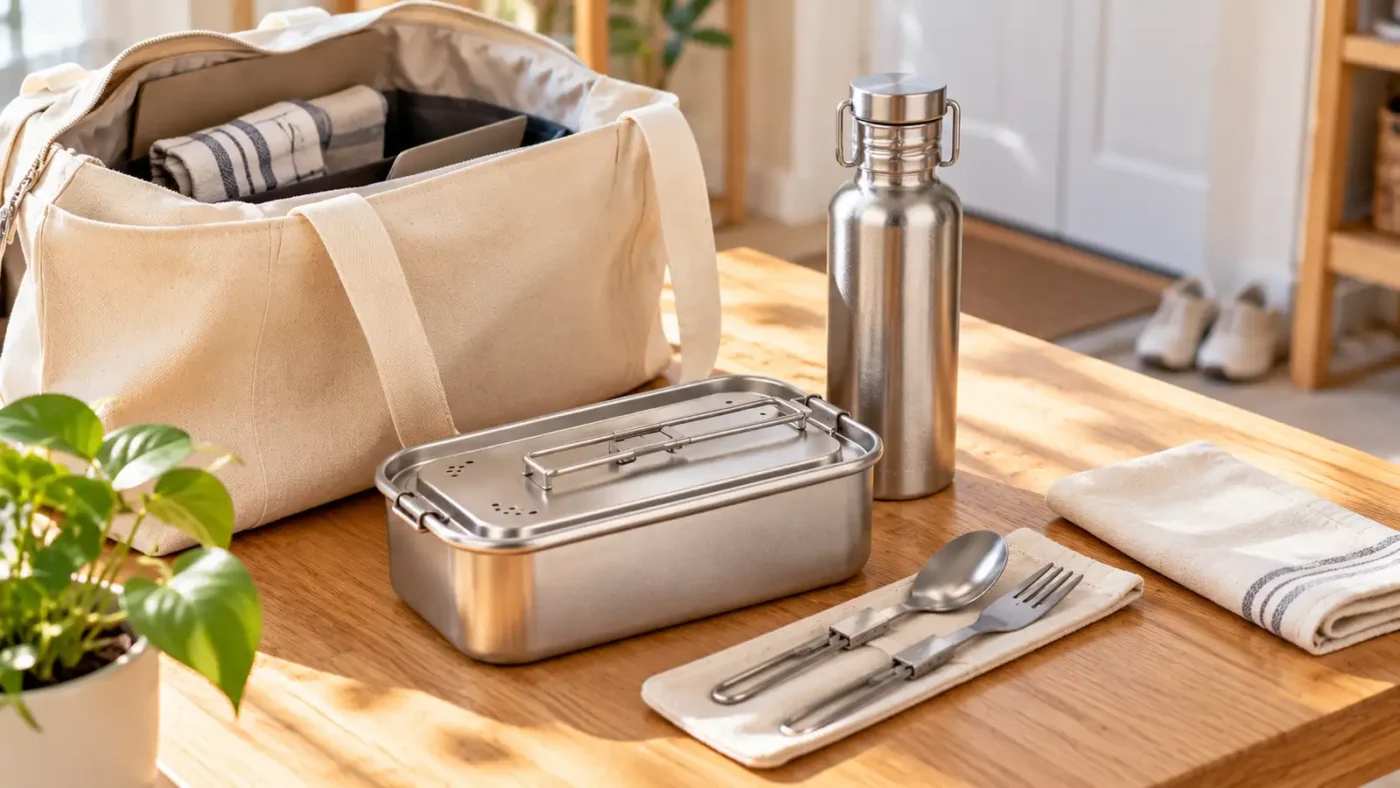
- Carrying or storage arrangement: Use a suitable compartment or washable holder to keep the pieces together and separate used items on the way home.
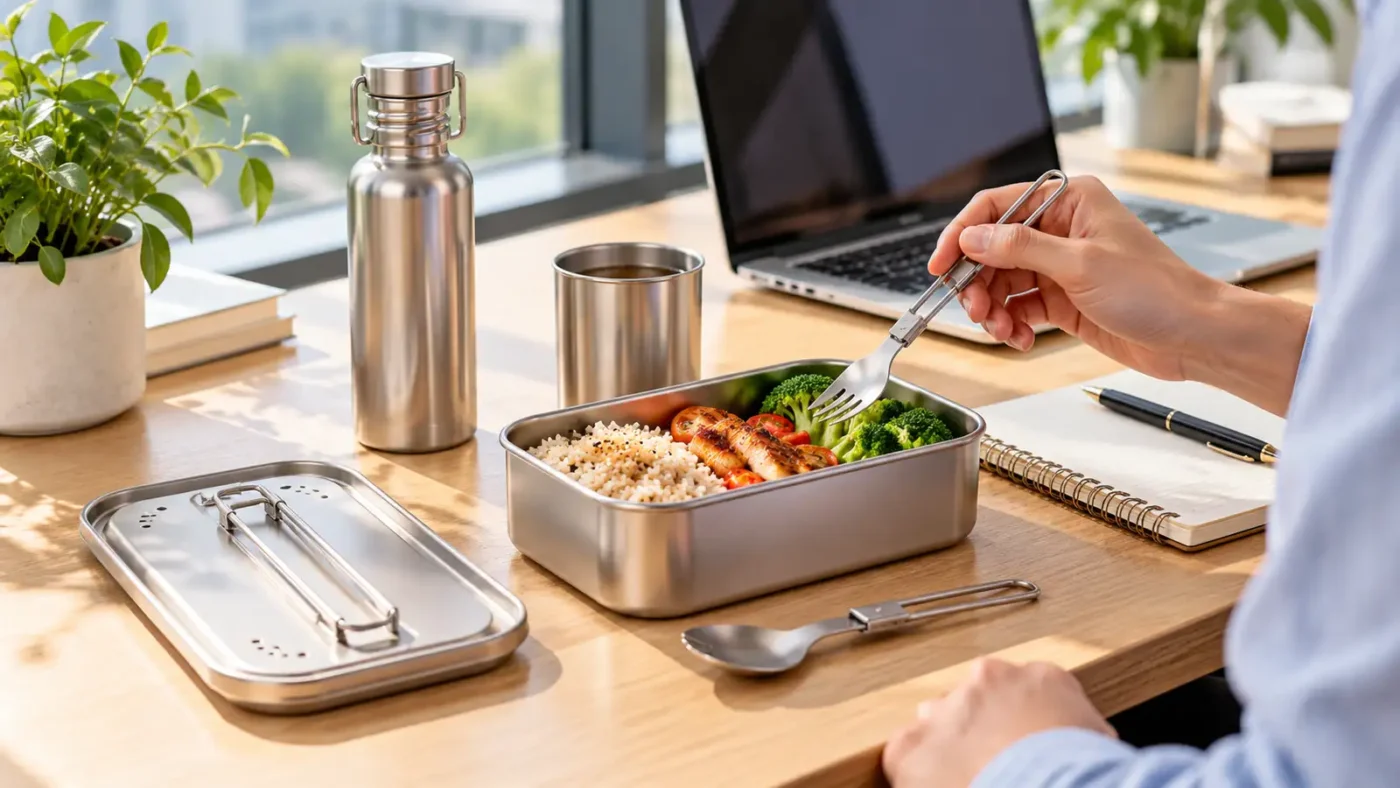
How to Build a Reusable Eating Kit With Fewer Pieces
Give one item two jobs where that works comfortably. A suitable food container can also be your eating dish, so a separate bowl may add little. Choose utensils from your set according to the meal. TiRoam’s foldable cutlery set contains a spoon, spork, fork, and knife, but that does not mean every lunch needs all four.
These are individual product examples, not a TiRoam meal-kit bundle.
Adapt Your Eating Kit to Different Routines
Keep the useful core and adjust it to the facilities and space at your destination. The essentials below are starting points for the meals described, not universal shopping lists.
| Situation | Essential items | Optional items | Main practical consideration |
|---|---|---|---|
| Meals at home | Suitable dish and utensils for the meal | Dedicated cup, storage container | Easy access and cleanup |
| Packed lunch at work | Suitable food container and utensils | Bottle, napkin, separate eating bowl | Workplace facilities and return storage |
| Road-trip meal stop | Serving dish or food container, utensils, drinking vessel | Shared serving piece, washable return holder | Access after parking and space for used items |
| Hotel stay | Dish and utensils for the chosen meal | Bottle, container for separately stored ingredients | Available table, washing, and food-storage facilities |
Meals at Home
Start with your normal dishes. A regular storage spot for lunch gear can make the transition from home meals to packed lunches easier. Keep matching lids nearby, with space for items to dry before they go away.
Lunch at Work
When packing lunch for work, check whether you have a refrigerator, washing facilities, and an appropriate place to eat. If reheating is part of lunch, arrange a dish explicitly approved for the available appliance rather than assuming your transport container can do that job.
Road Trips and Car Travel
A road-trip tableware checklist should reflect the number of people and planned meal stops. Keep frequently needed items accessible after parking, with somewhere separate for used utensils. Plan any food-temperature control separately; ordinary tableware does not provide refrigeration.
Hotel Stays
For hotel room meals without cooking, choose ready-to-eat food and only the dishes needed to serve it. Check actual washing and storage facilities before arrival. Do not assume the room includes a kitchen or refrigerator.
Check Size, Weight, and Packing Space
Lay out the complete kit beside your usual bag. Check exterior dimensions, lid clearance, protruding handles, and room to remove items without unpacking everything. If the container choice is still uncertain, use the lunch container size guide for the separate question of meal capacity and fit.
Consider packed weight, including food and drinks. The lightest individual utensil is not automatically useful if it cannot comfortably reach your food. Likewise, an extra bowl may be worth its space when you prefer serving separate parts of a meal.
Do a trial with existing pieces before buying replacements. Close the bag, carry it normally, and check that hard items do not press against a laptop or other belongings.
Choose Items You Can Clean and Maintain
Choose finished products whose care requirements fit the facilities you actually use. Material alone does not determine how to wash, heat, or store an item.
TiRoam’s lunch-box care guide recommends washing before first use, hand washing with a soft sponge or cloth, and thorough drying before storage. Its foldable cutlery guidance also recommends hand washing and cleaning and drying before storage. Inspect accessible joints and corners as part of routine care without forcing components apart.
Do not infer dishwasher, microwave, or direct-heating compatibility from a titanium label. Follow the exact model’s instructions, including requirements for lids and other components.
When washing must wait, keep used pieces separate from clean supplies, then clean them when suitable facilities are available. Leave enough time and space for drying before closing them into storage.
Build Gradually Instead of Buying Everything at Once
Use your starting kit for several ordinary meals and notice what repeatedly causes inconvenience. Perhaps you need a better place for used cutlery, rather than another utensil. Perhaps a cup can stay at work, reducing what you carry.
Add or replace one item to solve a recurring problem. Keep the pieces that work, even if their materials or colors do not match. A useful kit earns its place through regular use.
Reusable Eating Kit Checklist
- Does each item serve a meal I actually eat?
- Can a container also serve as my eating dish?
- Are the utensils comfortable with that container?
- Have I checked closures and any required heating compatibility?
- Does everything fit alongside my usual belongings?
- Can I separate clean and used items?
- Can I wash, dry, and store every part?
- Am I adding something useful rather than duplicating it?
Frequently Asked Questions
Do All the Pieces Need to Be Titanium?
No. Combine suitable items you already own. If you want to try titanium, replace one piece whose design and care requirements suit your routine rather than replacing the entire kit.
Should I Keep One Kit at Work and Another at Home?
That can help if carrying items is inconvenient and you can clean and store the work kit properly. Otherwise, moving a small core between locations may avoid unnecessary duplicates.
Can One Kit Work for Two People?
Some carrying arrangements and serving pieces can be shared. Each person still needs the dishes and eating utensils required for the meal; a single-person layout is not automatically enough for two.
Is a Dedicated Carrying Case Necessary?
No. An existing washable holder or suitable bag compartment may work. Check that it accommodates the actual pieces, protects nearby belongings, and can be cleaned after carrying used items.
Put the Kit Into Everyday Use
Start with one meal, test the complete arrangement, and add only what makes the next meal easier. When a genuine gap appears, compare everyday tableware for serving and eating or titanium drinkware for your drinking routine, checking the individual design and care instructions before choosing.