Tableware & Everyday Dining
Lunch Container Size Guide: How to Choose the Right Fit for Your Meal
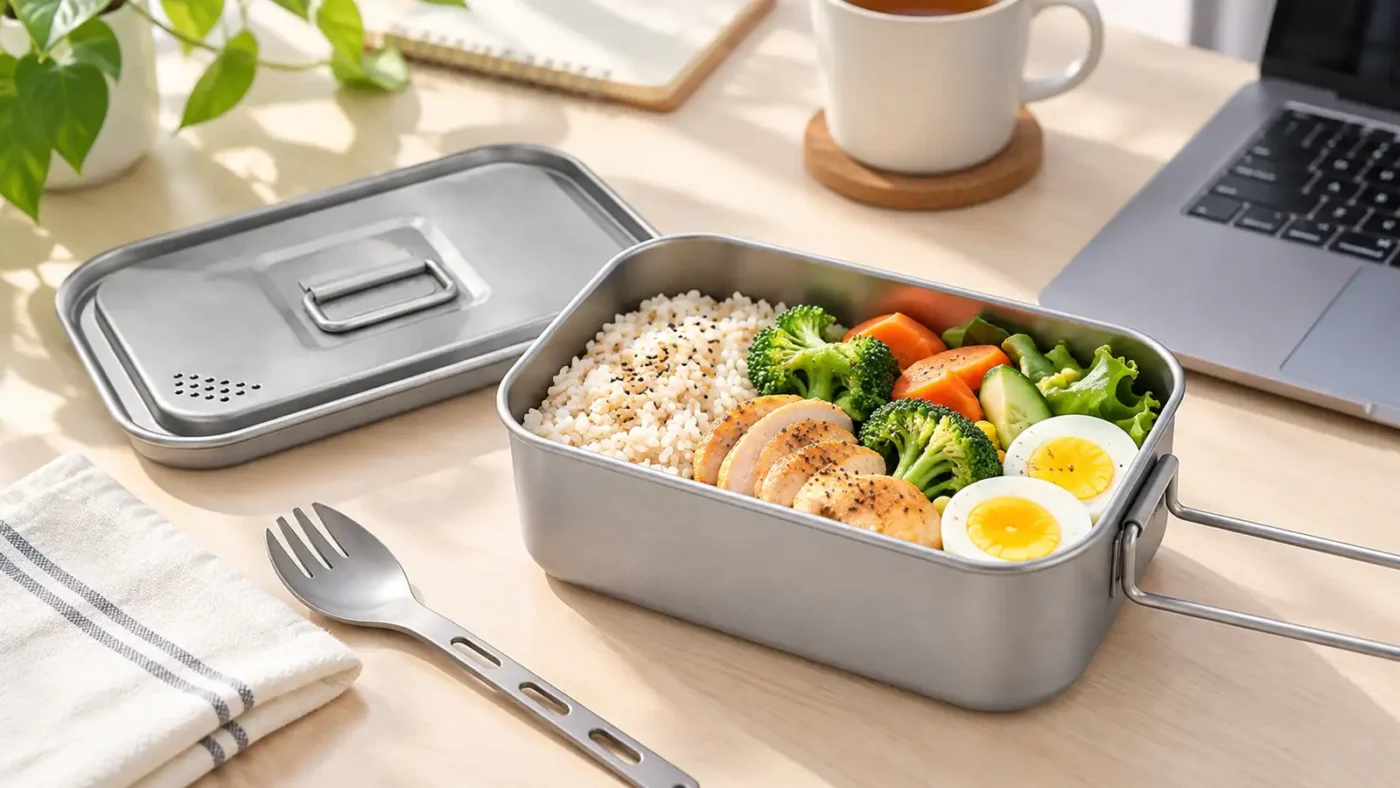
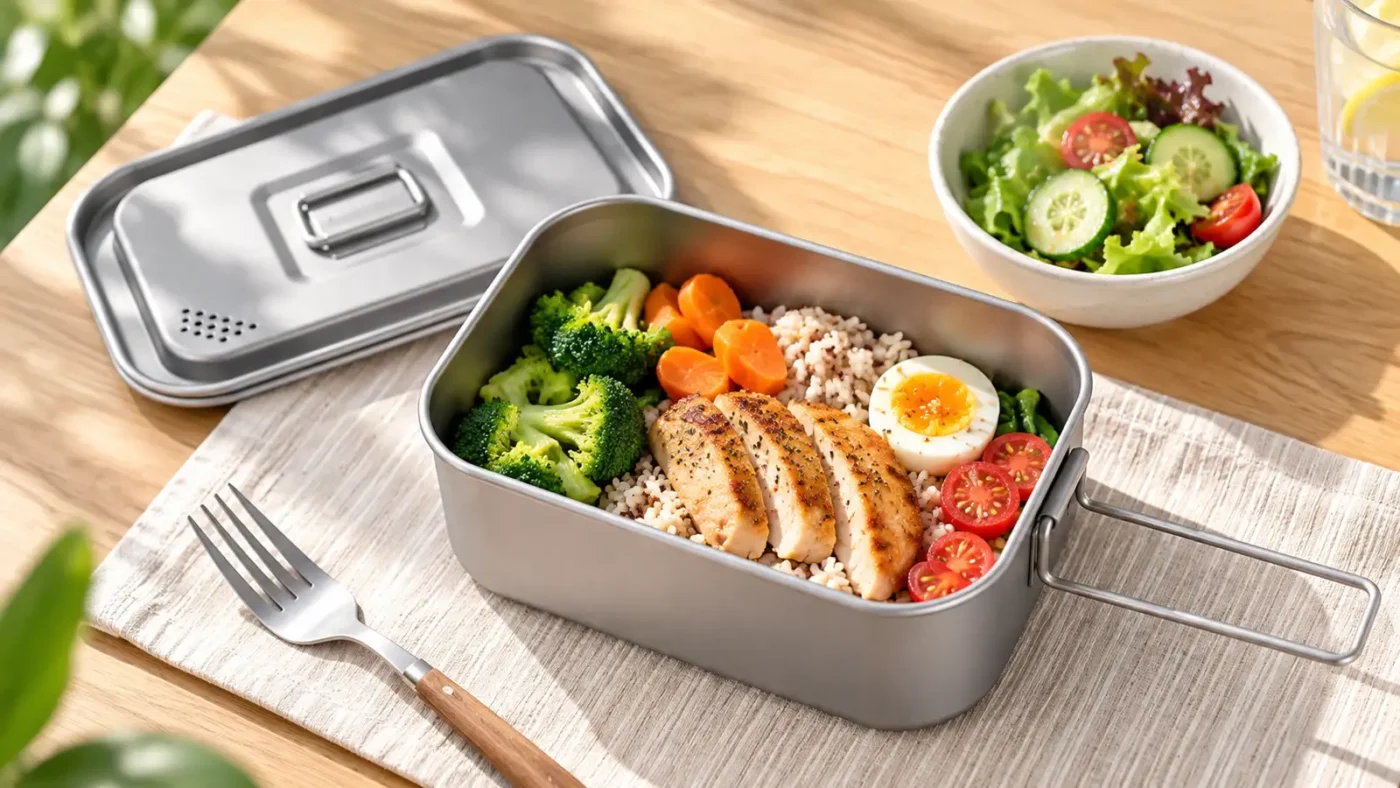
This lunch container size guide starts with your complete meal, not just the advertised capacity.The container should hold your normal main dish and sides with enough headroom to close the lid, carry the meal, and mix the food without crowding. Exterior dimensions and filled weight matter just as much as the number of milliliters.
Start With the Lunch You Actually Pack
The right container is the one that fits your usual lunch pattern. Before comparing capacities, list the foods you pack most often and decide whether they will share one container or travel separately.
A compact lunch may consist of a sandwich, fruit, or a modest rice portion. A mixed meal might include rice, vegetables, and protein in the same container. Salads, noodles, and foods with bulky toppings may need more physical space even when they are not especially heavy.
Consider these common meal patterns:
| Lunch pattern | Space requirement | What to check |
|---|---|---|
| Sandwich or simple dry lunch | Moderate horizontal space | Whether the food fits without being compressed |
| Rice, vegetables, and protein | Enough volume for several components | Room to separate or arrange the foods |
| Noodles or mixed grain bowl | Extra headroom | Space for stirring before eating |
| Salad with toppings | More volume than the ingredients may suggest | Whether the lid closes without pressing down the food |
| Soup, stew, or saucy food | Room below the rim | Lid design and the manufacturer’s transport guidance |
| Snacks or side dishes | Smaller usable area | Whether a separate small container would pack more efficiently |
Avoid choosing a container around an occasional oversized meal if most of your lunches are smaller. Extra capacity takes up room in a work bag, refrigerator, cabinet, and dish rack every day.
What Does the Listed Capacity Really Tell You?
Listed capacity describes internal volume, but it does not necessarily represent the most comfortable everyday fill level. Food placed close to the rim may leave too little space for closing the lid, adding toppings, or stirring the meal.
Capacity is still useful for comparing products, provided you interpret it together with the container’s shape. An 800 ml rectangular container and an 800 ml deep container may hold the same measured volume but organize food differently.
Do not translate capacity directly into a guaranteed number of servings. Portion size, food density, ingredients, and appetite vary too much for one volume to represent the same meal for everyone.
A better method is to compare the listed capacity with a lunch you already pack. Notice how much room your current food occupies, including the empty space needed above it. That gives you a more realistic reference than selecting a container from the capacity number alone.
Leave Enough Headroom
A practical lunch container needs space above the food. Headroom helps you close the lid without pressing into the meal and provides room to mix ingredients before eating.
You may need more headroom when packing:
- Noodles that will be stirred with sauce
- Rice with several toppings
- Salads with leafy ingredients
- Meals finished with dressing at lunchtime
- Foods that shift or spread while being carried
Meals that stay compact, such as a sandwich or a firm serving of rice, may need less working space. Even then, avoid treating the maximum listed capacity as a target fill line unless the product instructions say otherwise.
For liquids or very saucy foods, capacity alone is not enough. Check the exact lid construction and the manufacturer’s transport instructions. A product having a lid does not automatically establish that it is leakproof or suitable for being carried in every orientation.
Use This Lunch Container Size Guide to Compare Exterior Dimensions
Exterior length, width, and height determine whether a lunch container fits your bag, refrigerator shelf, workplace storage, and available eating space. A capacity that looks suitable can still be inconvenient if the container is too wide or tall for your routine.
Before buying, check the entire path the container will take:
- Where it will be filled at home
- The refrigerator shelf where it may wait
- The lunch bag or work bag used for transport
- The available space in a shared office refrigerator
- The desk, break-room table, or other eating surface
- The sink and dish rack used after lunch
- The cabinet or drawer used for storage
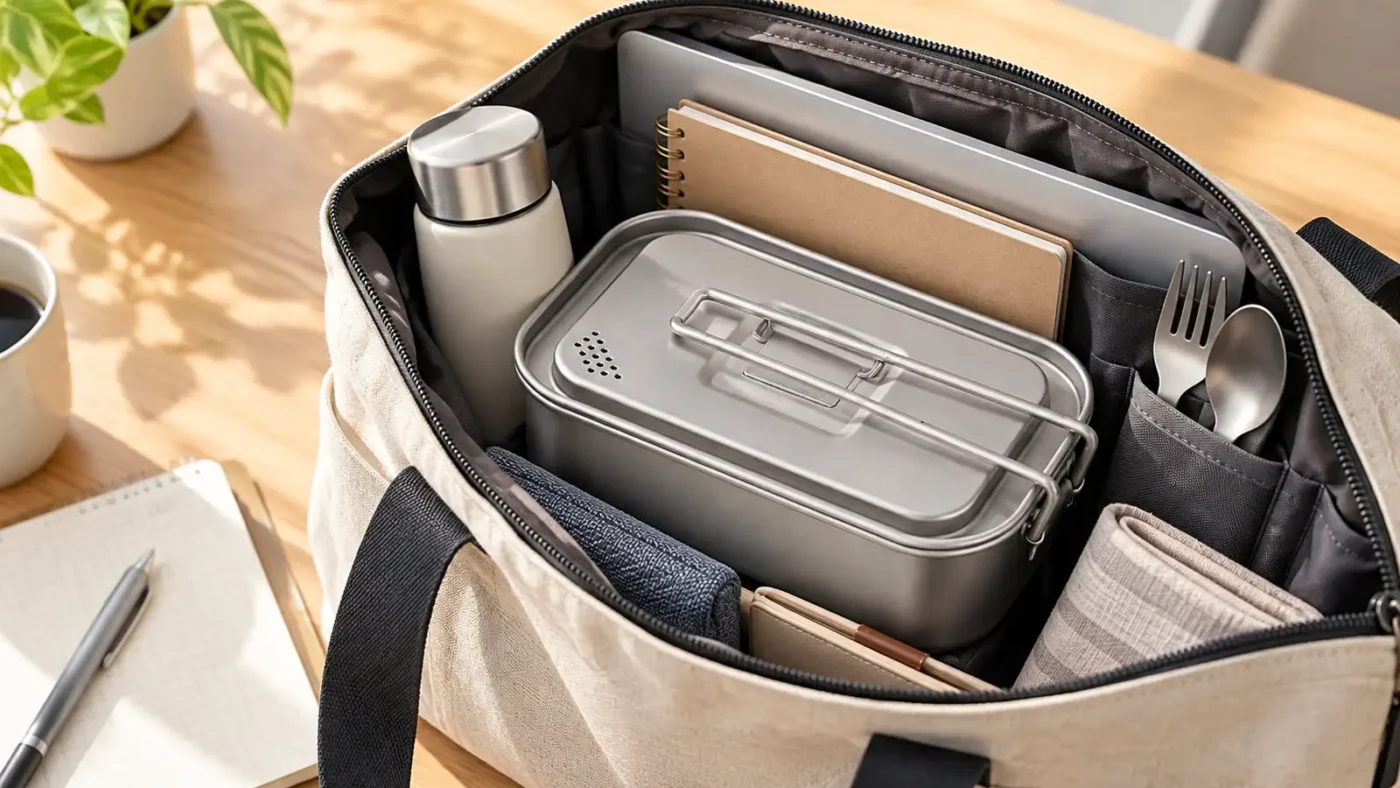
The current TiRoam Pure Titanium Lunch Box has a listed capacity of 800 ml / 27.0 fl oz. Its published product size is 16 × 11 × 5.5 cm / 6.30 × 4.33 × 2.17 in.
Those measurements provide a better picture of the product than capacity alone. Its rectangular footprint affects how it fits inside a bag and how different foods can be arranged across the base.
Consider Empty Weight and Filled Weight
The empty container is only part of what you carry. The complete packed weight includes the container, lid, food, utensils, napkin, and anything else placed in the lunch bag.
TiRoam currently lists its 800 ml lunch box at approximately 197 g / 6.95 oz. The product page notes that dimensions and weight may have a tolerance of ±5%.
A lightweight empty container can reduce the weight added by the container itself, but the food may still be the heaviest part of the packed lunch. Soup, stew, fruit, and other high-moisture foods can make the difference between empty products feel less significant once everything is packed.
Think about how far you carry lunch. Moving a container from a home refrigerator to a car is different from carrying it inside a shoulder bag during a commute. The best choice should remain comfortable after the meal, utensils, and other daily items are included.
Decide Whether One Container Is Enough
One larger container works well when the foods can share the same space. Separate containers are more useful when ingredients need to remain apart or when part of the meal will be eaten at a different time.
A single container may suit:
- Rice with vegetables and protein
- Pasta or noodles
- Sandwiches with dry sides
- Grain-based meals
- A complete cold lunch that can be stored together
Multiple containers may be more practical for:
- Dressing that should be added later
- Crisp and moist ingredients
- A main lunch plus an afternoon snack
- Foods with different handling or heating requirements
- Items that should not press against each other
Do not assume that a container includes a divider, removable tray, or separate compartment unless those parts are shown and listed on the exact product page. If food separation is essential, verify the included components before buying.
Separate Size Choice From Material Choice
Container size and container material are related purchasing decisions, but they answer different questions. Size determines whether the meal fits; material affects weight, visibility, handling, care, and compatibility with different heating methods.
TiRoam’s lunch box is listed as pure titanium with no interior coating. That information describes the current product’s material construction, but it does not tell you whether 800 ml is the correct capacity for your meal.
If you are still deciding among materials, read Titanium vs. Glass Food Containers: How Does Stainless Steel Compare?. That comparison covers material trade-offs separately, allowing this size guide to remain focused on meal volume and daily handling.
Material should also never be used to guess heating compatibility. Check the exact manufacturer instructions before placing any food container in a microwave, oven, dishwasher, or other appliance.
Think About How You Will Eat From It
A lunch container is not only used for storage. It may also become the dish you eat from, especially at work or while traveling.
A wider rectangular base can make different parts of a meal easier to see and reach. A deeper container may conserve desk space, but it can also affect how easily you reach the corners with a fork or spoon. The best shape depends on what you pack and how you prefer to eat it.
Utensil length matters as well. A short folding utensil may pack efficiently but feel different inside a deeper container. A full-length utensil takes more bag space but may be more comfortable for a larger lunch.
For help comparing these trade-offs, see How to Choose Titanium Cutlery for Work Lunches. Keep the two decisions separate: select the container around the meal, then choose utensils that work with its depth and your packing routine.
Do You Need a Lunch Container or a Bowl?
Choose a closed lunch container when the meal needs to be packed and carried. Choose a bowl when food will normally be served and eaten without requiring a transport lid.
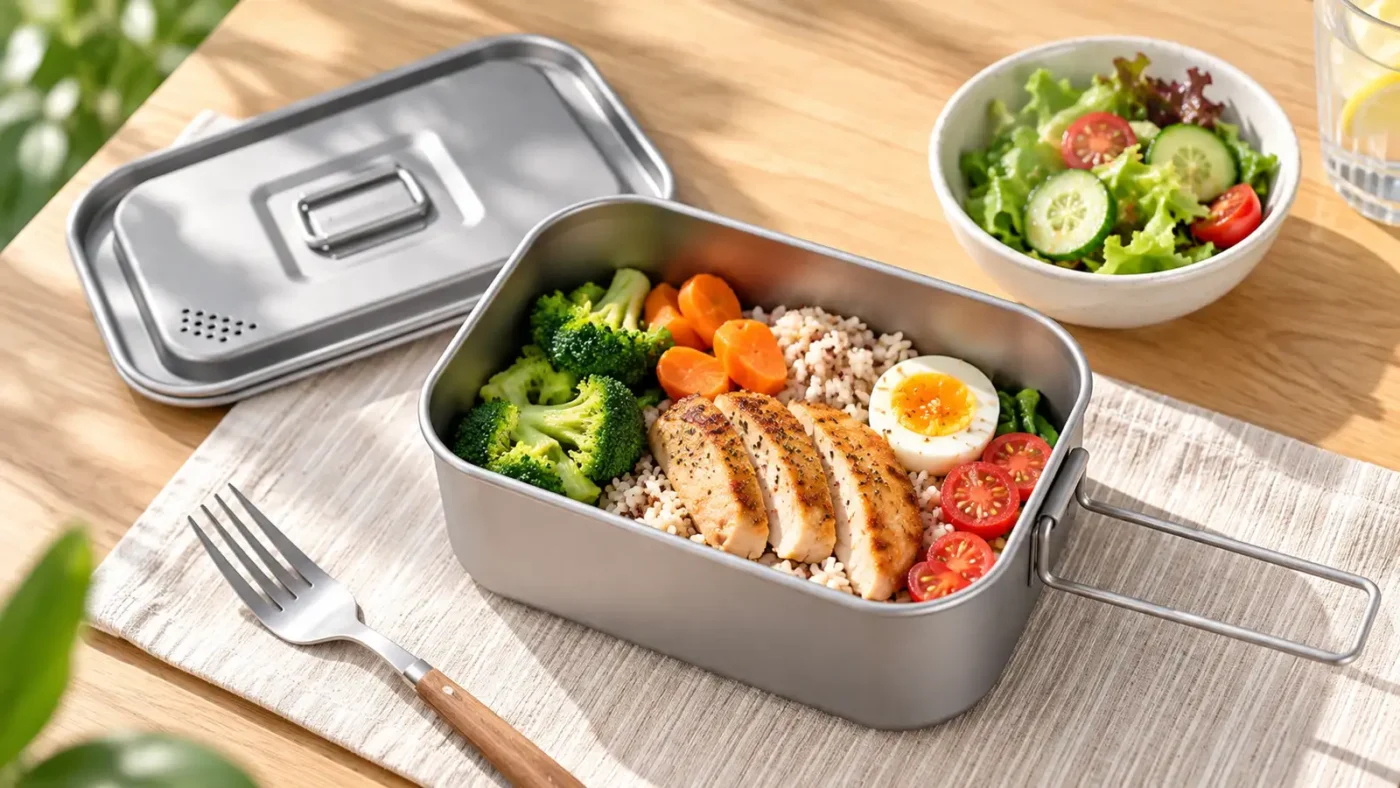
The distinction matters because similarly listed capacities can serve different purposes. A bowl’s shape may prioritize comfortable eating, while a lunch container must also fit inside a bag and work with its lid.
If your main need is serving rice, soup, cereal, noodles, or other meals at home or at a desk, use the titanium bowl size guide instead. If your meal is prepared at home and carried elsewhere, exterior dimensions and closure details make the lunch container the more relevant format.
Check Cleaning and Storage Requirements
A useful lunch container should be easy to clean, dry, and store as part of an ordinary workday. Pay attention to corners, lid contact areas, handles, and any other places where food or moisture may remain.
For routine cleaning, use a cleaning method appropriate for the food residue and the product’s surface. Avoid assuming that every lunch container has identical dishwasher, heating, or cleaning instructions. Check the current product information before using a specific appliance or cleaning method.
If food dries inside the container during the workday, allowing the residue to soften before cleaning can reduce the amount of scrubbing needed.
For broader titanium care principles, see How to Clean Pure Titanium Kitchenware.
Storage should be checked before purchase, too. Confirm that the complete container and lid fit where you intend to keep them. Do not assume that multiple containers will nest or stack securely unless that feature is documented.
Use a Simple Pre-Purchase Check
Before choosing a lunch container, answer these questions:
- What foods do I pack most often?
- Will all parts of the meal share one container?
- How much headroom do I need for closing and mixing?
- Will the exterior dimensions fit my usual bag?
- Can I carry the filled container comfortably?
- Does the lid design match the foods I plan to transport?
- Will my usual utensils work with the container’s depth?
- Can I clean, dry, and store every part easily?
- Have I checked the manufacturer’s heating and care instructions?
- Am I choosing a transport container rather than an open serving bowl?
The best lunch container size is not simply the largest capacity you can buy. It is the smallest practical format that holds your normal meal without crowding it and still fits your bag, storage space, utensils, and cleanup routine.
You can also browse the current TiRoam Titanium Tableware collection when comparing lunch containers, bowls, and reusable dining pieces for everyday use.