
Tableware & Everyday Dining
How to Clean Folding Titanium Cutlery
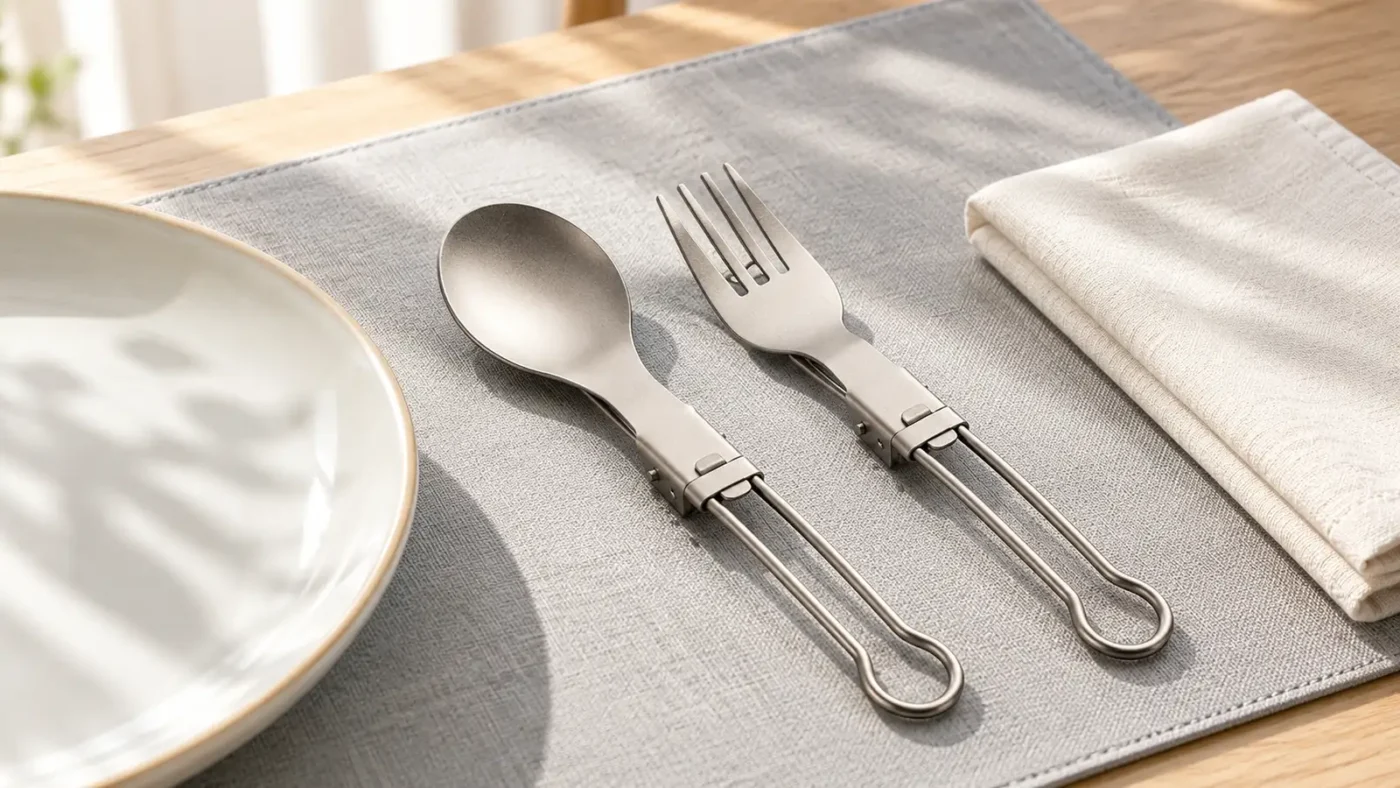
To clean folding titanium cutlery, open each utensil as directed, wash the eating end and accessible joint with warm water, mild dish soap, and a soft sponge, then rinse thoroughly. Use a small, soft-bristled brush only where it fits without force. Drain and dry the joint completely before folding the utensil for storage.
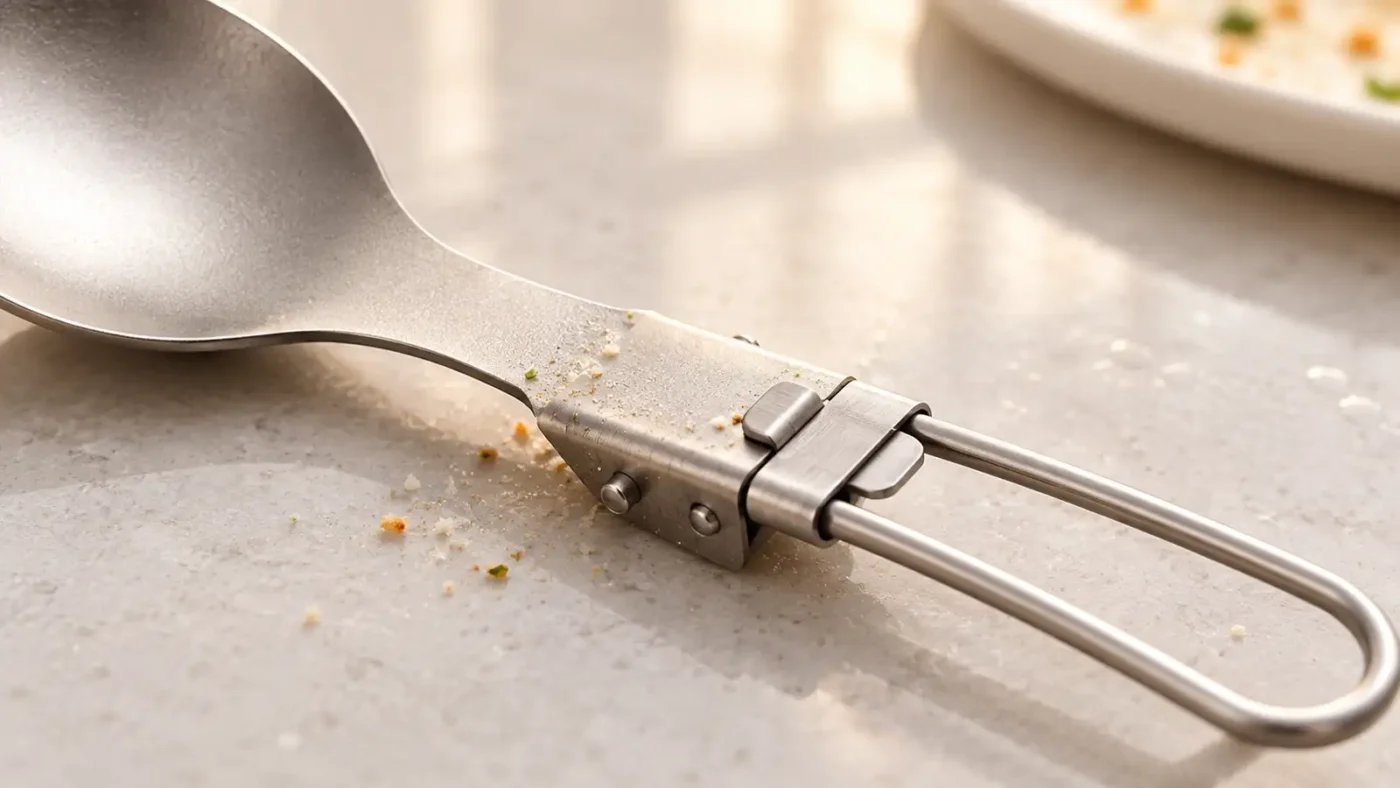
The extra attention belongs at the connection between the eating head and handle. A spoon can look clean while a little rice, sauce, or moisture remains around that connection. The same issue can arise after a meal at home, an office lunch, or a travel stop.
How to Clean Folding Titanium Cutlery Joints
Check how your particular utensil opens and stays in its intended position before cleaning it. Folding designs differ, and a visible joint is not an invitation to take the handle apart.
TiRoam’s Pure Titanium Foldable Cutlery Set contains a spoon, spork, fork, and knife. Its product photographs show wire-loop handles and visible folding connections. The current Care Guide recommends washing before first use, hand washing to preserve the finish, and thorough cleaning and drying before storage.
Those instructions do not establish that joint parts should be removed. Leave pins, retaining pieces, and attached components in place. Follow the supplied opening instructions, and keep fingers clear of pinch points and cutting edges.
For decisions about utensil shape, reach, and packed fit, see our work-lunch titanium cutlery guide. Here, the task is cleaning the accessible connection after use.
Where Food and Water Can Remain
Inspect the eating surface, the underside of the head, the handle connection, and the accessible edges around the folding mechanism. On a fork, also look between the tines and where they meet the head.
Food does not need to cover the entire handle to reach a joint. Fingers, sauce, or contact with a lunch container can transfer small deposits there. Folding the utensil before removing them can make the residue harder to see.
Look for raised particles, a sticky film, or visible moisture. These need cleaning or drying; ordinary cosmetic marks do not automatically call for stronger scrubbing.
Clean Folding Titanium Cutlery Step by Step
1. Remove Loose Food and Soften Visible Residue
Remove loose food with a gentle rinse or a soft sponge. Keep the utensil in a stable position while handling it, especially when washing a knife.
If food has dried onto an accessible area, let warm, soapy water soften the deposit before brushing. Follow any soaking limits for your model. Rewet and wash again as needed instead of scraping at a dry patch.
If the joint resists its normal opening movement, do not force it open to reach the residue. Clean what is accessible and seek product-specific advice if the obstruction remains.
2. Wash the Eating End and Handle
Use mild dish soap and a soft sponge to wash both sides of the eating head, the handle, and the exposed connection. A quick wipe across the spoon bowl misses the underside and nearby joints.
Choose tools compatible with the product’s finish. For the broader washing routine, our pure titanium kitchenware cleaning guide explains gentle cleaning and drying across different items.
3. Brush Only the Gaps You Can Reach
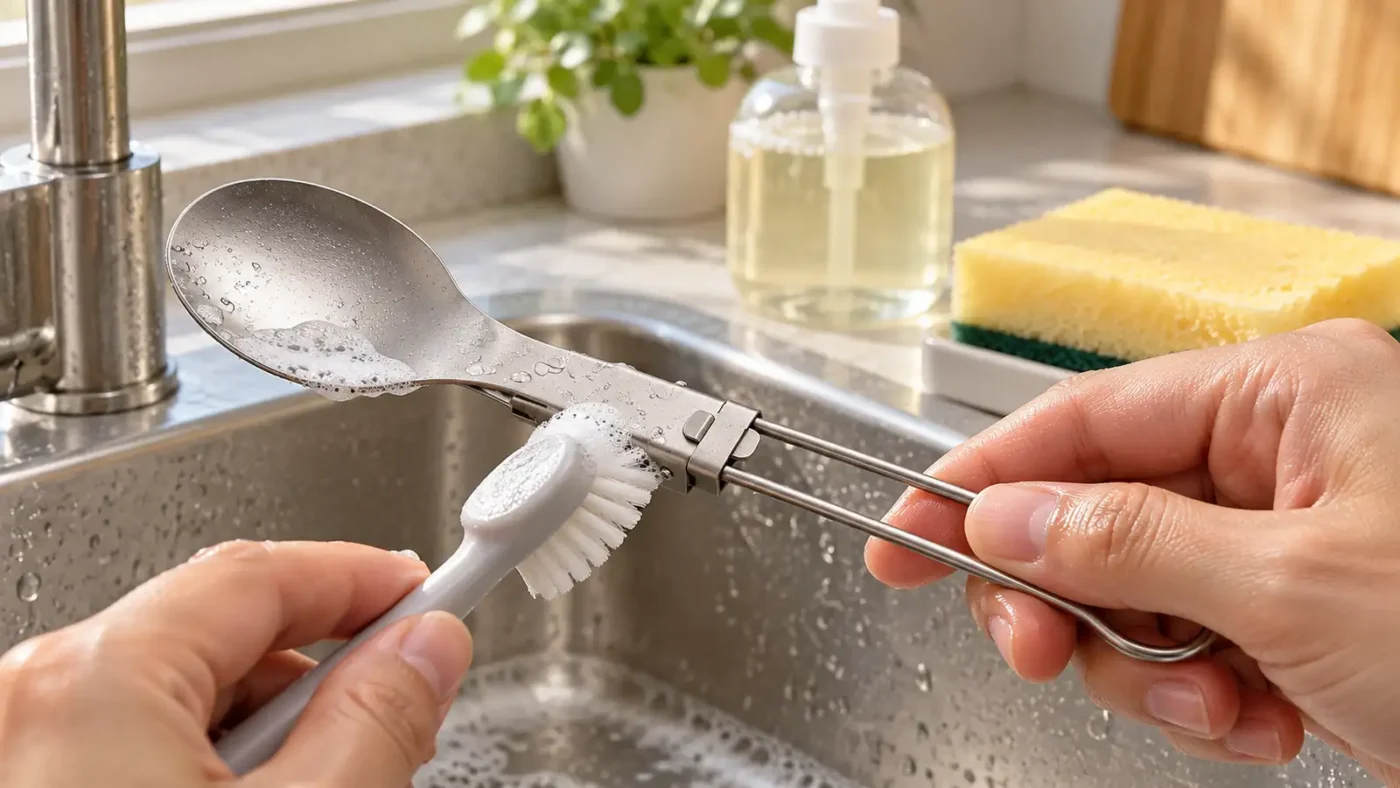
To clean a folding titanium spoon hinge, gently brush around the exposed edges with a small, soft-bristled brush suitable for the utensil’s finish. A soft nylon brush intended for kitchenware can help reach areas a sponge cannot contact.
Use light strokes to lift loosened food outward, rinsing the brush as it picks up residue. Work around visible edges rather than pushing debris deeper into the connection. The bristles should reach the area without wedging the brush between parts.
Stop if access would require prying, bending the handle, or removing a retaining piece. Never force the brush into tight gaps or disassemble the mechanism. Do not insert a pin, knife tip, or other hard tool into the joint.
4. Rinse and Inspect From More Than One Angle
Rinse away detergent and loosened food with clean water. Turn the utensil so water reaches the accessible sides of the joint, then inspect the underside as well as the front.
If a particle or sticky film remains, repeat the gentle wash. Move folding parts only through their normal, manufacturer-approved motion; do not force extra movement to flush an unseen space.
5. Drain and Allow the Connection to Dry
Let water drain from the head and handle, then blot accessible surfaces with a clean towel. Leave the utensil in an open or other manufacturer-approved drying position where air can reach the exposed joint.
A dry spoon bowl does not prove the connection is dry. Check for moisture along overlapping edges and around the handle attachment. If a droplet appears when you gently change the utensil’s angle, allow more drying time.
Keep drying utensils separate rather than stacking them tightly together. Do not close damp cutlery inside a pouch and treat that as finished storage.
6. Check the Joint Before Folding and Packing
Once clean and dry, check that the utensil follows its normal folding movement and can be secured for use as instructed. Look for retained food, unusual resistance, loose parts, sharp edges, or deformation.
If the connection no longer works normally, stop using the utensil and contact the brand for advice. Cleaning should not become an attempt to bend or repair the mechanism.
Fold it as directed and put it in clean, dry storage. Check the pouch or container too; old crumbs or damp fabric can undo part of the cleanup.
When You Cannot Wash Up After Lunch
If washing folding cutlery after lunch is not practical, remove loose food with a clean napkin and rinse with clean water when available. These are temporary steps, not a replacement for washing with detergent.
Keep used cutlery separate from clean utensils and other belongings in a dedicated washable container. Protect any cutting edge and follow the utensil’s normal folding instructions for transport. Temporary containment on the trip home is different from putting clean, dry cutlery away for its next meal.
Empty the container and wash the utensils when proper facilities are available. Clean the carrying container according to its own instructions, then let everything dry before routine storage.
Leave space for this separation when organizing lunch. Our lunch container size guide covers fitting the meal and its accessories into a practical daily kit.
Avoid Unnecessary Wear During Cleaning
Good titanium cutlery care depends on removing residue without forcing the mechanism or unnecessarily abrading the finish. Avoid steel wool, stiff wire brushes, sharp scraping tools, and aggressive polishing around the joint.
Do not assume boiling, strong cleaners, or a dishwasher cycle is approved simply because the product is described as titanium. The complete assembly matters. Likewise, do not add oil or lubricant to a stiff connection unless the manufacturer specifies a suitable product and method.
If gentle cleaning does not restore normal movement, ask for help rather than increasing force.
Frequently Asked Questions
Do I Need to Take the Hinge Apart?
No. Routine cleaning should stay within the accessible areas and the manufacturer’s instructions. A utensil that folds is not necessarily designed for user disassembly. Do not remove pins or retaining parts without explicit model-specific instructions.
Can Folding Titanium Cutlery Go in the Dishwasher?
Only when the complete product is identified as dishwasher-compatible. TiRoam’s current set recommends hand washing for the finish; its published Care Guide does not confirm dishwasher compatibility for the assembly.
How Long Should the Joint Air-Dry?
There is no universal drying time. Joint shape, room conditions, and remaining water vary. Let accessible areas dry, change the utensil’s angle to check for droplets, and allow more time if moisture appears before folding it away.
What if the Joint Still Feels Sticky After Washing?
Check for visible residue and repeat the gentle wash where it is accessible. Persistent stickiness or resistance needs product-specific advice, especially if food appears trapped beyond reach. Do not scrape deeper or assume lubrication is the answer.
Give the joint the same attention as the eating end: remove residue, rinse, drain, inspect, and dry before storage. That routine helps reusable cutlery fit into ordinary meals at home, work, and while traveling.