
Cookware & Food Prep
How to Remove Burnt Food From Titanium Cookware
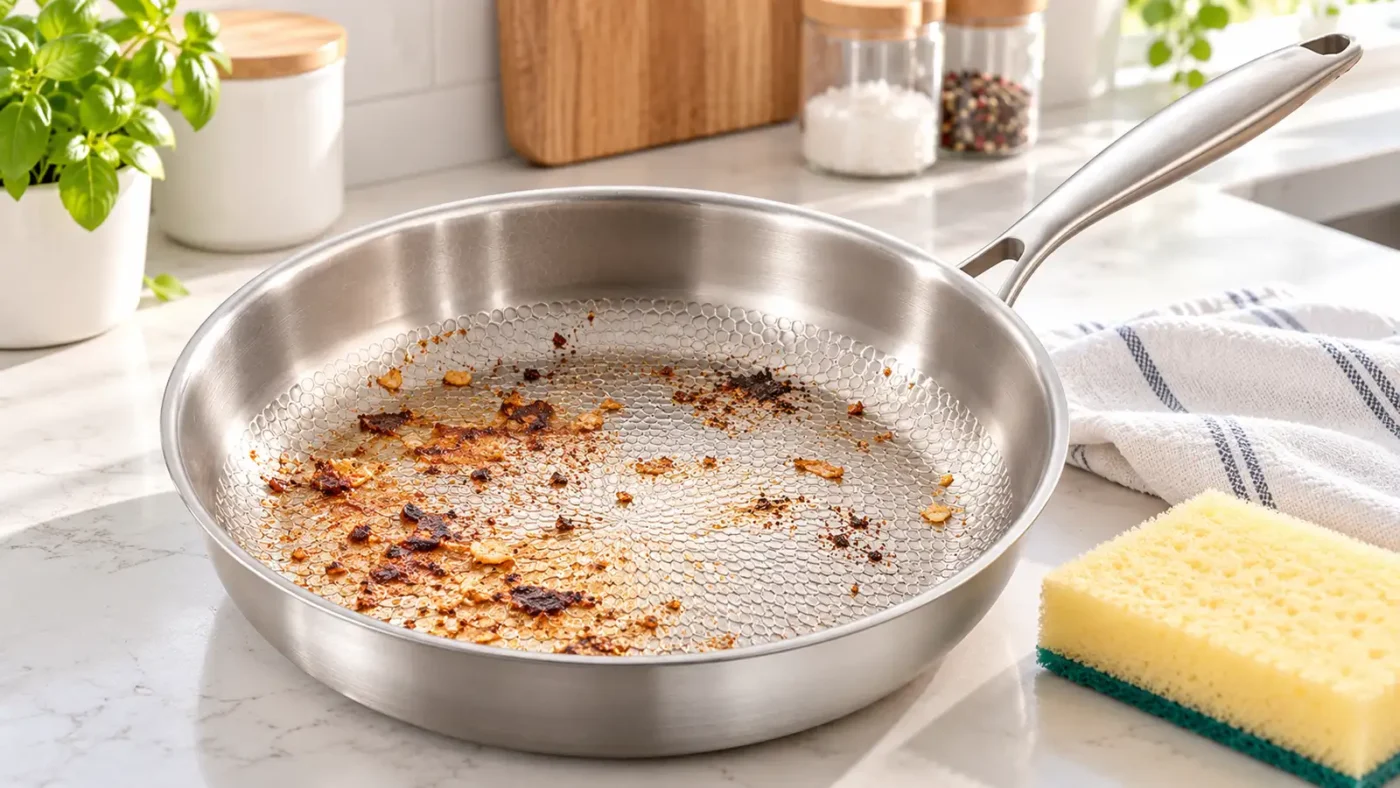
To remove burnt food from titanium cookware, let the pan cool naturally, soften the residue with warm water and mild dish soap, then clean gently with a soft sponge. Repeat if needed, rinse thoroughly, and dry completely. Avoid attacking a hot, crusted surface with a knife or metal scraper.
The right method depends on the whole pan: its construction, finish, handles, and care instructions. Start with the approved gentle method before trying a stronger treatment.
Check Your Pan’s Care Instructions First
An uncoated titanium cooking surface does not mean every part of the pan is titanium. Solid titanium cookware and titanium-clad cookware with a composite or multi-layer body need to be identified separately.
For example, TiRoam’s Titanium Frying Pan with Pure Titanium Cooking Surface combines a titanium food-contact surface with other metal layers. Its current Everyday Use & Care instructions recommend natural cooling, warm soapy water, a soft sponge or cloth, and soaking stubborn residue.
Check the instructions supplied with your particular model, including any limits for its finish, lid, and handle. A method suitable for one pan is not automatically suitable for another.
Why Does Burnt Food Stay Attached?
Food can burn onto a pan when heat, contact time, or cooking-fat coverage does not suit the ingredient. A patch of egg left behind after breakfast can also burn further when the pan is reheated for lunch.
Common contributors include excessive heat, prolonged contact with a hot surface, uneven oil coverage, and unsuitable preheating or turning time. Sticking is not always burning: food may resist turning before it has set, even without a scorched layer.
These conditions should be considered together rather than blaming every deposit on titanium. For the material and food-release expectations, see why food can stick to an uncoated titanium surface.
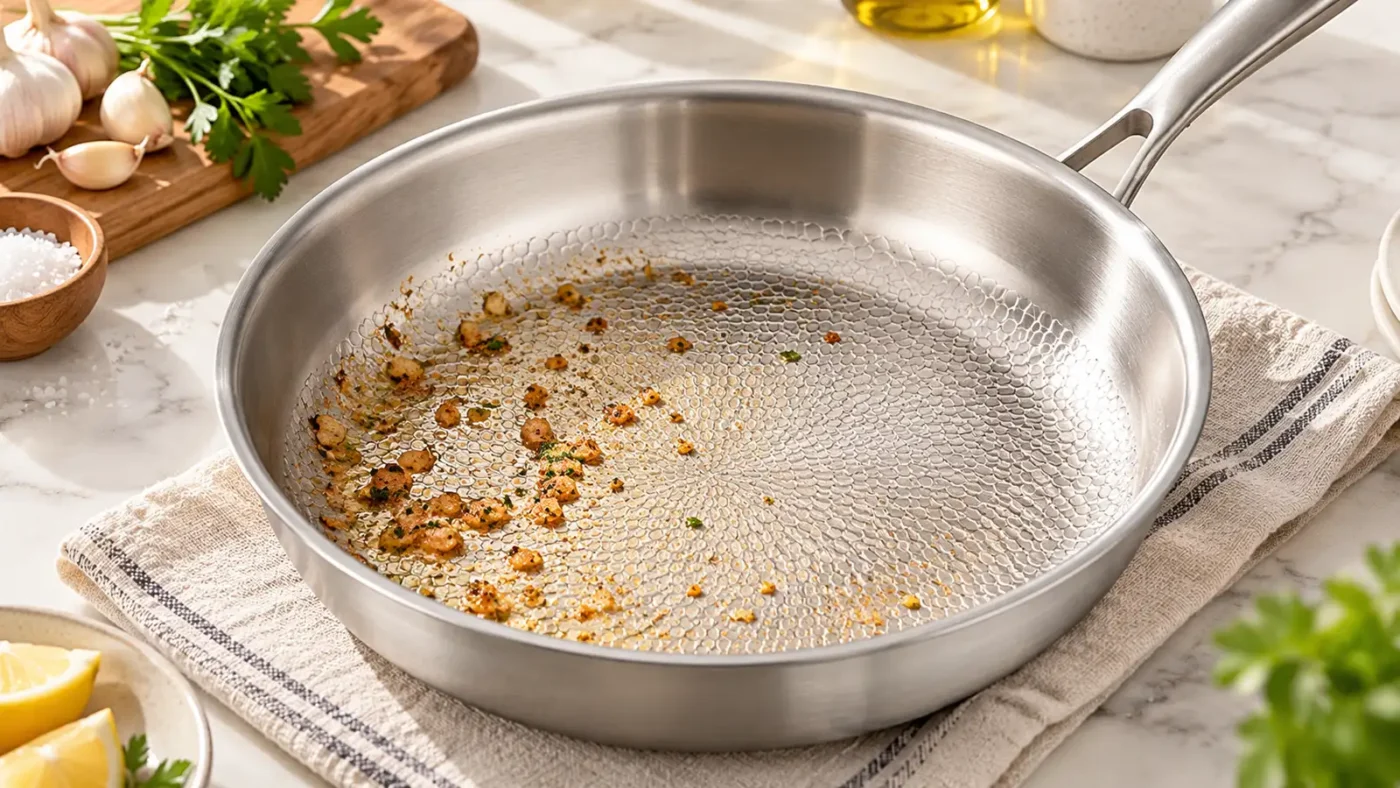
A Gentle Method to Remove Burnt Food From Titanium Cookware
Use these steps when your model’s instructions permit warm-water soaking and hand washing. Keep the pan off the stove throughout this cleaning sequence.
1. Let the Pan Cool Naturally
Turn off the heat and leave the cookware on a stable, heat-safe surface. Wait until it has cooled before adding cleaning water or handling the interior.
Do not put a very hot pan under a cold faucet to speed things up. Rapid cooling creates an abrupt temperature change that the TiRoam frying pan’s care instructions specifically advise avoiding.
2. Cover the Residue With Warm, Soapy Water
Add enough warm water inside the cooled pan to cover the stuck food, along with mild dish soap used according to its directions. Keep this a gentle soak; do not assume the whole pan, handle assembly, and lid should be submerged together.
For an oatmeal layer in a saucepan, cover the affected bottom rather than filling the vessel unnecessarily. For a small scorched patch in a frying pan, focus the water on that area.
3. Check Whether the Food Has Softened
After a brief soak, try a light pass with a wet, soft sponge. Look for food beginning to loosen or transfer to the sponge.
There is no confirmed universal soaking time for every TiRoam model and every burnt deposit. Use the residue’s response and the product instructions instead of treating a fixed number of minutes as a guarantee. If the patch stays hard, give the approved soaking method another cycle rather than pressing harder.
4. Wash With Light Pressure
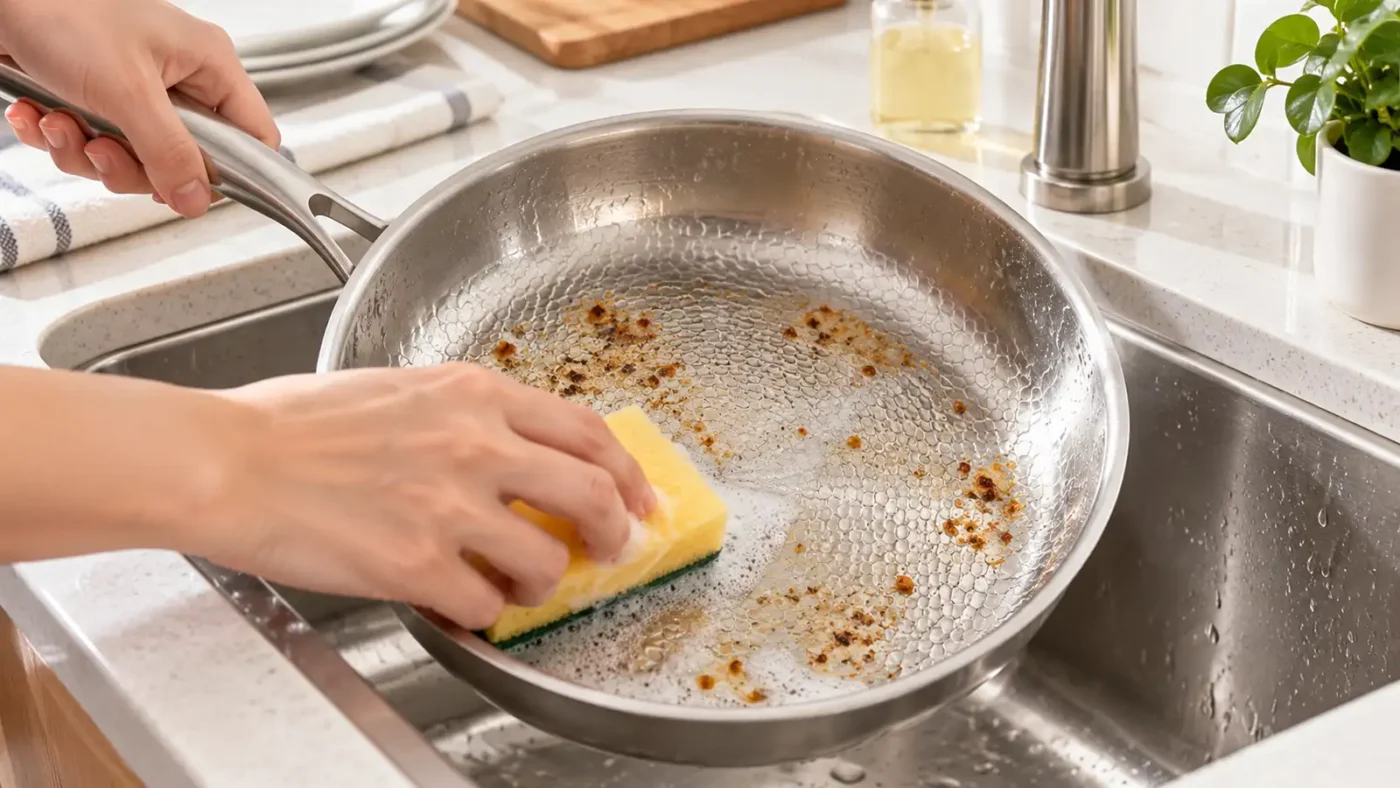
Work across the softened patch with the soft side of a sponge or a soft cloth. Rinse food particles from the sponge as they accumulate, then continue gently.
On a hammered surface, clean the visible textured areas without trying to scrape the texture flat. Avoid knife tips, hard-edged scrapers, steel wool, and coarse pads. Even a tool labeled non-scratch should be checked against the finish’s care requirements.
5. Repeat Where Needed, Then Reassess
Drain loosened particles, add fresh warm soapy water, and repeat the gentle wash if residue remains. Several light passes may be more manageable than trying to remove a whole crust at once.
Stop escalating the pressure if there is little progress. A deposit that remains attached needs a model-approved next step, not an improvised abrasive treatment. Take a clear photo of the cooled surface if you need TiRoam’s advice.
6. Rinse and Dry Completely
Rinse away detergent and loosened food. Check the cooking surface and accessible rim, then dry thoroughly before storage. A clean towel can help you inspect the finish without water obscuring the remaining marks.
For washing the rest of your kitchenware between these occasional cleanup problems, use the routine titanium kitchenware cleaning guide.
What If a Burnt Patch Still Will Not Come Off?
Stay within the cleaning methods confirmed for your model. The current TiRoam cookware care sections reviewed for this guide support soaking and gentle hand washing; they do not establish boiling, baking soda, vinegar, or heavy-duty descalers as universal burnt-food treatments.
A saucepan’s suitability for boiling food does not, by itself, approve a particular heated cleaning recipe. Likewise, resistance to ordinary cooking ingredients does not establish compatibility with concentrated cleaning products.
Ask for model-specific guidance before using those methods. Include the product name, what burned, and what you have already tried. That helps distinguish a remaining food deposit from a surface change without guessing from color alone.
Avoid Making Cleanup More Aggressive
Do not heat an empty pan to burn off residue. That adds uncontrolled heating to a problem you are trying to resolve.
Avoid forceful scraping, coarse abrasives, and unapproved chemical cleaners. They may change the finish or affect components differently from ordinary washing. A titanium food-contact layer does not make the complete cookware immune to wear or damage.
Keep cleaning products separate and follow their labels. Switching to a stronger product without checking compatibility is not a reliable next step when mild washing has stalled.
Check the Pan Before Cooking Again
Inspect the cooled, clean, dry cookware rather than judging it only while wet.
| What you notice | What to do next |
|---|---|
| Raised, crusted, or sticky material | Treat it as possible remaining residue; repeat approved cleaning or ask for advice. |
| A dark patch that still seems attached | Do not assume it is harmless coloration; seek guidance if gentle cleaning does not resolve it. |
| Flat color changes after food and grease are removed | Check the overall condition. Color alone does not establish that the pan is unsafe or damaged. |
| Deep or sharp scratches, deformation, cracks, or loose parts | Stop using the pan and consult TiRoam before cooking again. |
Light marks can develop with normal use. Cleaning cannot promise to restore the original appearance, and a persistent mark does not justify endless scrubbing. If you cannot tell whether you are seeing residue or a changed finish, pause and ask.
Reduce the Chance of Another Burnt Layer
Start the next meal with a clean surface. Use controlled heat, avoid prolonged empty preheating, and distribute cooking fat where the food will touch.
Watch the food’s actual progress. If it darkens too quickly, reassess the heat instead of waiting for it to release. Refresh oil coverage as the recipe requires between batches, and remove remaining food after the pan has cooled.
For the full cooking sequence and ingredient-specific adjustments, follow these heat, oil, and timing techniques.
Frequently Asked Questions
Can I Leave a Burnt Titanium Pan Soaking Overnight?
Do not assume overnight soaking is approved. The reviewed TiRoam pan instructions recommend soaking residue, sometimes specifying a brief soak, without giving universal overnight guidance. Start briefly, reassess, and check your model’s instructions.
Can I Use Steel Wool to Remove Stuck Food?
Use a soft sponge or cloth for the method described here. Steel wool and hard scrapers are not part of the confirmed gentle cleaning instructions; do not substitute them because food is difficult to remove.
Does a Dark or Rainbow-Colored Mark Mean the Pan Is Ruined?
Not necessarily. Normal use can change an uncoated metal surface’s appearance. Remove food residue first, then inspect for rough damage, deformation, or insecure parts. Color alone cannot diagnose the pan’s condition.
Should I Use a Dishwasher to Finish the Job?
Only use a dishwasher if the instructions approve the complete item and relevant components. Do not treat a dishwasher cycle as a confirmed solution for burnt-on food. For this cleanup, begin with the supported soaking and hand-washing method.
If approved gentle cleaning leaves a stubborn deposit, stop there and get advice for the exact pan before trying a stronger treatment.