
Cookware & Food Prep
How to Cook on a Titanium Surface: Heat, Oil, and Timing
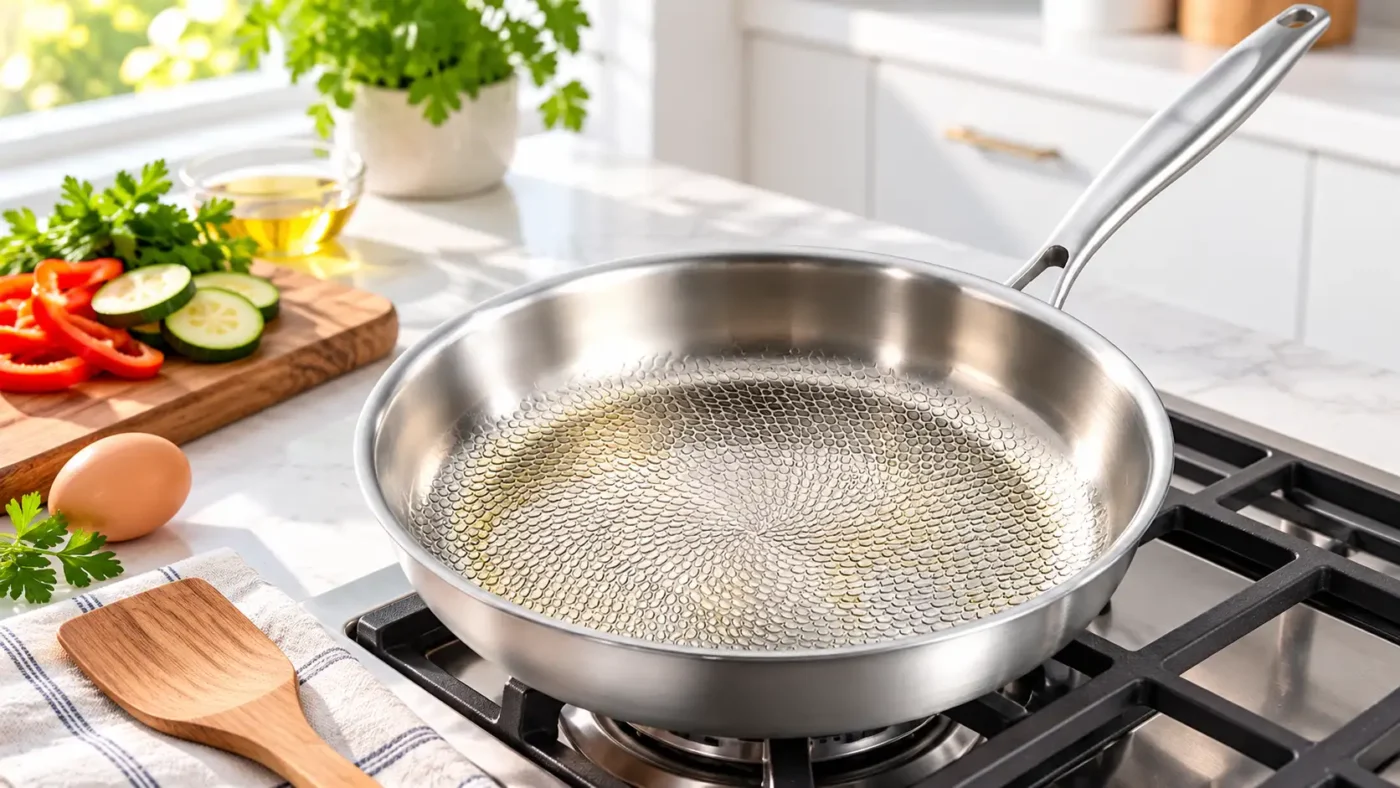
To cook on a titanium surface, start with controlled heat, spread cooking fat across the food-contact area, and move the food according to the recipe. An uncoated titanium surface can still stick; technique and the complete pan’s construction affect the result.
Cooking with titanium requires attention to heat, oil, and timing because an uncoated titanium surface is not a synthetic nonstick coating. This guide covers ordinary pan-frying on an uncoated titanium cooking surface.
When cooking with titanium cookware, the surface material and the complete pan construction both matter. TiRoam’s Titanium Frying Pan uses a TA1 commercially pure titanium food-contact surface within a composite body. The surface material alone does not determine how quickly the whole pan heats. Our guide to Solid Titanium vs. Composite Titanium Cookware explains that distinction.
How to Cook on a Titanium Surface With Controlled Heat
For ordinary pan-frying, begin with low to medium heat and warm the pan gradually according to its instructions. Use the food’s cooking rate to decide whether to increase or reduce the burner setting.
A practical starting sequence is:
- Place a clean pan securely on an approved heat source.
- Select a burner suited to the pan’s base.
- Warm the pan gradually over low to medium heat.
- Add cooking fat and spread it over the contact area.
- Allow the fat to warm, add the food, and adjust the heat as needed.
There is no universal preheating time. Burner output, pan size, construction, and the amount of food all change how the cooking surface responds.
Higher heat is not automatically better. If oil begins smoking or food darkens much faster than expected, reduce the heat or move the pan off the burner briefly. Avoid prolonged empty heating.
Some recipes deliberately start in a cold pan. Follow that method when called for rather than treating preheating as a requirement for every dish.
How Much Oil or Butter Should You Use?
Use enough cooking fat to cover the area where the food will touch the pan. Spread it across that area instead of leaving it pooled in one spot.
On a hammered surface, such as the lotus-leaf hammered titanium frying pan, the shallow grooves hold a thin film of oil, but the food still needs fat underneath where it touches the pan.
The amount depends on the recipe, cooking area, portion size, and fat already present in the ingredients. Lean fish and eggs may need different preparation from fatty meat.
Check coverage again between batches. Food can absorb or carry away some of the fat, leaving the next portion on a drier surface.
Oil helps manage contact between food and the pan, but adding more oil will not necessarily correct excessive heat, old residue, or unsuitable turning technique. Follow the recipe rather than assuming one quantity works for every meal.
When Should You Move or Turn the Food?
Move food when the recipe calls for it and it can be lifted without excessive force. The correct movement depends on what you are cooking.
For a portion of meat or fish, gently test an edge with a suitable spatula. If it resists lifting but is not burning or darkening too quickly, give it a little more time and test again.
Do not assume that every food will eventually release by itself. If the underside is becoming too dark, reduce the heat rather than continuing to wait.
Scrambled eggs need regular stirring or folding. Vegetables may need repeated turning. A fried egg or a piece of fish may need time in place before lifting. Applying the same movement pattern to all four can produce different results.
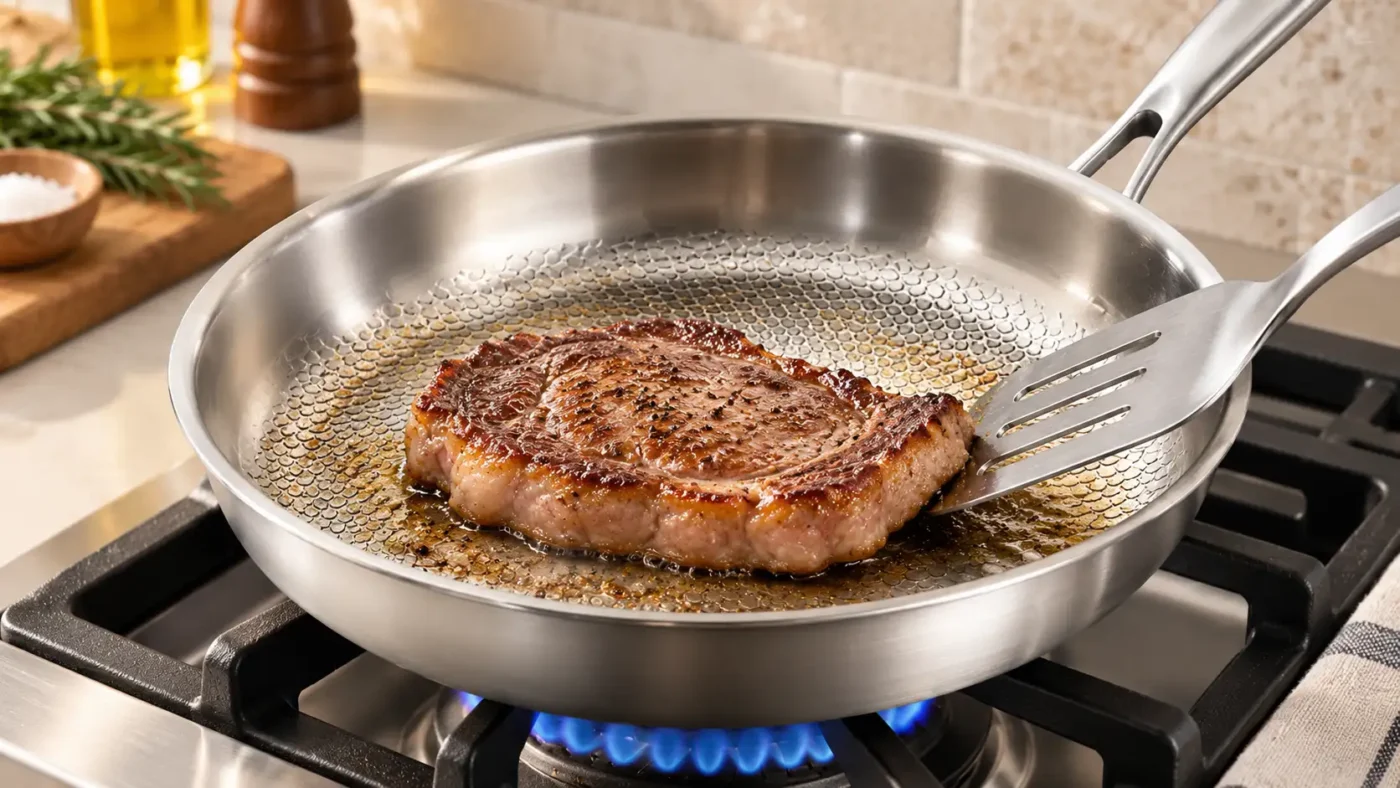
How Should You Adjust for Different Foods?
Use the ingredient and desired result to guide heat, spacing, and movement. These examples are starting points for learning your pan, rather than fixed settings for every stove.
Eggs
Use gentle heat and an evenly distributed layer of butter or cooking oil. Eggs cook quickly, so small heat adjustments can make a noticeable difference.
For a fried egg:
- Warm the pan gently over low to medium-low heat.
- Spread cooking fat over the area where the egg will sit.
- Add the egg before the fat overheats.
- Control the heat while the white sets.
- Test gently before sliding a spatula underneath.
For scrambled eggs, stir or fold according to the recipe instead of waiting for them to release as one piece.
If the edges brown rapidly while the center remains undercooked, reassess the heat. An egg that barely cooks on a cool surface presents a different problem; sticking alone does not identify which adjustment is needed.
Meat and Fish
For browning, manage surface moisture and leave room between portions. Remove excess surface moisture where appropriate for the recipe, then place the food into the prepared cooking area.
A crowded pan can collect liquid and make browning harder to control. Smaller batches give you more room to observe each portion and turn it carefully.
Support delicate fish with a suitable spatula rather than pulling it away from the surface. For thicker pieces, adjust the heat so the exterior does not darken too quickly while the center continues cooking.
Browning and easier release do not establish that the center is safely cooked. Use a food thermometer to check the appropriate internal temperature for the food.
Vegetables
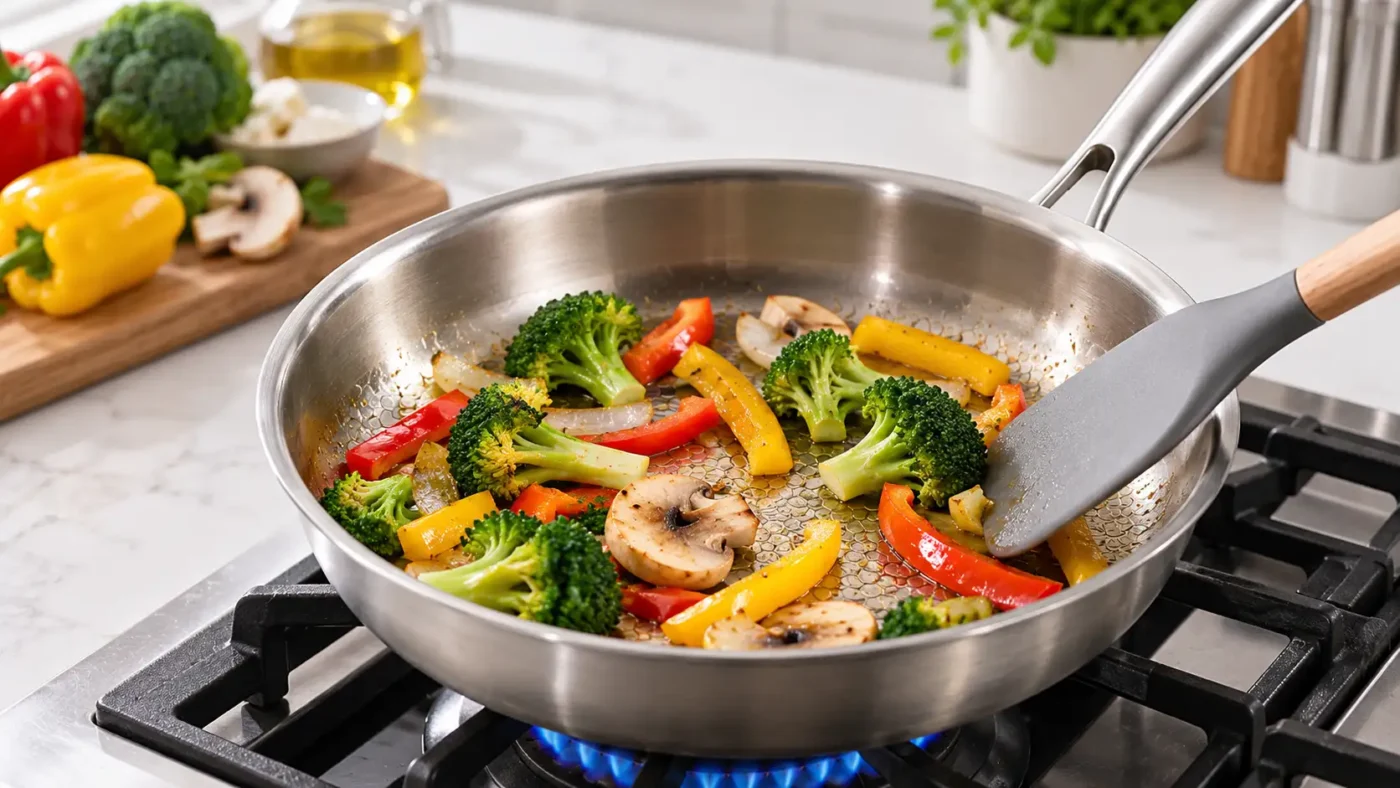
Give vegetables space when browning is the goal, and stir or turn them to suit their size and texture.
High-moisture vegetables can release enough liquid to shift a crowded pan toward steaming. Firmer vegetables may need more cooking time or recipe liquid to soften.
If vegetables darken before reaching the texture you want, reduce the heat or add liquid when the recipe calls for it. If they are cooking too slowly, increase the burner gradually.
Cutting pieces to a similar size can also make their cooking rate easier to manage.
What Should You Check If Food Sticks?
Look at heat, fat coverage, residue, and movement before deciding what to change. Sticking has several possible causes, so use the visible cooking result as a starting point.
| What you notice | Possible factor | What to try |
|---|---|---|
| Oil smokes or food darkens rapidly | Excessive heat for the fat or ingredient | Reduce the heat or move the pan off the burner briefly |
| Some contact areas look dry | Uneven or insufficient fat coverage | Restore coverage before adding the next portion |
| Meat or fish resists lifting without burning | Turning may be too early | Wait briefly, then test gently |
| Food catches where old residue remains | An unclean cooking surface | Remove residue before the next use |
| A crowded pan collects liquid | Portion size and released moisture | Cook smaller batches when browning is the goal |
These are troubleshooting starting points, not certain diagnoses.
When repeating a familiar meal, change one factor at a time. Keep the ingredient quantity similar while adjusting the burner setting, fat coverage, or turning point. That makes the effect of each change easier to assess.
An uncoated titanium surface is not a synthetic nonstick coating. For more on that difference, read Does Titanium Cookware Stick? What to Expect Before You Buy.
How Should You Clean the Pan After Cooking?
Let the pan cool naturally, then remove cooking residue using the method approved for the exact model. Starting the next meal with a clean surface prevents old deposits from becoming another variable.
For TiRoam’s frying pan, wash with warm water, mild dish soap, and a soft sponge or cloth. Soak attached residue before attempting to remove it, then rinse and dry thoroughly.
For food that has already burned onto the surface, follow the burnt-food removal guide for a gradual cleaning approach.
Avoid sudden temperature changes, such as putting a very hot pan under cold running water. Do not use aggressive scraping or abrasive tools unless the product’s instructions permit them.
For detailed care methods, see How to Clean Pure Titanium Kitchenware.
You can compare cooking surfaces, pan shapes, and cooktop compatibility in the TiRoam Titanium Cookware Collection.