
Drinkware & Everyday Carry
Titanium Water Bottle Benefits and Everyday Trade-Offs
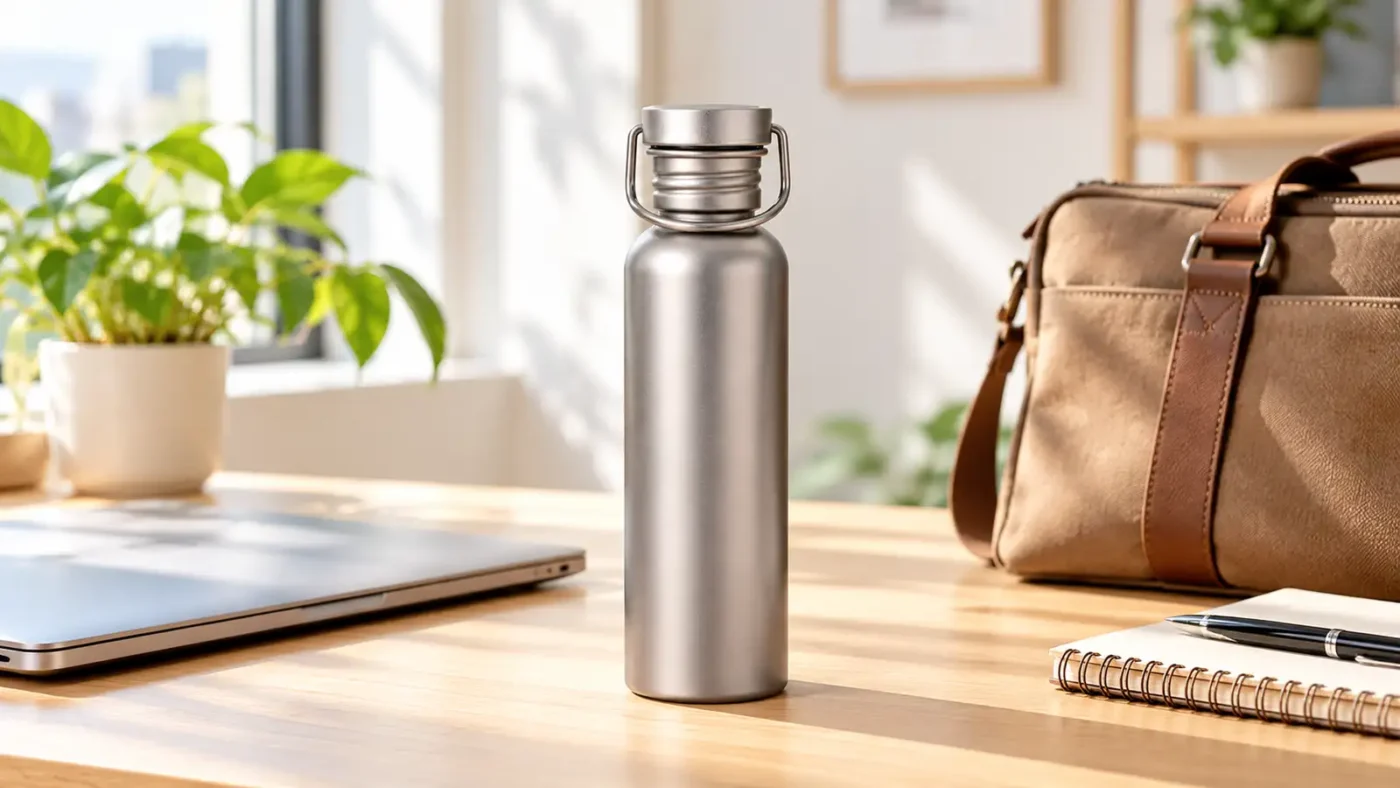
The main titanium water bottle benefits are a lightweight metal body, corrosion resistance, and, in an uncoated design, an interior without an applied liner. Those qualities can suit everyday drinking at home, at work, and on the move. They do not make every titanium bottle lighter than every alternative, eliminate cleaning, or keep water cold.
For a single-wall bottle, the central trade-off is straightforward: you get a simple vessel for carrying and refilling water, without vacuum insulation. Whether that works for you depends on how you drink, what you carry, and which conveniences you value.
Titanium Water Bottle Benefits: Lightweight Everyday Carry
Titanium has a lower density than stainless steel, which gives designers a useful starting point for a light metal bottle. Less empty weight can be welcome in a work bag that already holds a laptop, lunch, and other essentials. It can also make carrying a bottle between a home office, kitchen, and errands feel less cumbersome.
Material alone does not determine finished weight, though. Wall thickness, bottle size, and the cap all contribute. A large titanium bottle can weigh more than a small bottle made from another material, and many plastic bottles are light too.
Water also adds weight regardless of the container. Compare bottles you would actually carry, filled for your normal day, rather than judging the material name alone. If capacity is the unresolved question, the water bottle size guide covers that decision separately.
Corrosion resistance supports repeated use, with limits
Titanium’s corrosion resistance comes largely from a thin, naturally forming protective oxide layer at its surface. This is a material property that makes titanium useful where repeated exposure to water is expected.
For a daily bottle, the practical appeal is a metal body suited to repeated filling, emptying, and washing. You do not need to treat ordinary contact with water as an unusual event. However, corrosion resistance is not permission to use any cleaning chemical or leave every type of drink inside indefinitely. Follow the bottle’s instructions for beverages and cleaning products.
Durability also needs a realistic definition. A reusable titanium body can be a durable part of a daily routine, but a thin-walled bottle can still dent, and its finish can acquire scratches. A drop may affect the neck, threads, or closure even if the body looks usable. Material strength does not guarantee the assembled bottle will survive every impact or remain watertight afterward.
What an uncoated interior actually offers
An uncoated titanium bottle has no applied interior liner between the drink and the titanium surface. The natural protective oxide layer is part of the metal’s surface chemistry; it is different from a separately applied interior coating.
That construction appeals to people who prefer a reusable metal vessel without a lining that needs its own care considerations. It is a specific structural benefit, rather than a reason to make broader health claims.
The description also applies to the bottle body, not automatically to every part of the lid. A cap may use other materials or a sealing component. Check the complete product description before assuming the entire assembly is titanium or contains no plastic.
An uncoated interior does not guarantee a particular drinking experience. Water source, previous drinks, detergent residue, and the condition of the cap can all affect perceived taste or odor. If something smells unusual, clean and inspect the bottle and closure instead of assuming the material makes residue impossible.
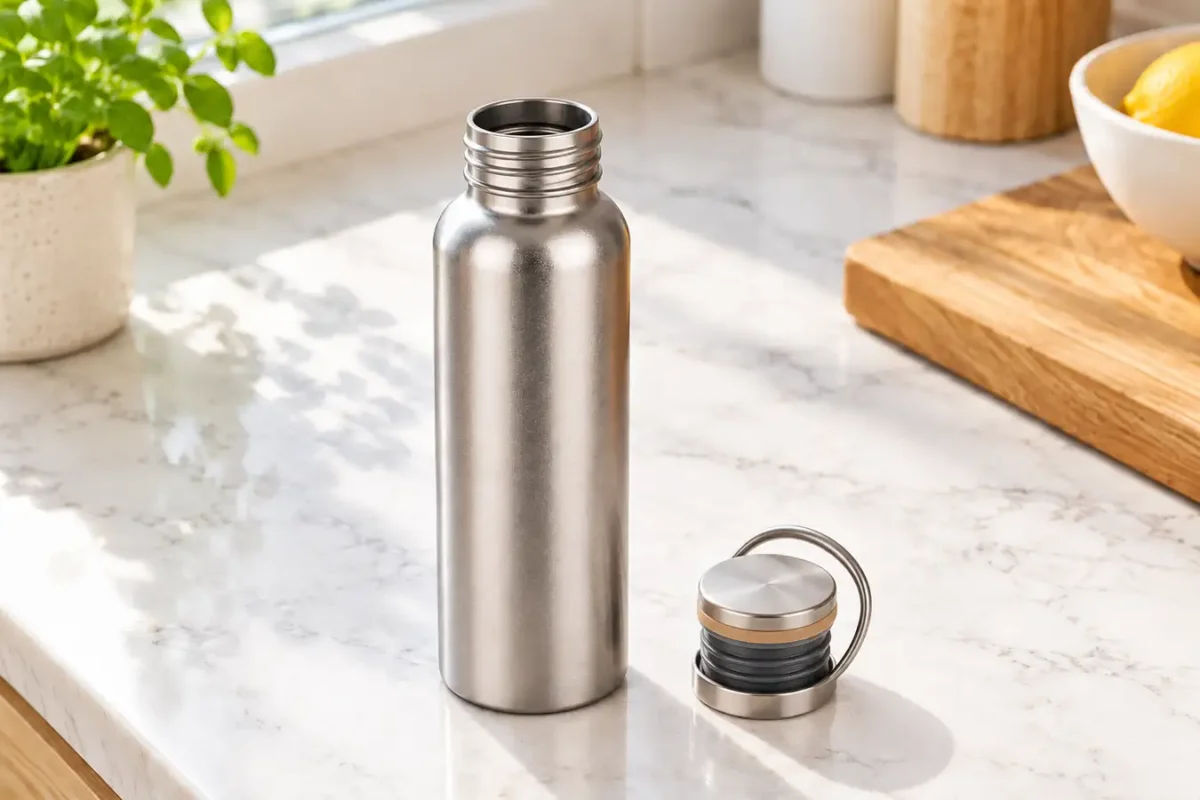
Single-wall construction trades insulation for simplicity
Where a single wall fits everyday use
A single-wall bottle has one wall around the drink, without the vacuum barrier used in a vacuum-insulated bottle. For someone who drinks room-temperature water and refills throughout the day, that can be a suitable arrangement.
Think of filling up before leaving home, refilling at the office, then using the same bottle during the trip back. The bottle holds your water; it does not manage its temperature for you. This distinction matters more than the appeal of a premium material.
Where temperature becomes a limitation
Water in a single-wall bottle moves toward the surrounding temperature. On a warm commute or during a long travel day, it will not stay chilled the way it would in a suitable vacuum-insulated bottle. Cold contents can also cause condensation on the outside, which may be inconvenient beside paperwork or inside a bag.
Hot contents can make the body, neck, and drinking rim hot. Check the exact model’s instructions before using hot drinks, and do not assume a comfortable grip or sip.
Single-wall construction does not, by itself, authorize direct heating. Removing the cap is not sufficient evidence that a particular bottle is suitable for a stove, flame, or other heat source. Follow that model’s current care instructions, and never heat a sealed container.
The purchase price and cap still matter
Titanium bottles often cost more upfront than many conventional reusable options. That extra spending may make sense if low body weight and an uncoated metal interior are features you appreciate every day. It may add little value if your main priority is a low-cost container for occasional use.
There is no automatic payback period. How often you use the bottle, how you care for it, and whether the closure remains serviceable all affect its usefulness over time. A durable body alone does not establish the lifespan of the complete bottle.
The cap can also shape daily satisfaction more than expected. For example, a screw cap involves opening and closing the bottle each time you drink. Someone who strongly prefers a one-handed spout may find that routine less convenient. Titanium’s material advantages do not cancel out a closure that does not suit your habits.
An accessible interior helps, but cleaning is still required
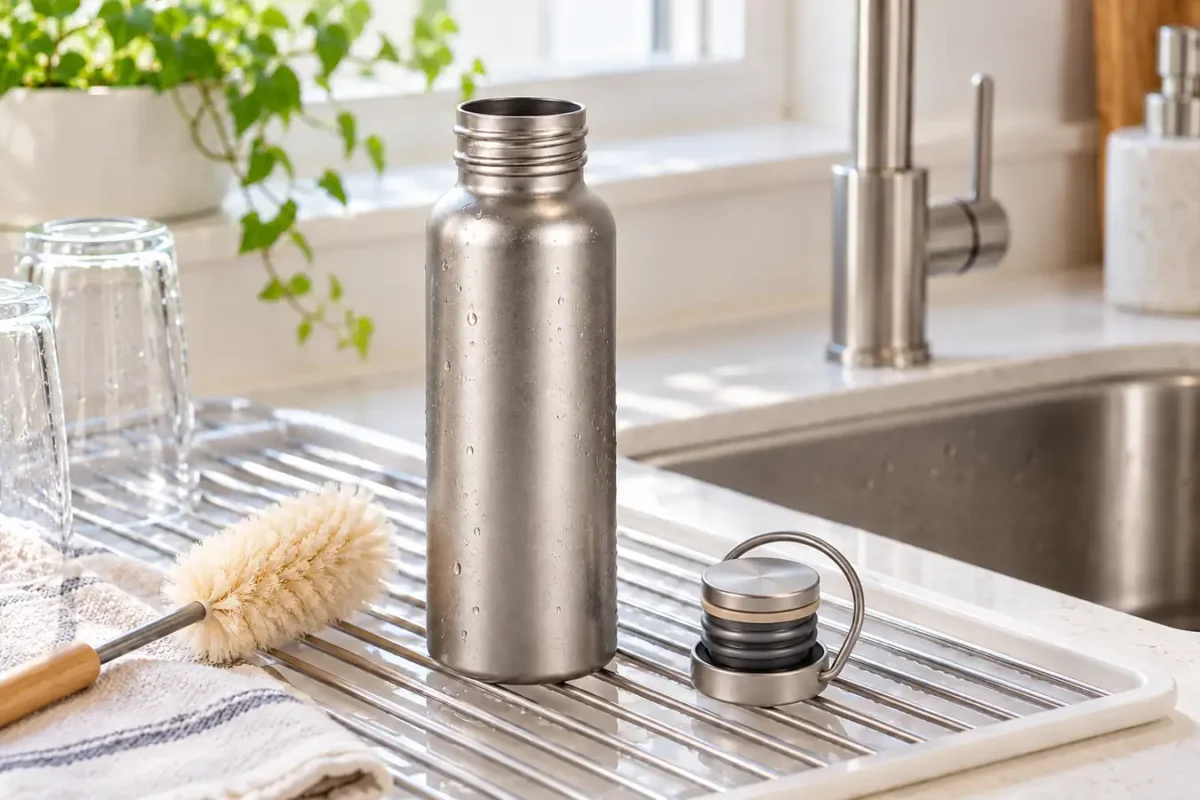
A wide opening can make it easier to see and reach inside a bottle with an appropriately sized soft brush. That is useful after a day on a desk or a journey when the bottle has been repeatedly handled and refilled. It does not make the bottle self-cleaning.
For the TiRoam bottle discussed here, the published cleaning guidance uses warm water, mild dish soap, and gentle cleaning of accessible surfaces. Give the neck, threads, and reachable areas of the cap attention as well as the main chamber. Rinse thoroughly and let the bottle and cap dry before closed storage.
The sealing component stays in place during routine cleaning; do not pry it out or assume it is designed for removal. The guide to cleaning bottle lids and seals explains that routine in more detail. Do not infer dishwasher, boiling, or harsh-cleaner compatibility from the body material alone.
When the benefits are worth the trade-offs
A single-wall titanium bottle can be a good fit if you prefer room-temperature water, have regular access to refills, and value a light metal body without an applied interior liner. Home, office, commuting, and everyday travel can all fit that pattern.
A vacuum-insulated bottle may suit you better if keeping a drink hot or cold for an extended period is the main goal. A different closure may be more useful if opening a cap repeatedly interrupts your routine. If purchase price is the priority, a less expensive reusable bottle may meet your needs just as well.
For a broader comparison of bottle features, use the everyday titanium bottle selection guide. The decision here is narrower: do the material benefits matter enough to you to accept the single-wall limitations?
The TiRoam Single-Wall Pure Titanium Water Bottle combines an uncoated interior, a wide opening, and a cap with a carry loop. Consider it if those features match how you already drink and carry water. Choose it for that everyday fit, with clear expectations about temperature, cap care, and cost.