
Home, Work & Travel
Road Trip Tableware Checklist for Meals on the Go
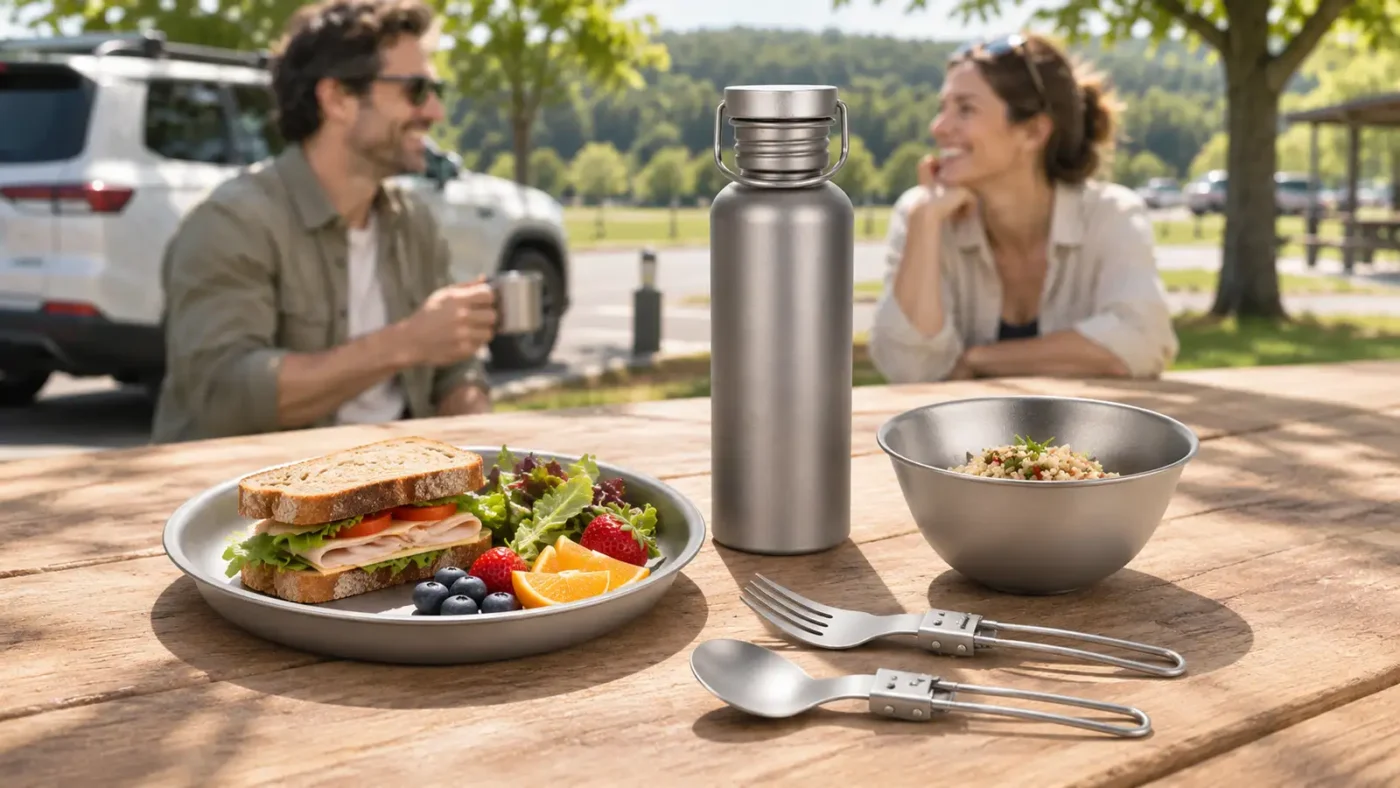
A good road trip tableware checklist starts with the basics: a plate or bowl, the utensils each person needs, and a drinking bottle or cup. Add shared supplies for serving food, cleaning up, and carrying used dishes home. Keep everything within easy reach so you can enjoy a meal after parking without unpacking half the car.
The right setup depends on how many people are traveling, what you plan to eat, and whether you can wash dishes between meals. A quick sandwich stop for two requires much less than a weekend with several shared meals.
If you’re putting together a set for the first time, our guide to building a reusable eating kit explains how to choose a few practical pieces before adapting them to your trip.
Start With People, Meals, and Facilities
Before packing, think about who will be eating, what you’ll serve, and where you’ll stop. You don’t need separate dishes for every meal if you’ll have a place to wash and dry them.
Start with three questions:
- How many people are eating together? Make sure everyone has their own utensils and something to drink from.
- What are you planning to eat? Sandwiches may only need a plate or food container. Salads, noodles, and foods with sauces are often easier to eat from a bowl.
- Where will you clean up? A picnic table doesn’t necessarily mean there’s a sink, drinking water, or somewhere to wash dishes.
Also consider whether you’re packing meals from home or buying food along the way. Takeout containers sometimes work as serving dishes, so you may not need to bring extra plates for every stop.
Your Road Trip Tableware Checklist
Use this checklist as a starting point. You can leave out anything your meals don’t require.
| Purpose | For Each Traveler | Shared Supplies |
|---|---|---|
| Holding food | One plate, bowl, or food container | Serving container for shared dishes |
| Eating | Fork, spoon, or utensils suited to the meal | Serving utensils when needed |
| Drinking | Water bottle or cup | Extra drinking water or planned refill access |
| Setting up | Napkin | Clean table covering if needed |
| Cleaning up | Space to store used personal utensils | Handwashing and dishwashing supplies |
| Bringing items home | — | Separate containers or bags for used dishes and trash |
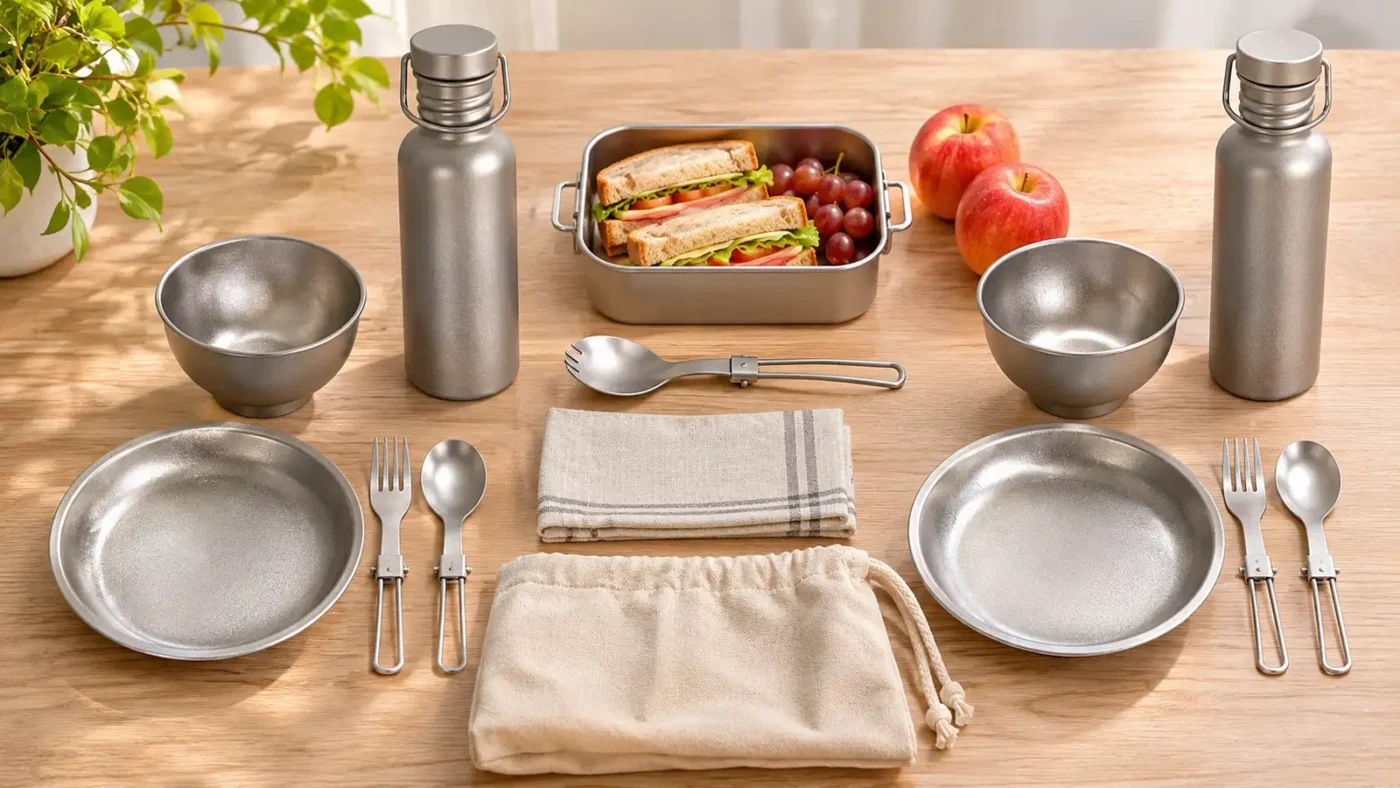
You don’t need both a bowl and a plate for every meal. Choose the one that works for most of what you’ll eat, then add another piece only when it serves a purpose.
The same goes for utensils. If you’re bringing sandwiches and fruit, you probably don’t need a complete knife, fork, and spoon set for everyone.
For travelers who prefer lightweight, reusable tableware, titanium plates, bowls, and utensils are worth comparing by size, weight, and ease of cleaning. Focus on the pieces you’ll actually use rather than packing an entire matching set.
What Can You Share?
Serving utensils, a table covering, and cleanup supplies can usually be shared by the group. Personal utensils and drinking bottles are easier to manage when everyone knows which items are theirs.
If you’re sharing a salad or another side dish, keep a serving utensil with the food container. That way, nobody has to borrow someone else’s eating fork to serve another portion.
Give each traveler a familiar place to keep their items. Small pouches, labeled containers, or separate sections of a meal bag can all work. You don’t need specialized organizers unless they make packing easier.
Planning several meals without access to washing facilities? Bring enough clean utensils for those meals or plan a stop where you can wash them properly. Putting a used fork back in its pouch doesn’t make it clean for the next meal.
Pack the Car Around the Next Meal Stop
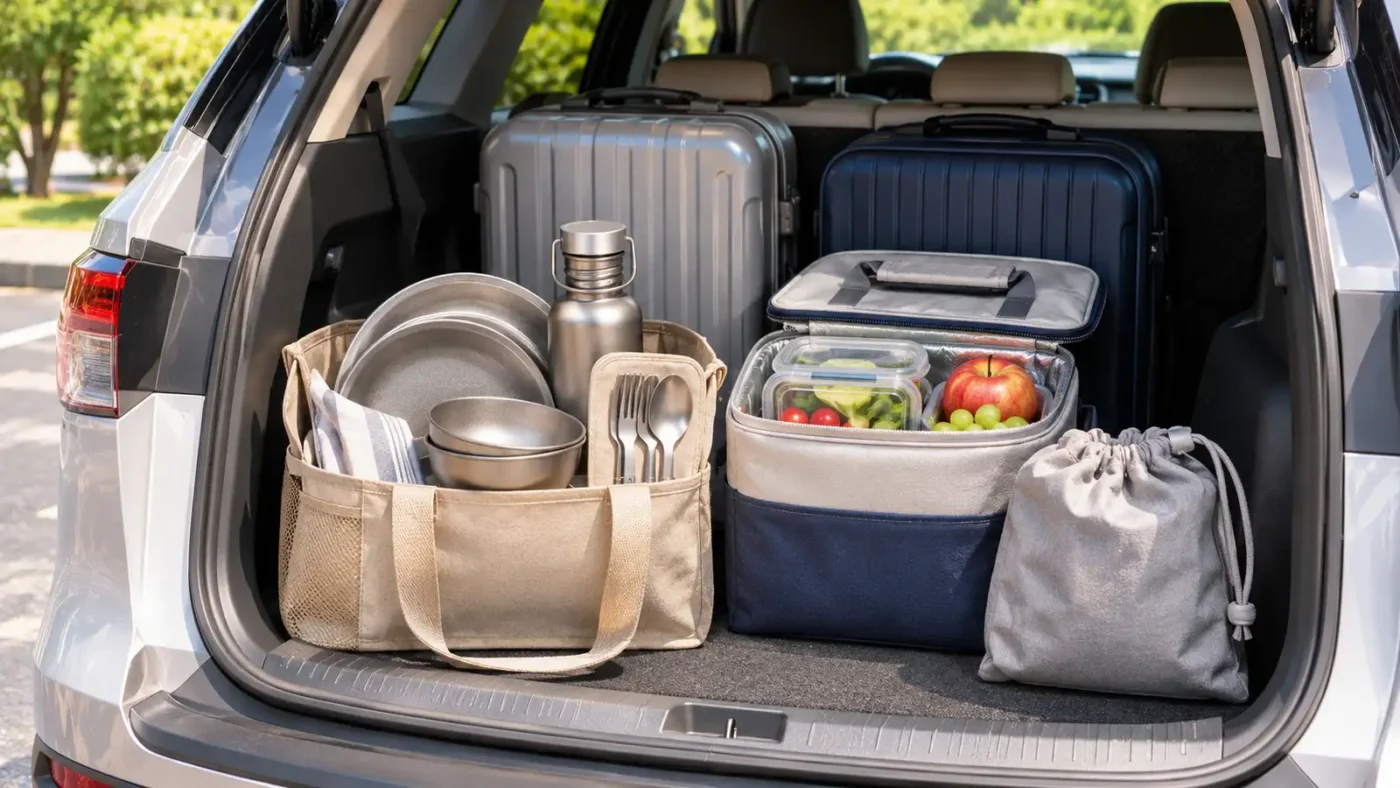
Pack your tableware so you can reach it after parking without moving suitcases or digging through several bags.
A simple approach is to organize everything into three groups: clean tableware, food storage, and a place for used dishes.
Keep Clean Tableware Together
Store clean plates, bowls, and utensils in one dedicated bag or container. Keep food-contact surfaces away from shoes, luggage wheels, tools, and other items that may be dirty.
Place heavier pieces toward the bottom and arrange them so they won’t knock against bottles or other dishes during the drive.
Don’t assume different products will stack or nest neatly. Check how they actually fit before leaving home.
Keep Food Storage Separate From Tableware Storage
Your tableware bag is for organizing dishes, not keeping food cold.
Likewise, an ordinary metal food container shouldn’t be treated as an insulated cooler. Food that requires refrigeration still needs appropriate temperature-controlled storage.
Follow food storage instructions, especially when bringing prepared meals, dairy products, or other perishable foods.
For drinking water, think about how long you’ll travel between refill stops. Our water bottle size guide can help you choose a practical capacity without packing more bottles than you need.
Leave Space for Used Items
One of the easiest things to forget is where everything will go after you’ve eaten.
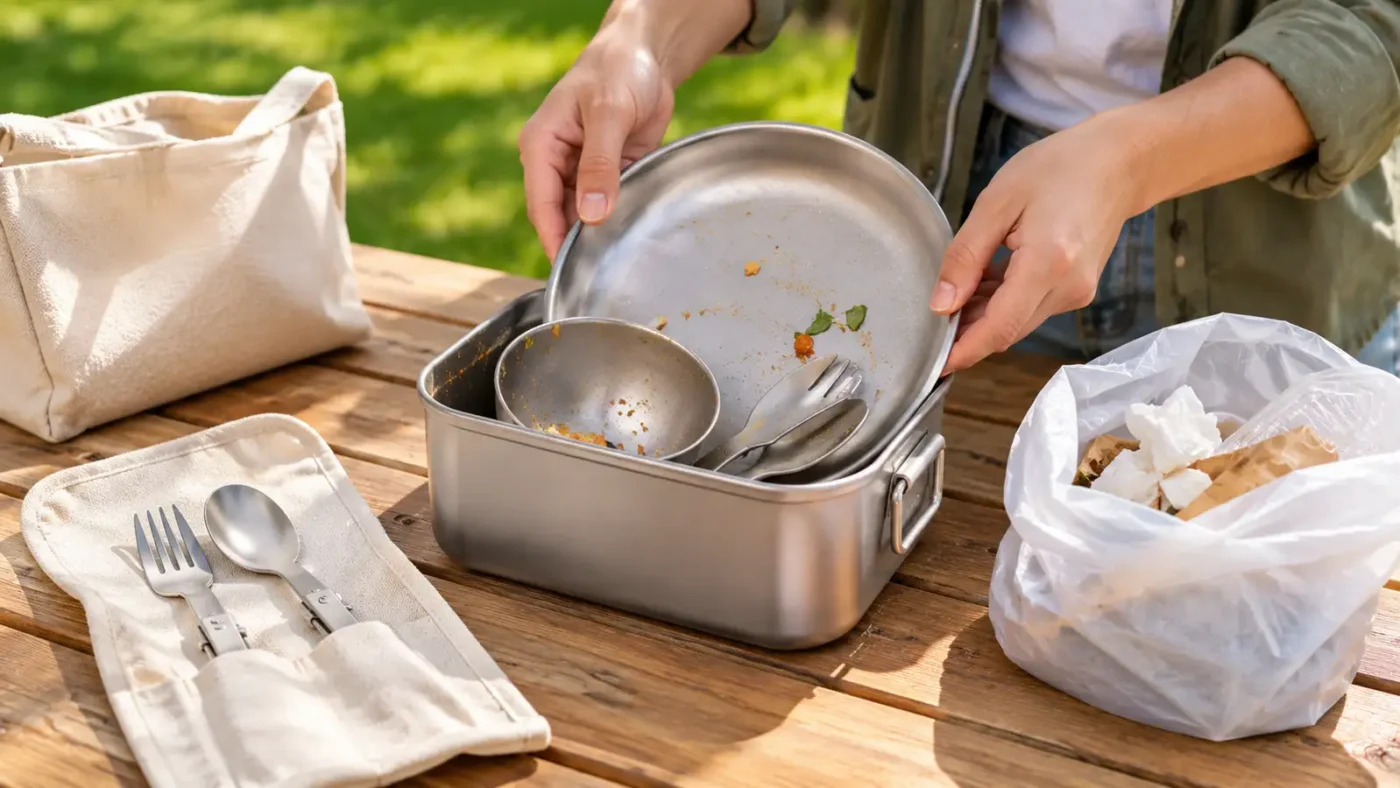
Bring a separate washable container or bag for used dishes. Make sure it has enough space for plates, bowls, utensils, and anything that may no longer pack as neatly after the meal.
Keep used tableware away from clean items and ready-to-eat food. Pack trash separately, especially greasy wrappers or anything that could spill.
Secure bags and hard objects before driving, and keep the driver’s footwell clear.
Set Up After You Park
A good meal stop doesn’t require an elaborate setup. The goal is to get your food and tableware out, enjoy the break, and pack everything away without leaving a mess.
Park safely before getting out your food or dishes. Find a stable table or another suitable stationary eating surface.
When you stop:
- Check the table and available handwashing facilities.
- Take out only the dishes and utensils needed for that meal.
- Place shared food and serving utensils where everyone can reach them.
- Leave clean spare items packed away.
- Put used dishes into their designated return container when the meal is finished.
If the table is dirty, clean it or cover it before setting out your food. Avoid placing clean utensils directly on the ground or an unclean car surface.
Before getting back on the road, make sure all dishes, bottles, and loose supplies are securely packed.
A Weekend Example for Two Travelers
Imagine two people taking a weekend drive. They’re bringing lunch for the first day and planning another meal stop on the way home. They’ll have access to a place to wash dishes at their destination.
Their first lunch includes sandwiches, a shared side dish, and drinking water.
Here’s what they pack:
- Two plates or food containers.
- Two forks for the shared side.
- Two water bottles.
- One serving utensil.
- Napkins.
- Handwashing supplies.
- One container for used dishes.
- A separate bag for trash.
They leave the extra bowls, cups, and full cutlery sets at home because those items aren’t needed for the planned lunch.
At their destination, they wash and dry the dishes before repacking them. If washing isn’t available, they’ll need clean utensils for the return meal instead.
This isn’t a fixed packing list for everyone. A family of four, a longer drive, or meals that require bowls and spoons will call for a different setup.
The useful question is simple: What will everyone actually need at the next meal stop?
Bring Used Tableware Home Without Mixing It With Clean Items
Once the meal is finished, remove food scraps into an appropriate waste container and separate used dishes from anything still clean.
Close containers securely for the drive home, but don’t assume an ordinary storage bag or an unverified lid will prevent leaks.
Wash reusable dishes at a suitable facility, following the care instructions for each item. Wiping away visible food residue can make packing easier, but it’s not a substitute for proper washing before the next use.
If you’re carrying folding utensils, pay attention to the joints and moving parts where food residue can collect. Our folding titanium cutlery cleaning guide covers those details.
When you get home, unpack used tableware promptly. Wash and dry everything before putting it away.
Returning clean items to their usual storage spot also makes packing for the next trip much easier.
Check Your Tableware Kit Before Leaving
Before loading the car, use this road trip tableware checklist for one final check. Set your meal bag next to your luggage and make sure you have everything you need:
- Can you reach the meal bag after parking without moving heavy luggage?
- Does everyone have the utensils needed for their meals?
- Are shared serving supplies easy to find?
- Have you arranged appropriate food storage for anything perishable?
- Is there enough space to keep used dishes separate?
- Are bottles, containers, and other hard items secure for the drive?
You don’t need an oversized collection of travel tableware to eat comfortably on the road. A few well-chosen pieces, packed in the right places, will usually do the job.
Start with the tableware you already own. If you’re looking for a lightweight, reusable option for your next trip, explore our titanium tableware collection and choose the pieces that fit your routine.