
Drinkware & Everyday Carry
What Size Water Bottle Should You Choose for Work and Day Trips?
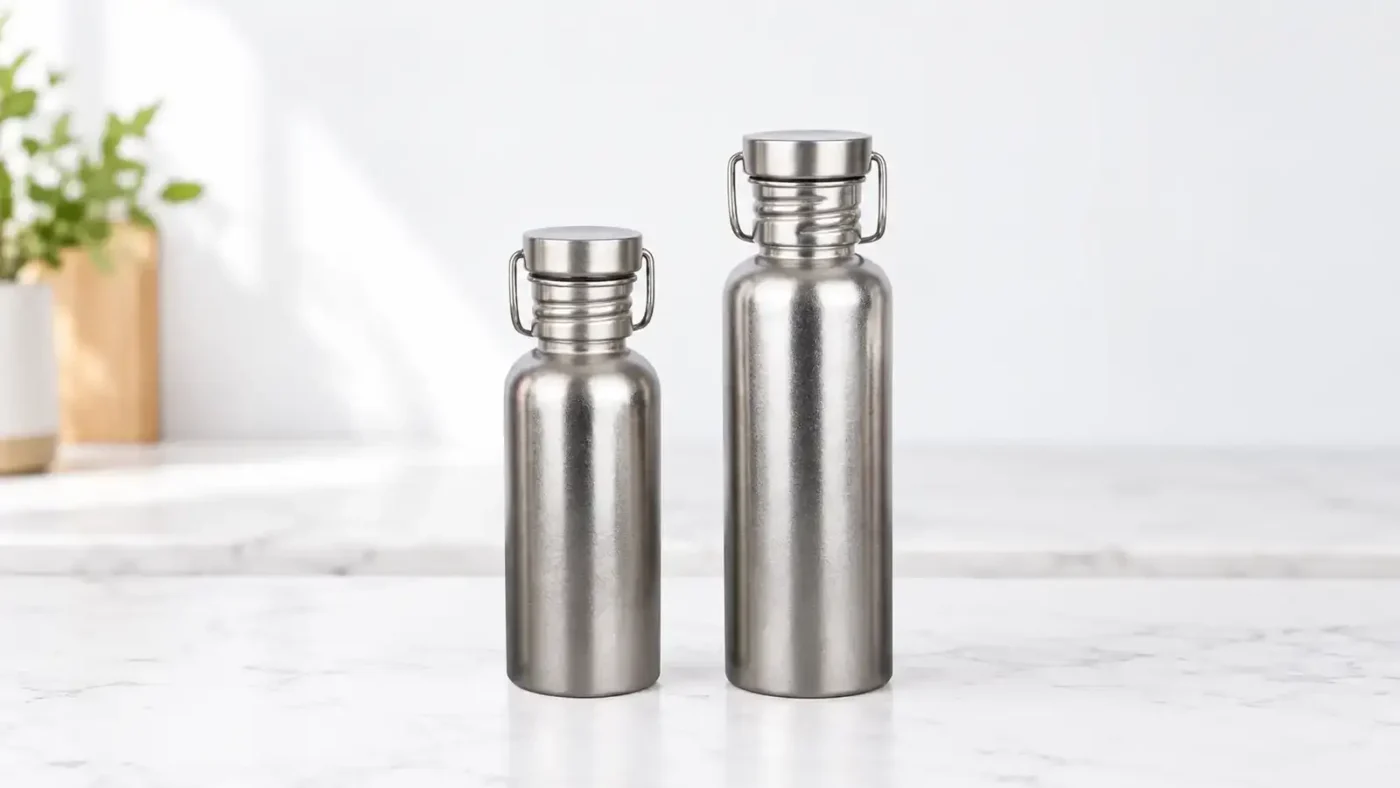
Choose 500 ml when compact carrying and convenient refills fit your routine. Choose 750 ml when the additional water is useful enough to justify the extra filled weight and height.
This water bottle size guide compares the two capacities for work and day trips, using refill access, carrying comfort, and bottle dimensions as the main decision points. TiRoam’s Pure Titanium Water Bottle provides specific examples of how those differences affect everyday use.
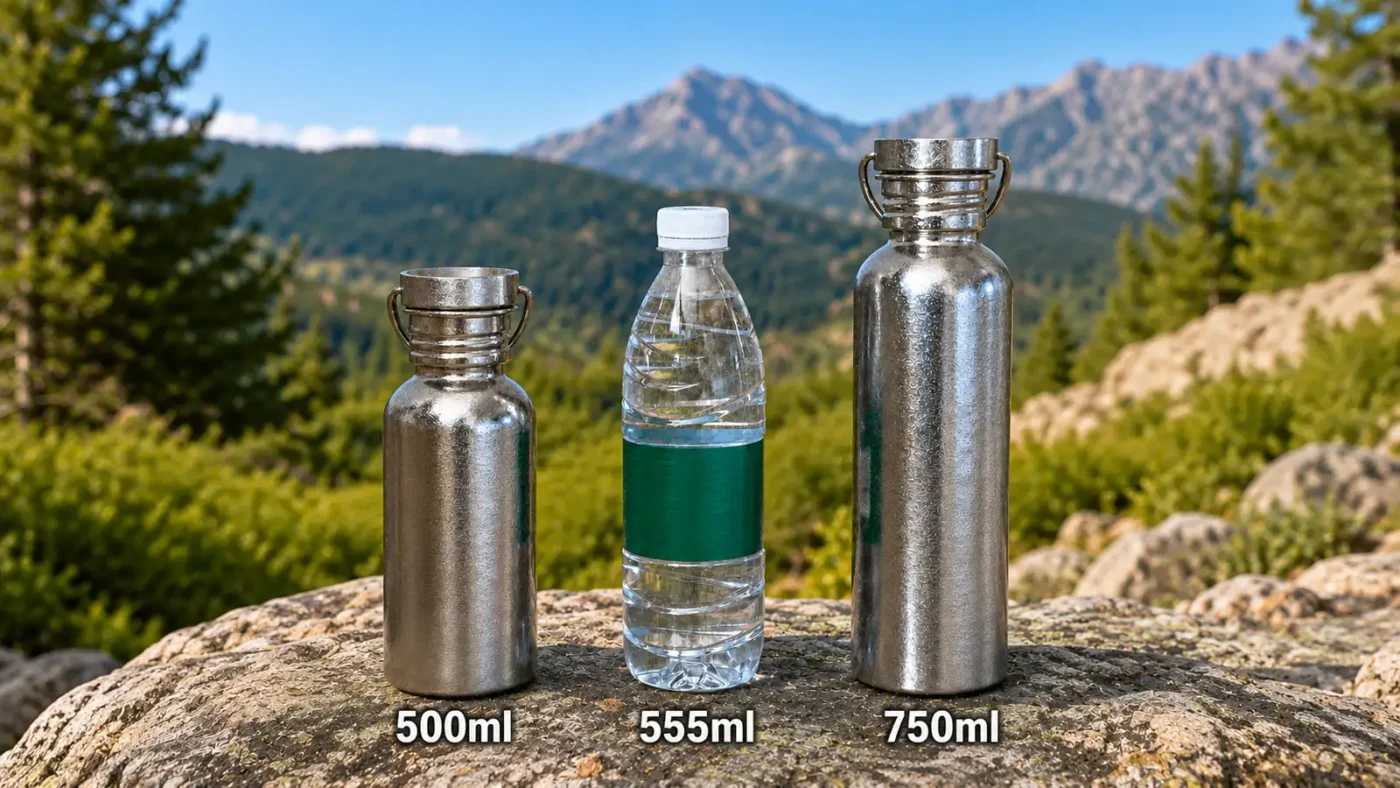
For shoppers comparing the average size of bottled water containers, 500 ml and 750 ml are useful reference points because they show how capacity changes carrying weight and overall dimensions.
Common Water Bottle Sizes in ml and US fl oz
Many single-serve bottles of water sold in the US hold 16.9 US fl oz (500 ml), which is why 500 ml is such a common reference size.
Capacity tells you how much liquid a bottle holds; it does not tell you its height or diameter. These rounded US fluid-ounce conversions let you compare common sizes across brands. They are capacity references, not a list of TiRoam products.
| Capacity | Approx. US fl oz |
|---|---|
| 350 ml | 11.8 |
| 500 ml | 16.9 |
| 600 ml | 20.3 |
| 750 ml | 25.4 |
| 1 L (1,000 ml) | 33.8 |
How Big Is a 500 ml Water Bottle?
A 500 ml bottle holds 0.5 liter, or about 16.9 US fl oz. That is its capacity, not a standard external size. A tall, narrow bottle and a shorter, wider one can hold the same amount.
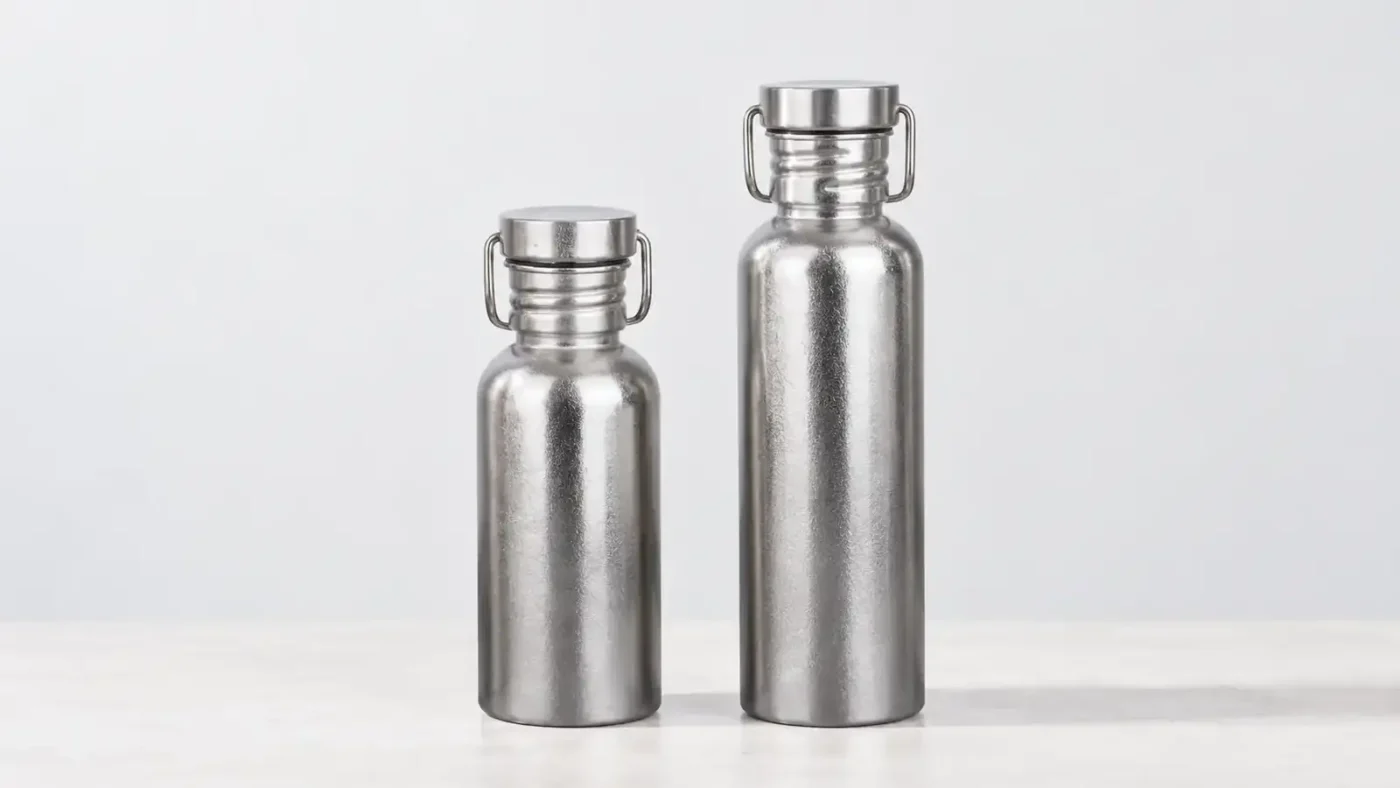
As a model-specific example, TiRoam lists its 500 ml single-wall Pure Titanium Water Bottle at 19 cm (7.48 in) tall, with a 7 cm (2.76 in) body diameter. The dimensions table below compares both TiRoam capacities; these measurements should not be applied to every 500 ml bottle.
Water Bottle Size Guide: 500 ml vs 750 ml
The main trade-off is carrying less weight versus having more water available between refills. Start with where you can reliably refill, then consider how you will carry the bottle.
| Capacity | When it may suit your routine | Main trade-off |
|---|---|---|
| 500 ml / 16.9 US fl oz | A compact commute, desk use with accessible drinking water, or short errands | Less water available before the next refill |
| 750 ml / 25.4 US fl oz | More water at your desk or longer gaps between refill opportunities | More weight when filled and potentially more space in your bag |
These are carrying scenarios, not promises that either size will cover a fixed number of hours.
If you already use a reusable bottle, notice how often you refill it and how much water remains when you reach your next refill point. That gives you a practical starting point for choosing capacity.
Capacity is one part of the decision; our everyday titanium water bottle guide also covers openings, caps, carrying, and maintenance.
What Water Bottle Size Works Well for Work?
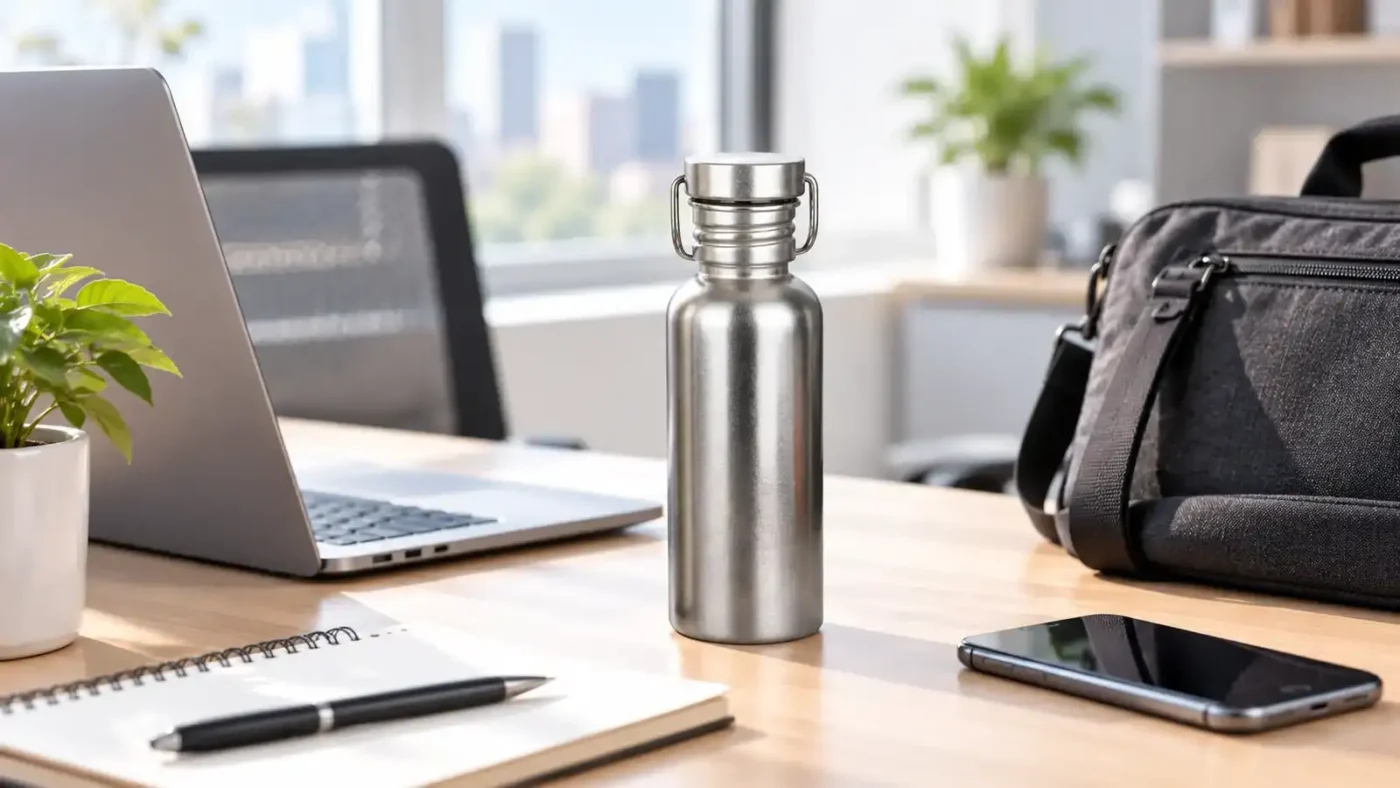
Choose around your commute and the drinking water available at work. A bottle carried through a walking commute creates different requirements from one that stays beside your computer.
A 500 ml bottle may suit a compact work bag when refilling is convenient. It leaves less water to carry at one time and can be easier to accommodate alongside a laptop, lunch, and other belongings.
A 750 ml bottle may suit someone who wants more water available during meetings or prefers fewer trips to a refill point. Check its filled weight against the rest of what you normally carry.
Your work bottle does not need to hold an entire day’s water if you can refill it. Bottle capacity is a carrying decision, not a universal daily hydration target.
What Water Bottle Size Should You Carry for a Day Trip?
Choose capacity around the longest gap between reliable refills. The total length of the outing alone does not tell you how much water you need to carry.
A city outing with accessible drinking-water points may allow frequent refills. Another route may have few places where you can obtain water, even if the outing is relatively short.
Check refill locations before leaving rather than assuming they will be available. A 750 ml bottle carries 250 ml more than a 500 ml bottle, but neither capacity should automatically be treated as sufficient for every trip.
If the planned gap between refills requires more water than either bottle holds, carry additional water or revise your refill plan.
How Much Do the Bottles Weigh When Full?
Compare the bottle plus its contents, not just the empty weight. For practical estimates, 500 ml of water adds approximately 500 g, while 750 ml adds approximately 750 g.
TiRoam publishes the following empty weights for its Pure Titanium Water Bottle:
| Capacity | Published empty weight | Estimated total weight when filled with water |
|---|---|---|
| 500 ml | Approx. 122 g / 4.3 oz | Approx. 622 g / 21.9 oz |
| 750 ml | Approx. 144.8 g / 5.11 oz | Approx. 894.8 g / 31.6 oz |
Filled weights are calculated by adding approximately 1 g per ml of water to the published empty weights. They are estimates, rather than measurements of individual filled bottles.
Based on the published empty weights, the difference is about 273 g when both bottles are filled to their stated capacities. Most of that difference comes from the additional 250 ml of water.
See both sizes, finishes, and current pricing on the Pure Titanium Water Bottle page.
That distinction matters when comparing products advertised as lightweight. A modest difference in empty weight can become a more noticeable difference once the bottles are filled.
Will the Bottle Fit Your Bag or Cup Holder?
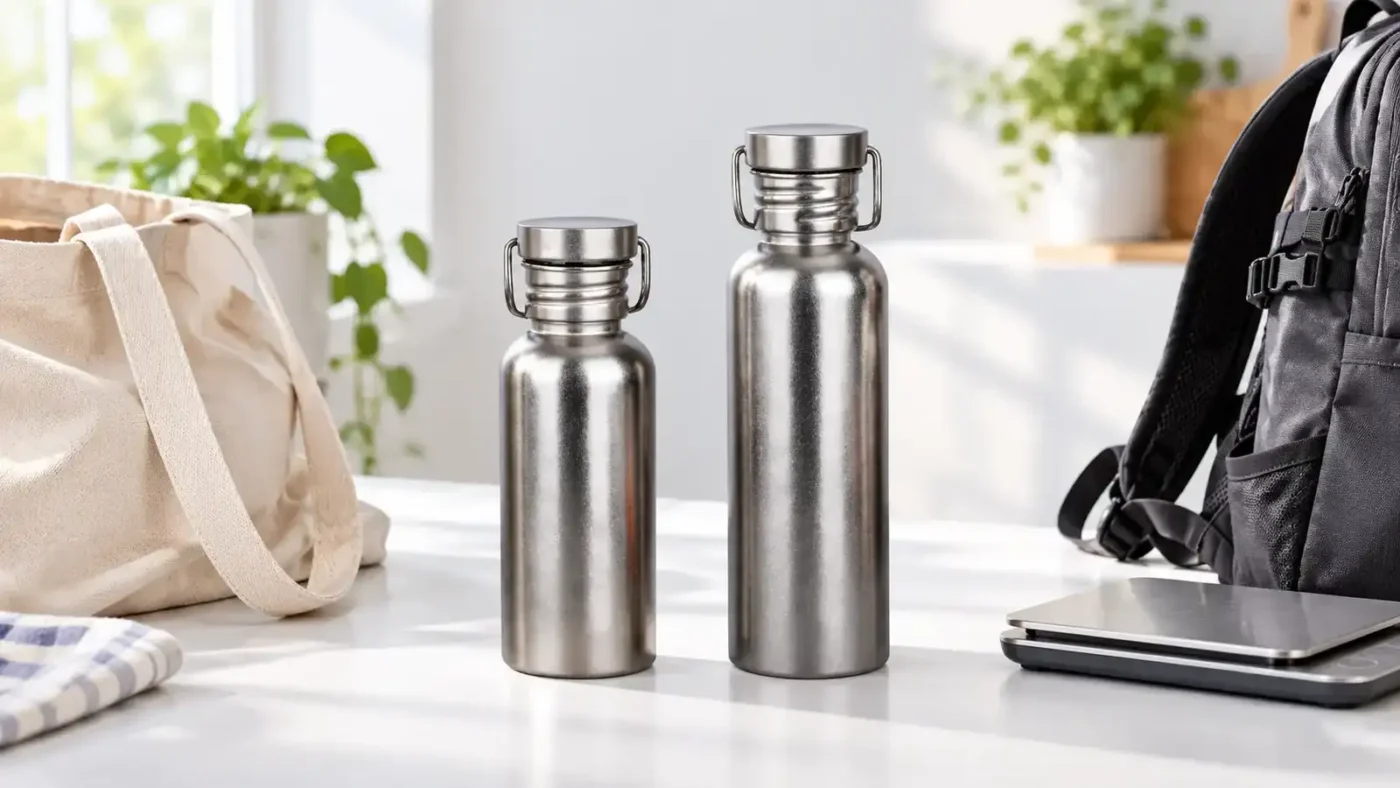
Check the actual height and diameter against your carrying space. Capacity alone does not establish whether a bottle fits a side pocket, bag compartment, or cup holder.
TiRoam lists these dimensions for its Pure Titanium Water Bottle:
| Capacity | Listed height | Listed body diameter |
|---|---|---|
| 500 ml | 19 cm / 7.48 in | 7 cm / 2.76 in |
| 750 ml | 25.5 cm / 10.04 in | 7 cm / 2.76 in |
The two versions have the same listed body diameter, while the 750 ml version is 6.5 cm taller. In this comparison, water bottle length is therefore one of the main physical differences between the two capacities, while the listed body diameter remains the same.
Measure both the pocket opening and the available height. Also consider whether you can easily remove and replace the bottle without rearranging your bag.
TiRoam notes that dimensions and weights may vary by ±5%. A nominal 7 cm diameter should not be treated as a guaranteed fit in a rigid opening of exactly that size.
Does Capacity Tell You Whether a Bottle Is Insulated?
No. Capacity and insulation are separate specifications. TiRoam’s 500 ml and 750 ml Pure Titanium Water Bottles use single-wall construction and are not insulated.
Choose between these capacities according to carrying needs. If keeping a drink hot or cold for an extended period is important, compare products that explicitly specify insulation and their stated temperature-retention performance.
Do not infer insulation from the word “titanium” or from a larger capacity.
For an explanation of wall construction, read Single-Wall vs. Double-Wall Titanium Mugs: Which Should You Choose?. That article discusses mugs; use the exact bottle specifications when evaluating a bottle.
Water Bottle Size Guide: Final Buying Checklist
Before ordering, check the selected capacity against one typical workday or outing.
Check bottle-lid and seal care as well, since cleaning access differs between cap designs.
- Identify the drinking-water refill points you can reliably use.
- Decide how much water you want available between those points.
- Compare the estimated filled weight with your usual bag contents.
- Measure the available height and width in your carrying space.
- Check the bottle’s construction separately from its capacity.
- Review the specifications for the exact size you intend to order.
Compare both sizes on the Pure Titanium Water Bottle product page, or browse the TiRoam Titanium Drinkware Collection if another format better suits your routine.
Packing meals for a road trip as well? The road trip tableware checklist covers what to bring alongside your bottle.