
Tableware & Everyday Dining
How to Choose a Titanium Bowl for Rice, Soup, and Everyday Meals
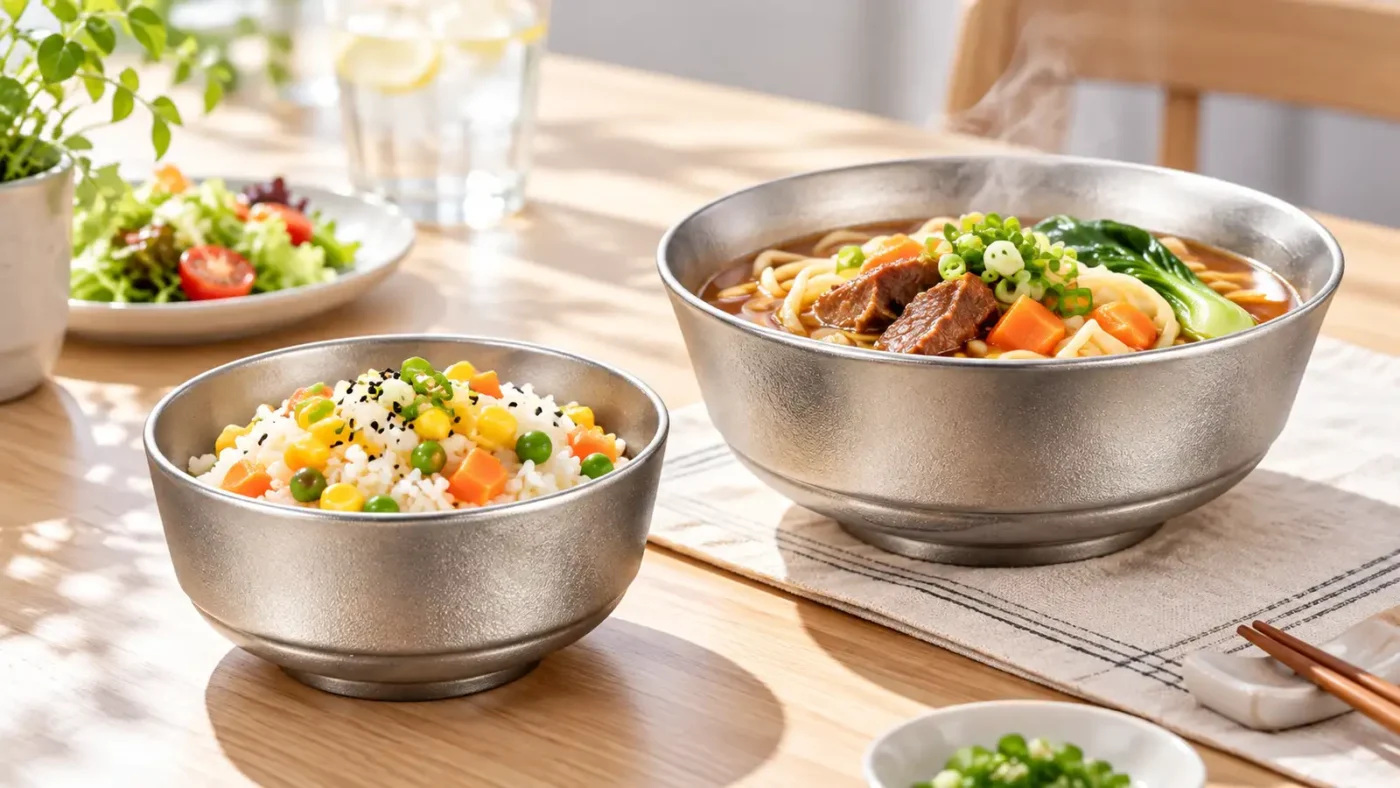
When deciding how to choose a titanium bowl, start with the food you plan to serve, then compare capacity, top diameter, depth, finished weight, and wall construction. A compact bowl around 380 ml can suit rice, cereal, fruit, snacks, and side dishes, while a larger bowl around 900 ml provides more room for noodles, soup, salad, and mixed meals. Do not choose by capacity alone: the bowl’s shape and the amount of headroom you need also affect daily use.
How to Choose a Titanium Bowl for Everyday Meals
The right titanium bowl is the one that fits your usual meal without feeling crowded or unnecessarily large. Make a short list of what you expect to eat from it before comparing products.
A smaller bowl can work well for:
- Rice or grain portions
- Cereal
- Fruit
- Snacks
- Side dishes
- Modest servings of soup
A larger bowl may be more practical for:
- Noodle soup
- Chili or stew
- Salad
- Grain bowls
- Rice with several toppings
- Meals that need space for stirring
This does not mean every meal requires a separate bowl. The useful question is which format covers most of your normal meals with enough room to carry, stir, and eat comfortably.
For meals served on a plate, use our titanium dinner plate guide to compare shape and dimensions separately.
If you frequently transport lunch rather than serving it immediately, keep the functions separate. An open bowl and a closed food container solve different problems. TiRoam’s guide to titanium, glass, and stainless steel food containers covers the separate questions of lids, transport, reheating, and material trade-offs.
How Much Bowl Capacity Do You Need?
Capacity should reflect both the amount of food and the headroom needed to use the bowl comfortably. A bowl filled close to its listed capacity may leave little room for stirring, toppings, or carrying without spills.
Use the listed capacity as a comparison specification rather than assuming it represents the ideal everyday fill level. The shape of the bowl also determines how that capacity feels in practice.
| Buying question | Compact bowl | Larger bowl |
|---|---|---|
| Typical capacity example | 380 ml / 12.8 fl oz | 900 ml / 30.4 fl oz |
| Likely meal roles | Rice, cereal, fruit, snacks, sides | Noodles, soup, salad, mixed meals |
| Counter and storage space | Easier to fit into a small place setting | Requires more shelf and table space |
| Carrying around the kitchen | Lower finished weight may be easier to handle | Larger food capacity also means more weight when filled |
| Headroom | Limited for stirring a full serving | More room for broth, toppings, or mixing |
The table describes practical buying differences, not fixed serving rules. Appetite, recipe, food density, and preferred headroom vary.
When comparing two products, check whether the stated capacity is accompanied by actual dimensions. Capacity tells you how much space is inside; diameter and height tell you how the bowl will sit on the table and feel during use.
Compare Diameter and Depth Alongside Capacity
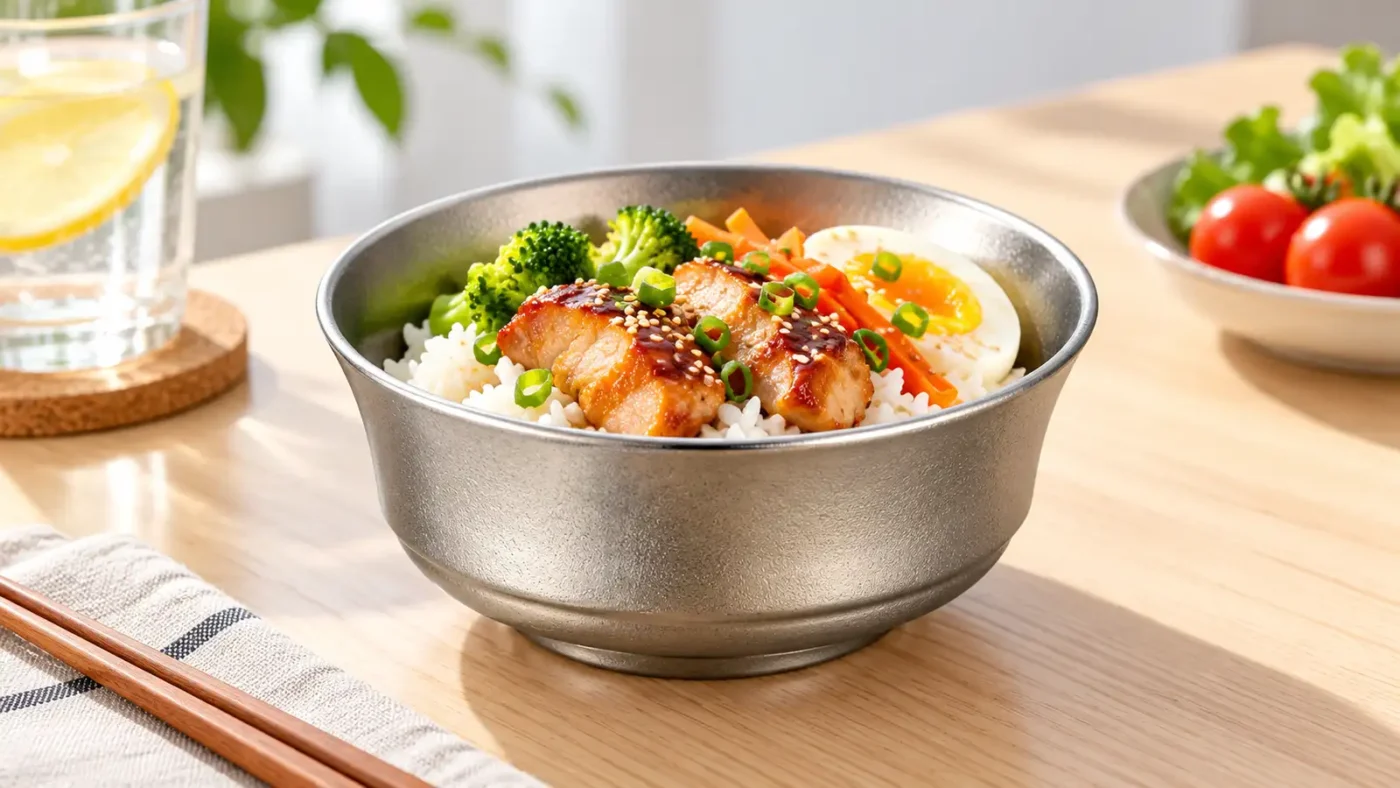
Diameter and depth determine whether a bowl feels better for rice, broth, noodles, or a mixed meal. Two bowls with similar capacity can still behave differently if one is broad and shallow while the other is narrower and deeper.
A wider opening can make it easier to:
- Arrange toppings
- Cool food across a larger surface
- Use a fork and knife where appropriate
- Mix salads or grain bowls
- See and reach different parts of the meal
A deeper profile can help with:
- Broth-based foods
- Noodles
- Carrying the bowl a short distance without filling near the rim
- Keeping a compact footprint on the table
Neither shape is universally better. Look at your usual utensils and eating position. A bowl used at a dining table may have different requirements from one used for a quick lunch at a desk.
The currently listed 380ml Double-Wall Pure Titanium Bowl measures 11.5 cm in diameter and 6.5 cm high. The 900ml Double-Wall Pure Titanium Bowl has a listed top diameter of 17.8 cm and a height of 8.1 cm. These dimensions show why capacity alone does not describe the complete eating experience.
What Does Double-Wall Construction Change?
Double-wall construction places space between the inner and outer walls, changing the bowl’s handling and complete construction. It should not be interpreted as permission to cook with the bowl or place it in a microwave.
TiRoam describes both current examples as double-wall pure titanium bowls. The 900 ml product specification identifies its structure as double-wall vacuum construction. The 380 ml product page lists pure titanium double-wall construction and states that it is suitable for hot and cold foods.
TiRoam’s product pages describe these double-wall designs as helping make the exterior more comfortable to hold with hot or cold foods. Still, check the exterior temperature before handling a bowl filled with very hot food.
Do not generalize one bowl’s construction to every titanium bowl. Before buying, verify:
- Whether the bowl is single-wall or double-wall
- Whether the manufacturer describes a vacuum structure
- Whether it is intended only for serving or for another use
- Its microwave and dishwasher instructions
- Whether any lid or accessory is actually included
A double-wall serving bowl is still tableware. It should not be treated as a cooking pot unless the manufacturer specifically identifies it for that use.
Consider Finished Weight and Filled Weight
Check the finished product weight, but also think about how much the bowl will weigh when filled. A larger bowl carries more food or liquid, so the difference during use can be greater than the empty specifications suggest.
TiRoam currently lists the 380 ml bowl at approximately 81 g / 2.86 oz. The 900 ml bowl is listed at approximately 230 g / 8.11 oz. Both product pages note that dimensions and weight may have a tolerance of ±5%.
The lighter bowl may be easier to move between a shelf, counter, and table. The larger model provides much more meal capacity but occupies more space and becomes correspondingly heavier when filled.
Consider the full routine:
- Take the bowl from storage.
- Fill it at the counter.
- Carry it to the table or desk.
- Hold or reposition it while eating.
- Wash and dry it.
- Return it to storage.
The best specification is the one that works throughout that route—not simply the lowest empty weight.
Choose Between a Compact and Large TiRoam Bowl
Choose the 380 ml bowl when you primarily need a compact bowl for rice, cereal, fruit, snacks, side dishes, or smaller servings. Choose the 900 ml bowl when you regularly serve noodles, soup, salad, or mixed meals that benefit from more room.
380ml Double-Wall Pure Titanium Bowl
The 380ml Double-Wall Pure Titanium Bowl is the more compact option.
Its current listed specifications are:
- Capacity: 380 ml / 12.8 fl oz
- Diameter: 11.5 cm / 4.53 in
- Height: 6.5 cm / 2.56 in
- Approximate weight: 81 g / 2.86 oz
- Structure: Pure titanium, double-wall
This format makes sense when table space, storage space, or easy handling matters more than maximum capacity.
900ml Double-Wall Pure Titanium Bowl
The 900ml Double-Wall Pure Titanium Bowl is designed for larger everyday meals.
Its current listed specifications are:
- Capacity: 900 ml / 30.4 fl oz
- Top diameter: 17.8 cm / 7.01 in
- Bottom diameter: 8.5 cm / 3.35 in
- Height: 8.1 cm / 3.19 in
- Approximate weight: 230 g / 8.11 oz
- Structure: Pure titanium, double-wall vacuum
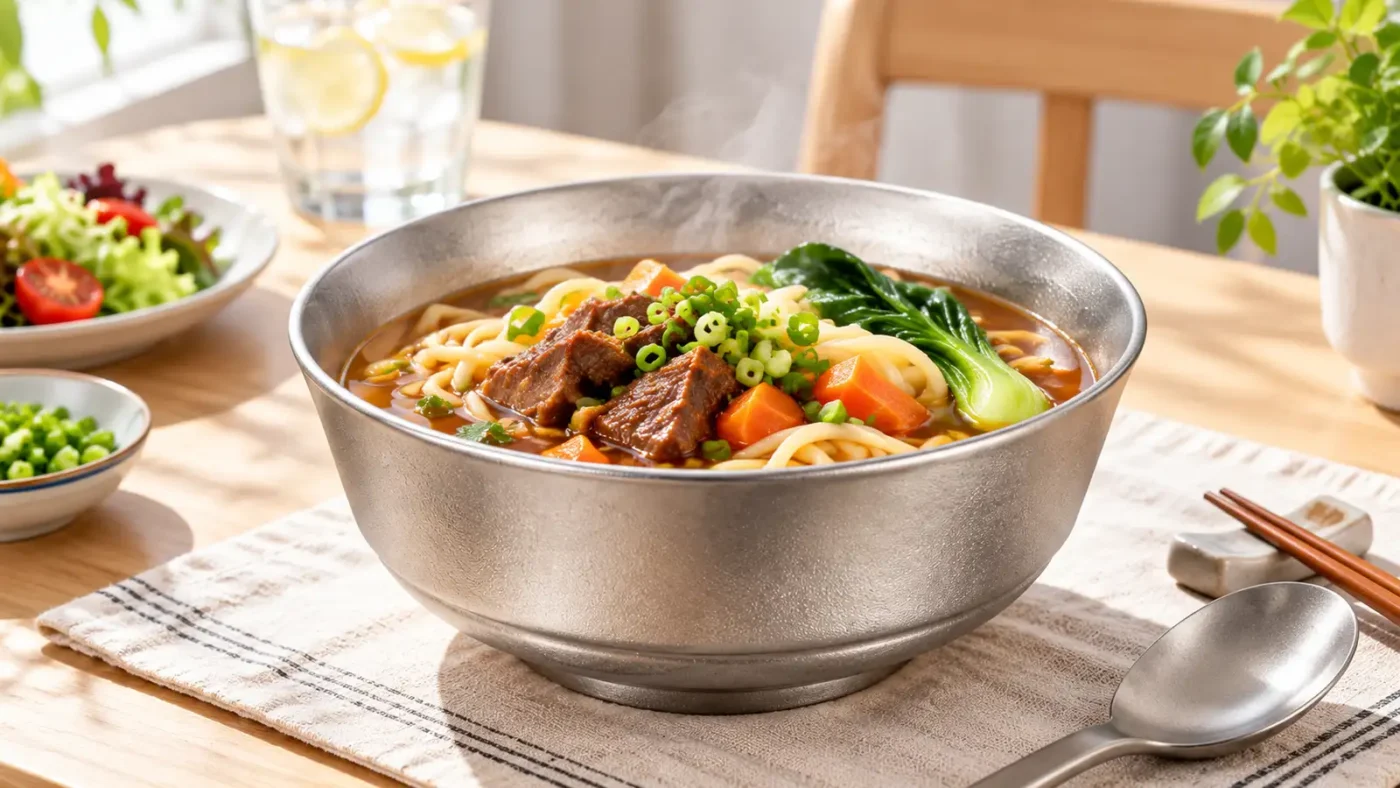
This format provides more room for broth, noodles, salad, toppings, and meals that need stirring space.
Other bowl formats are available, so browse the TiRoam Titanium Tableware collection when you want to compare the complete current selection rather than only these two capacities.
Check Cleaning and Storage Before Buying
Choose a bowl whose care requirements fit your normal cleanup routine. A bowl that is easy to wash but awkward to dry or store may still become inconvenient.
The current TiRoam bowl instructions recommend washing before first use, using a soft sponge or non-abrasive cleaning tool, and drying thoroughly before storage. Hand washing is recommended to help preserve the finish.
Avoid assuming that every titanium bowl has identical care instructions. Colored or crystalline finishes, attached components, and different constructions may have model-specific guidance.
For general care principles, see How to Clean Pure Titanium Kitchenware. That guide covers mild dish soap, non-abrasive cleaning, rinsing, drying, and the distinction between cosmetic surface changes and damage.
Storage deserves the same attention. Confirm that the bowl fits:
- Your cabinet or drawer
- The available shelf height
- Any intended stack
- Your dish rack
- The area where it will dry
Do not assume differently sized double-wall bowls will nest securely unless the product information confirms it.
Match the Bowl With the Rest of Your Place Setting
A bowl should work with the utensils and eating location you use most often. Check whether your spoon, fork, or spork feels proportionate to the bowl’s depth and diameter.
A compact bowl paired with an unusually long utensil may feel unbalanced. A deep, wide bowl may be easier to use with a full-length spoon or fork. These are small details, but they affect every meal.
If you are building a reusable lunch setup, How to Choose Titanium Cutlery for Work Lunches explains utensil length, folding versus fixed designs, packed dimensions, and cleaning access. Keep that decision separate from bowl capacity: the bowl holds the meal, while the cutlery guide addresses how you eat and carry the utensils.
A Practical Buying Checklist
Before choosing a titanium bowl, verify these points on the exact product page:
- Meal type: Decide whether the bowl is mainly for rice, sides, cereal, soup, noodles, salad, or mixed meals.
- Capacity: Allow enough room for toppings, broth, or stirring instead of planning to fill the bowl to its limit.
- Diameter and height: Confirm that the shape works with your table, desk, utensils, and storage.
- Finished weight: Consider both the empty bowl and its weight when filled.
- Wall construction: Identify whether the bowl is single-wall, double-wall, or specifically described as vacuum construction.
- Care instructions: Check washing tools, finish care, drying, and microwave guidance.
- Included parts: Do not assume a lid, case, or accessory is included unless it is listed.
- Intended use: Treat a serving bowl as tableware, not cookware.
When deciding how to choose a titanium bowl for everyday use, the practical difference often comes down to size: choose a compact bowl when you value smaller portions and easy handling, or choose a larger bowl when your meals need more volume and working space.