
Tableware & Everyday Dining
How to Choose Titanium Cutlery for Work Lunches
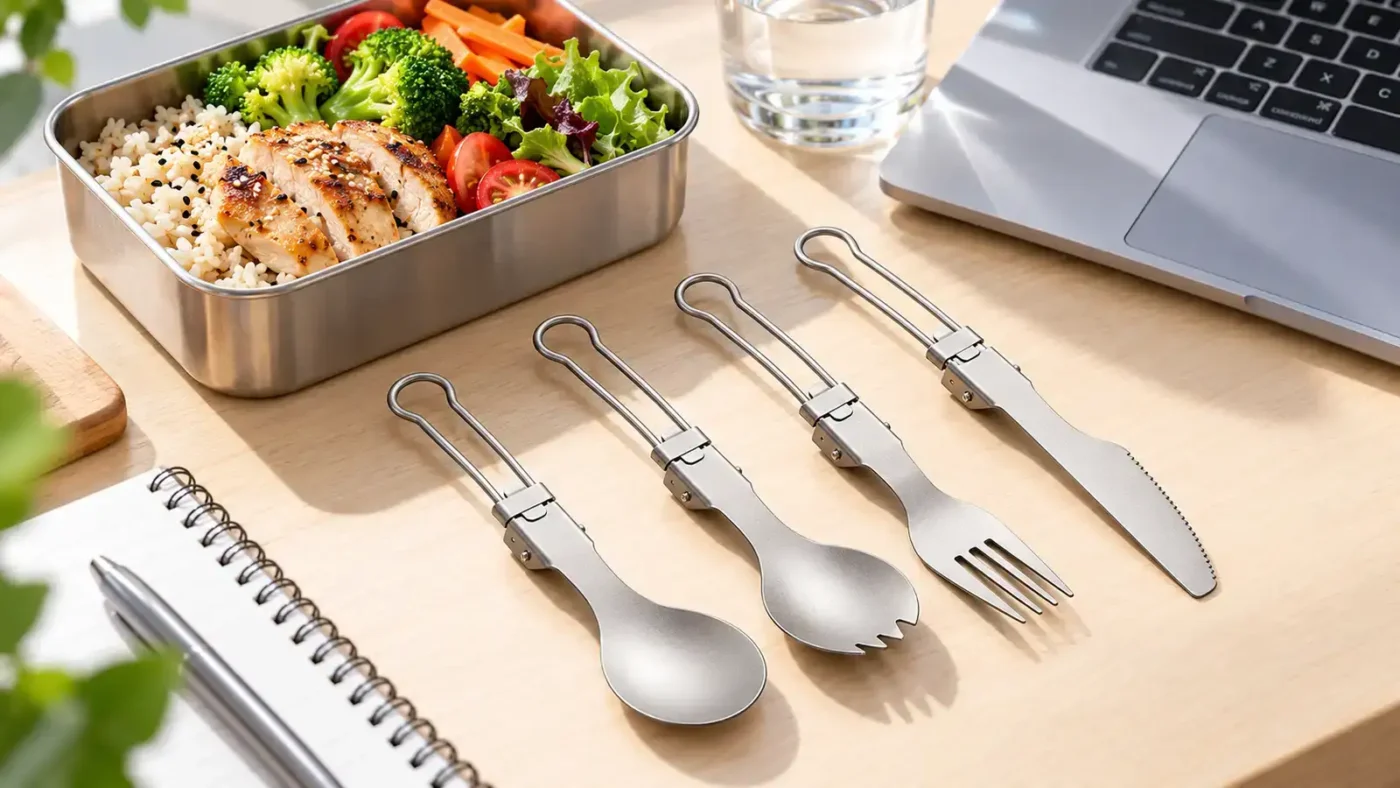
To choose titanium cutlery for work lunches, match the spoon, fork, or spork to your usual meal, then check handle length, grip, and packed size. Choose a folding design when shorter storage length helps your commute; consider fixed cutlery when it can stay in a desk drawer.
A rice bowl, a pasta salad, and a cup of soup ask different things of an eating utensil. The most useful choice is one that handles your regular lunch comfortably and fits the way you carry it.
Start with a meal and container you already use. They give you a practical reference for comparing products.
If the container is changing too, use the lunch container size guide to check usable meal space and packed dimensions.
How to Choose Titanium Cutlery by Utensil Shape
Choose the eating head around what you need to scoop, pick up, or cut.
A spoon is a useful starting point for rice dishes, yogurt, and soup. For liquid foods, pay attention to the bowl depth and shape: a shallow head may feel different from the spoon you use at home.
A fork can suit pasta, salad, and pieces of vegetables or meat. Look at tine length and spacing, especially if you regularly pick up small ingredients or twirl noodles.
A spork combines scooping and short tines in one piece. It may be convenient for a mixed lunch, but the shape is a compromise. If you often eat soup and salad, separate spoon and fork heads may suit those meals better.
Include a knife when your lunch regularly needs cutting. If you portion the food before packing, you may have less reason to carry one every day.
Check Handle Length Against Your Lunch Container
Choose enough reach to eat from the container comfortably while keeping a usable grip above its rim.
A shallow lunch box and a deep food jar can require different handle lengths. Overall utensil length includes the eating head, so it does not tell you exactly how much handle remains above the food.
Try a utensil you already own with your usual container. Notice whether your fingers approach the rim, whether you can reach the corners, and whether the head fits between any dividers. Measure that utensil as a reference when reading product dimensions.
If you are choosing the container too, read Titanium vs Glass Food Containers: How Does Stainless Steel Compare? for the separate questions of carrying weight, storage, and reheating.
Folding vs Fixed Titanium Cutlery
Folding cutlery can reduce storage length; fixed cutlery can simplify setup when compact packing is less important.
For a commute, a folding handle may let a comfortable eating length fit into a shorter compartment. Compare the open and folded measurements separately. A short packed length does not automatically mean a short utensil during use.
Fixed cutlery may be convenient if you keep a set at work and have enough drawer space. It removes the unfolding step and has no folding joint to check.
For a folding model, read how the handle is secured for eating and follow that product’s instructions. Check that it stays in its intended open position during ordinary use. Do not assume that every folding utensil uses the same mechanism.
Compare actual listed weights too. Folding construction alone does not establish which utensil will be lighter.
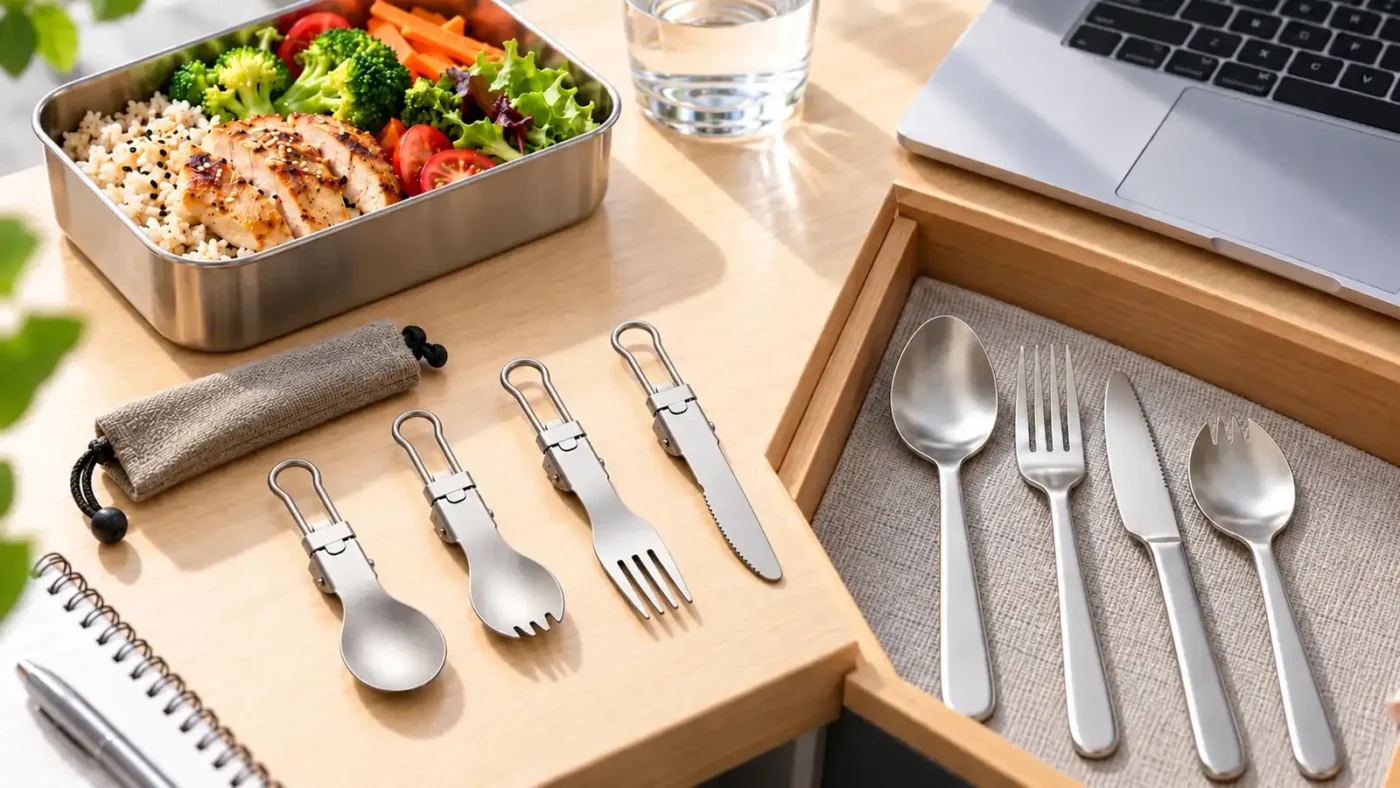
Look at Grip and Eating Comfort
Handle shape and the finish of the eating head determine how the cutlery feels in your hand and mouth.
Look at the part of the handle you will hold. A narrow wire handle, a flat handle, and a shaped grip can feel different even at the same overall length. When possible, compare the design with cutlery you already find comfortable.
Product photographs can help you inspect the spoon rim, fork tines, and head shape, but they cannot establish how comfortable a finish will feel.
After delivery, wash the utensils before first use and check that the eating surfaces and folding mechanism are in normal condition.
Read the material description for the specific product as well. Where handles or joint components are described separately, check those details rather than extending a titanium label to every component.
Use Published Dimensions to Check Packed Fit
Compare the longest folded piece with the usable space inside your chosen pouch or lunch-bag compartment.
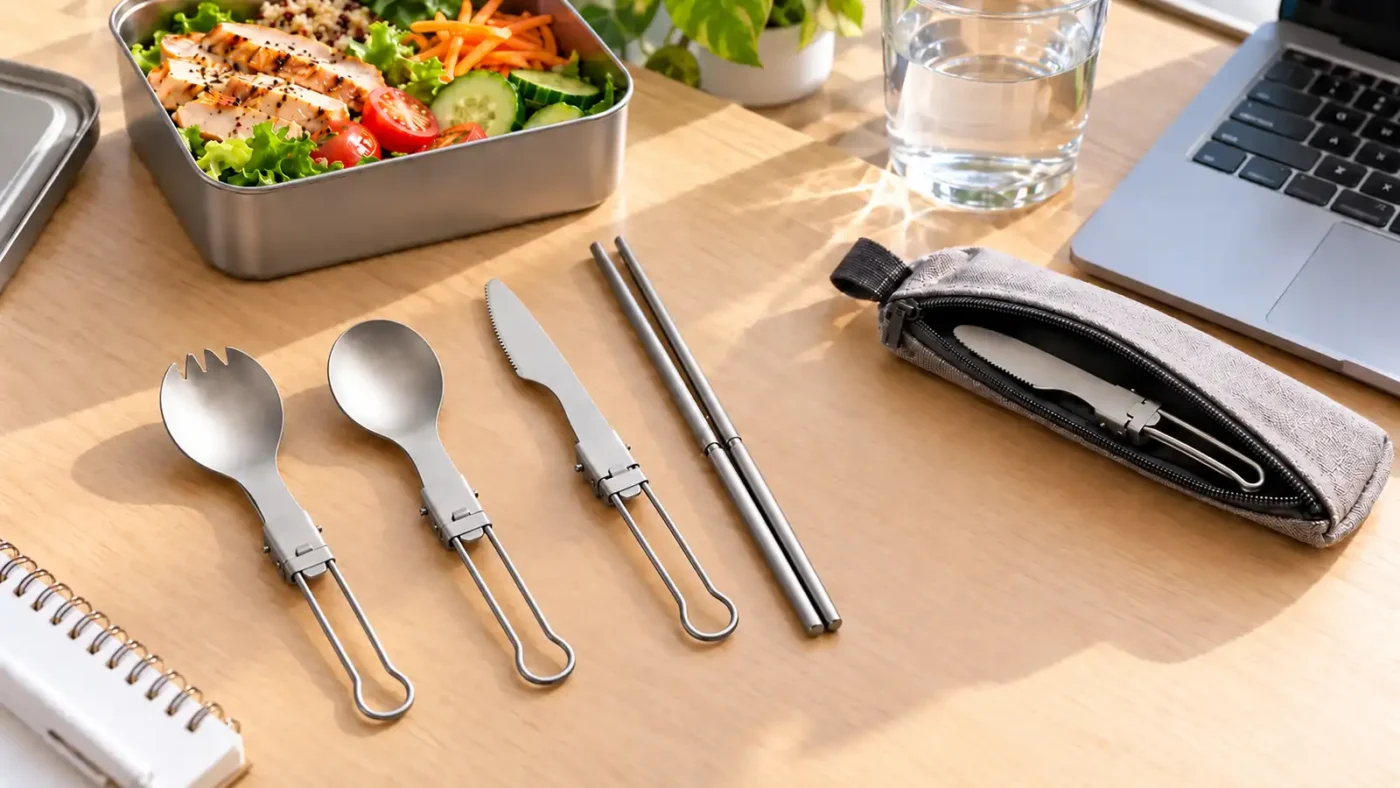
For a concrete example, the TiRoam Pure Titanium Foldable Cutlery Set contains a spoon, spork, fork, and knife. Its currently listed specifications are:
| Piece | Open length | Folded length | Approximate weight |
|---|---|---|---|
| Spoon | 17.0 cm / 6.69 in | 9.5 cm / 3.74 in | 15 g |
| Spork | 17.0 cm / 6.69 in | 9.5 cm / 3.74 in | 15 g |
| Fork | 16.5 cm / 6.50 in | 9.5 cm / 3.74 in | 12 g |
| Knife | 18.3 cm / 7.20 in | 10.5 cm / 4.13 in | 17 g |
The product page allows a ±5% tolerance for size and weight. The knife is the longest folded piece, so use its measurement when checking space for all four.
Length is only part of the fit. Check the packed width and thickness as well, and leave room to remove the utensils easily. A pouch’s external dimensions may overstate its usable interior space.
Choose a Cleaning Routine That Fits Your Workday
Consider whether you can wash the cutlery after lunch and let it dry before storage.
TiRoam recommends washing this set before first use, hand washing to help preserve the finish, and thorough cleaning and drying before storage.
For a folding design, check whether the areas around the joint are accessible for routine cleaning. Follow its care instructions without assuming that the handle should be taken apart or that every component is dishwasher-safe.
For the joint-cleaning steps, see our folding titanium cutlery care guide.
For broader care guidance, read How to Clean Pure Titanium Kitchenware.
Build Your Kit Around One Typical Lunch
Carry the pieces your meal uses, with space to keep clean cutlery separate from used utensils.
For a rice-and-vegetable lunch with yogurt, a spoon may do most of the work. For pasta salad with food that needs cutting, a fork and knife may be more useful.
These examples give you a way to choose pieces from a set without carrying every utensil for every meal.
If you cannot wash up at work, plan a separate washable container for the used cutlery on the trip home. That small detail can make a reusable lunch kit easier to keep in rotation.
You can also browse the TiRoam Titanium Tableware collection for more everyday dining pieces.
A Simple Way to Choose
Start with the lunches you eat most often, then choose the utensil shapes you actually use. Check open length for eating comfort, folded length for storage, and the care requirements for the specific set.
For a work lunch kit, the best choice is usually the one that is comfortable enough to use every day and compact enough to carry without extra thought.