
Drinkware & Everyday Carry
How to Choose a Titanium Water Bottle for Everyday Use
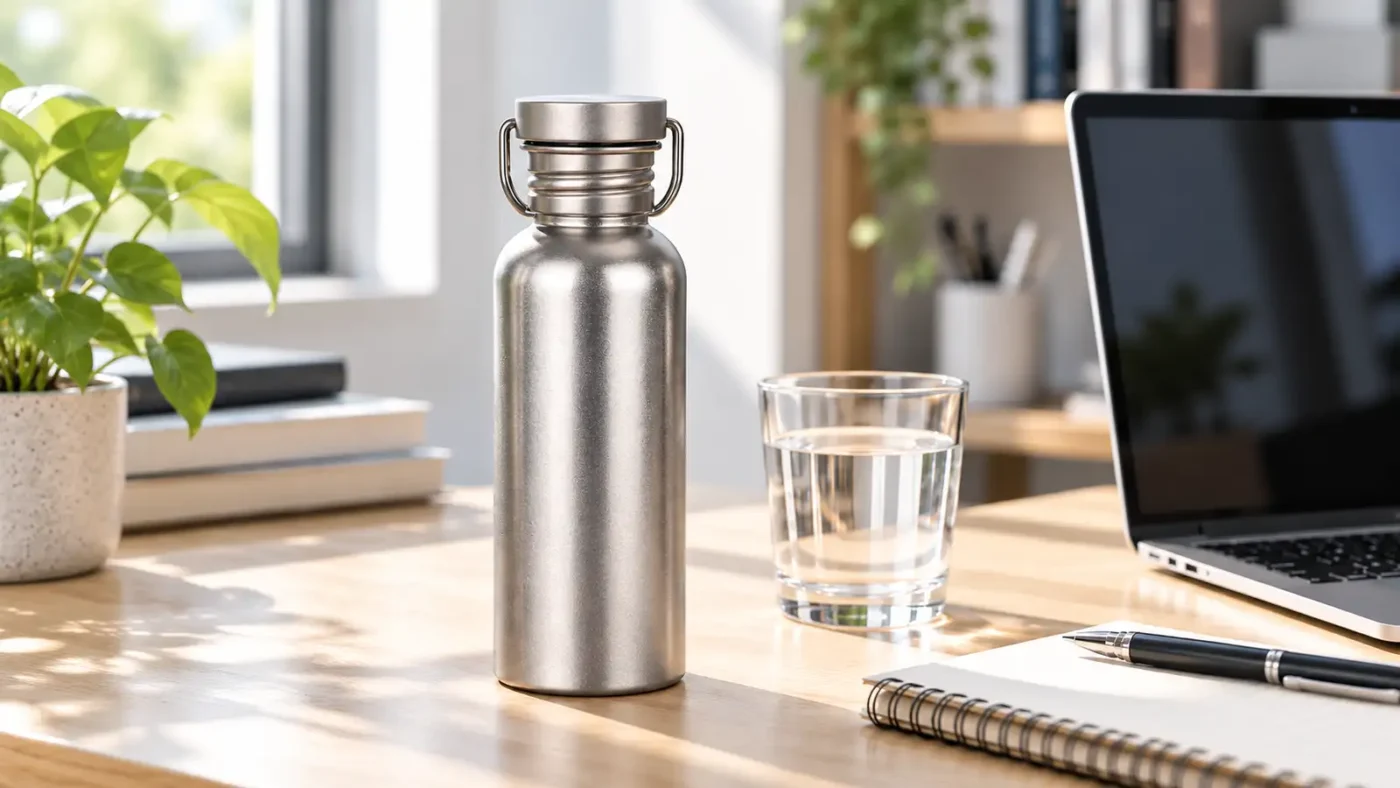
To choose a titanium water bottle for everyday use, start with the drinking opening and the way the cap opens, closes, and carries. Check whether those details suit your desk, commute, and refill routine, then confirm that the accessible parts are practical to maintain.
Two bottles with a similar capacity can feel very different in daily use. One may have an opening that is easier to refill from your kitchen tap. Another may have a cap shape that feels more convenient when you take frequent drinks at work. A carry loop can also change how easily you move the bottle between your desk, kitchen, car, or meeting room.
The useful question is not simply whether a bottle is made from titanium. Start with what you want to improve about the bottle you already use. An awkward opening, inconvenient cap, or difficult cleaning routine gives you a more specific buying criterion than the material name alone.
For the material-focused advantages and limitations, see titanium water bottle benefits and everyday trade-offs.
How to Choose a Titanium Water Bottle for Your Daily Routine
Choose the opening, closure, and carrying design around the actions you repeat most often.
| Your usual situation | Detail to check before buying |
|---|---|
| Filling the bottle from a kitchen tap or office dispenser | Whether the opening is accessible under that water source |
| Taking frequent drinks between desk tasks | The steps needed to open the cap, drink, and close it again |
| Carrying the bottle by hand between rooms or meetings | The shape and position of any carry loop or handle |
| Packing a filled bottle for a commute | The stated closure and carrying instructions for that exact model |
| Washing the bottle at home after work | Access to the interior, drinking rim, cap grooves, and exposed surfaces |
Use these routine actions to decide what matters most.
For example, if your current bottle is awkward to refill, compare bottle openings first instead of immediately changing capacity. If you regularly carry a bottle by hand, the cap and loop design may deserve more attention than an exterior finish.
Choose an Opening That Suits Drinking and Refilling
Check both how you fill the bottle and how you prefer to drink from it.
An open, wide mouth can be useful when you want direct access for filling, pouring, or drinking. If you prefer a smaller drinking spout, check for that feature explicitly rather than assuming every titanium water bottle includes one.
For desk use, consider whether you prefer drinking directly from the exposed rim or usually pour water into a cup. The location of your refill point also matters. A bottle opening that works comfortably under your kitchen tap may be more practical for your routine than a narrower design that requires more careful positioning.
Opening measurements also need to be interpreted correctly.
A published cap width is not necessarily the same as the bottle’s usable internal mouth diameter. If opening size matters for a cleaning brush, ice, pouring, or another specific use, look for the actual mouth measurement or ask for it when it is not listed.
Product photographs can help you understand the shape, but photographs alone should not be used to estimate exact dimensions.
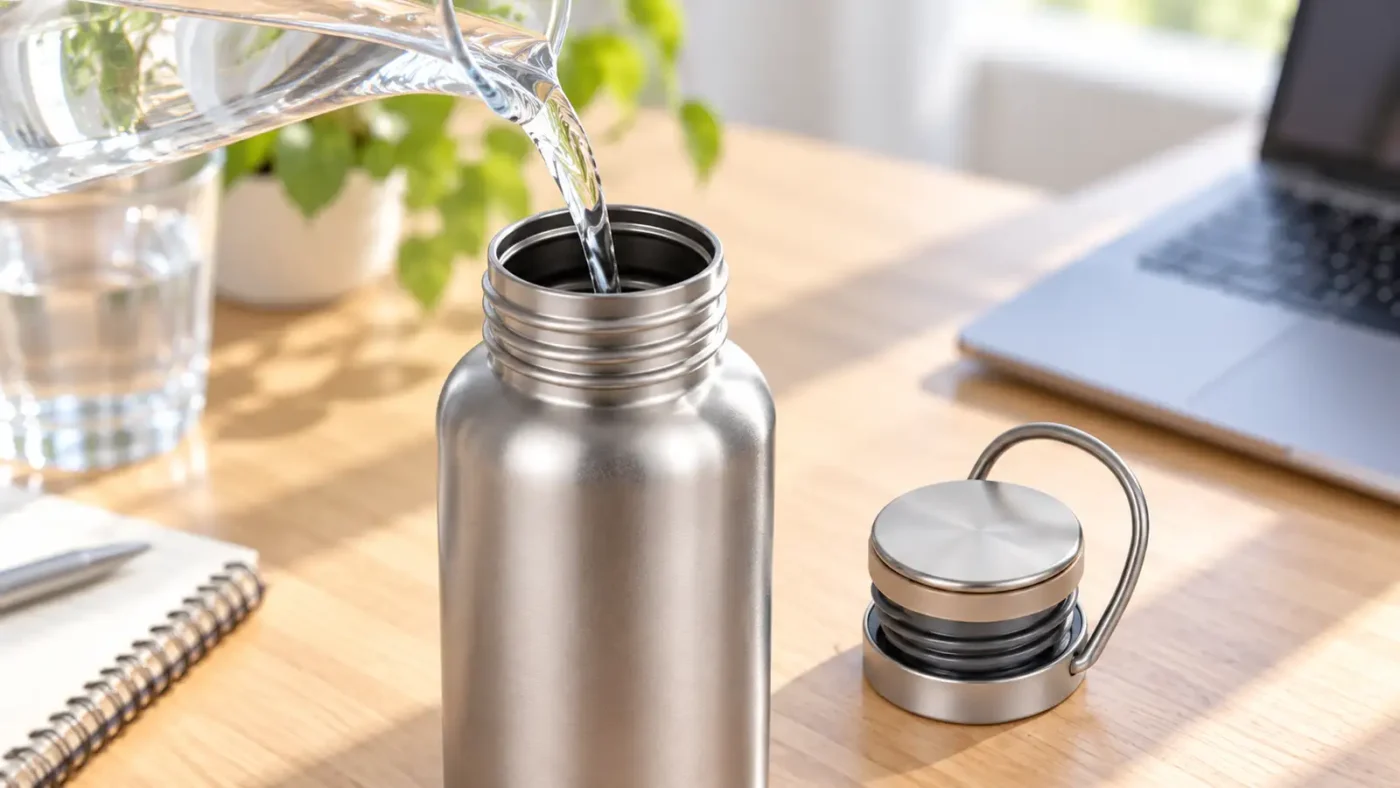
Consider the Complete Opening and Closing Routine
Compare the cap as something you will use repeatedly throughout the day, not simply as a visual design feature.
A removable screw cap needs somewhere to go while you drink or refill the bottle. At a desk, that may be simple. During a commute or while moving between rooms, you may prefer a design that keeps the cap connected to the bottle.
Check whether an attachment, loop, or tether is actually part of the product before assuming it is included.
The gripping area of the cap also matters. Look at its shape and consider how you normally open a bottle. A cap that works well for occasional refilling may feel different when you open and close it many times during a workday.
Opening convenience and carrying performance are separate questions.
A cap that is easy to remove does not automatically establish that the bottle is suitable for every carrying position. When packing a filled bottle inside a work bag, follow the closure and carrying instructions for that exact product rather than assuming that all screw-cap bottles behave the same way.
Check Carry Loops and Surface Details
Choose carrying features and exterior details for the way you expect to handle the bottle.
A carry loop can be useful when moving a bottle between your kitchen, desk, vehicle, or meeting room. Check its location and the amount of space available for your preferred grip.
If you intend to attach the bottle to another item, confirm that the manufacturer provides guidance for that use. The presence of a loop alone does not establish a specific load rating or attachment method.
Exterior finish is another detail you can compare.
A hammered titanium surface looks and feels different from a smooth titanium surface, but appearance should not be confused with verified performance. A hammered finish does not by itself prove better grip, greater impact resistance, or improved sealing.
Choose the finish because you prefer its appearance or handling characteristics that you can actually evaluate, not because of an unsupported performance assumption.
Treat Maintenance Access as a Buying Feature
Before buying, check which surfaces you can reach during routine cleaning and which components are intended to remain in place.
Look at the bottle interior, drinking rim, cap grooves, and other exposed surfaces. Consider whether your usual washing tools can reach them and whether the required cleaning routine fits the facilities you have at home.
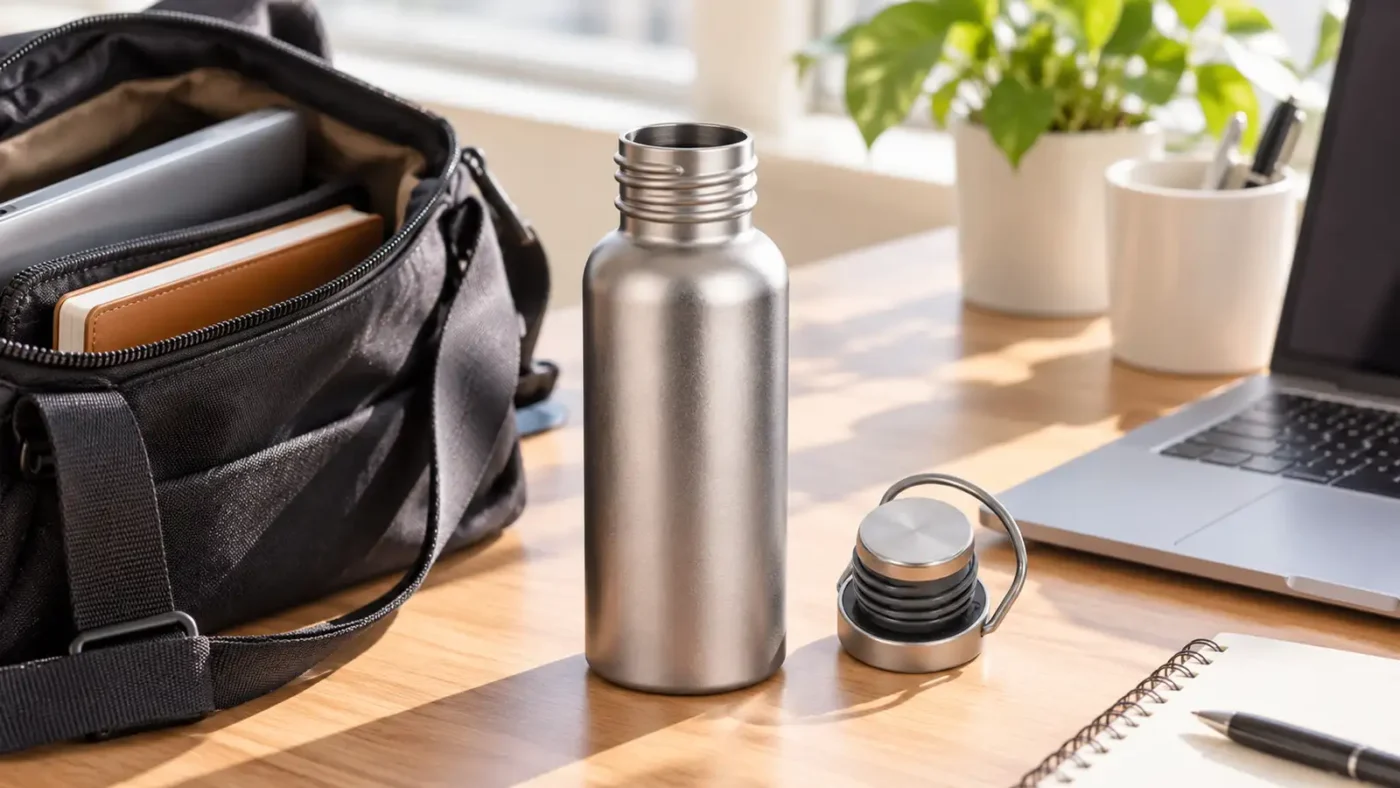
For TiRoam’s 500 ml and 750 ml Pure Titanium Bottle for Everyday Use, the sealing component stays in place during routine cleaning. A removable seal should not be assumed, and disassembly instructions from another bottle should not be transferred to this cap design.
For the actual cleaning process, read How to Clean Water Bottle Lids and Seals Without Disassembly.
If future cap service or replacement matters to your purchase, ask what support is available for the specific model. Similar-looking caps, seals, or accessories should not be treated as interchangeable unless compatibility has been confirmed.
Compare the Current TiRoam Bottle Designs
Use each product’s confirmed features to decide which design deserves a closer look.
The TiRoam Pure Titanium Bottle for Everyday Use has a wide-mouth opening and a cap with a carry loop. Its interior has no plastic liner or interior coating. It uses single-wall construction and is not insulated.
That combination may suit someone who wants straightforward access to the bottle interior, direct drinking from the rim, and a loop for carrying the bottle by hand.
The Hammered Pure Titanium Water Bottle offers a hammered titanium body. Consider that model if you prefer its exterior appearance, then check its own product photographs, specifications, cap design, and care information rather than assuming that every detail matches the Pure Titanium Bottle for Everyday Use.
The important point is to compare each model by its confirmed features instead of treating all titanium bottles as the same product with a different finish.
Keep Capacity and Bottle Size as a Separate Decision
Once the opening, cap, and carrying design suit your routine, choose the capacity. For a comparison of capacity, filled weight, dimensions, and refill needs, read Water Bottle Size Guide: 500 ml vs 750 ml for Work and Day Trips.
Bottle or Open Drinkware?
Choose a bottle when you need a closed drinking container that moves with you.
A bottle makes sense when you regularly move between places and want your drink contained between uses.
If your drink mainly stays on a desk, kitchen counter, or dining table and you prefer drinking from an open cup or mug, a bottle may not be the most convenient format.
In that case, browse the TiRoam Titanium Drinkware collection and compare bottles, cups, mugs, and tumblers around the way you actually drink during the day.