Cookware & Food Prep
How to Choose Titanium Cookware for Everyday Cooking
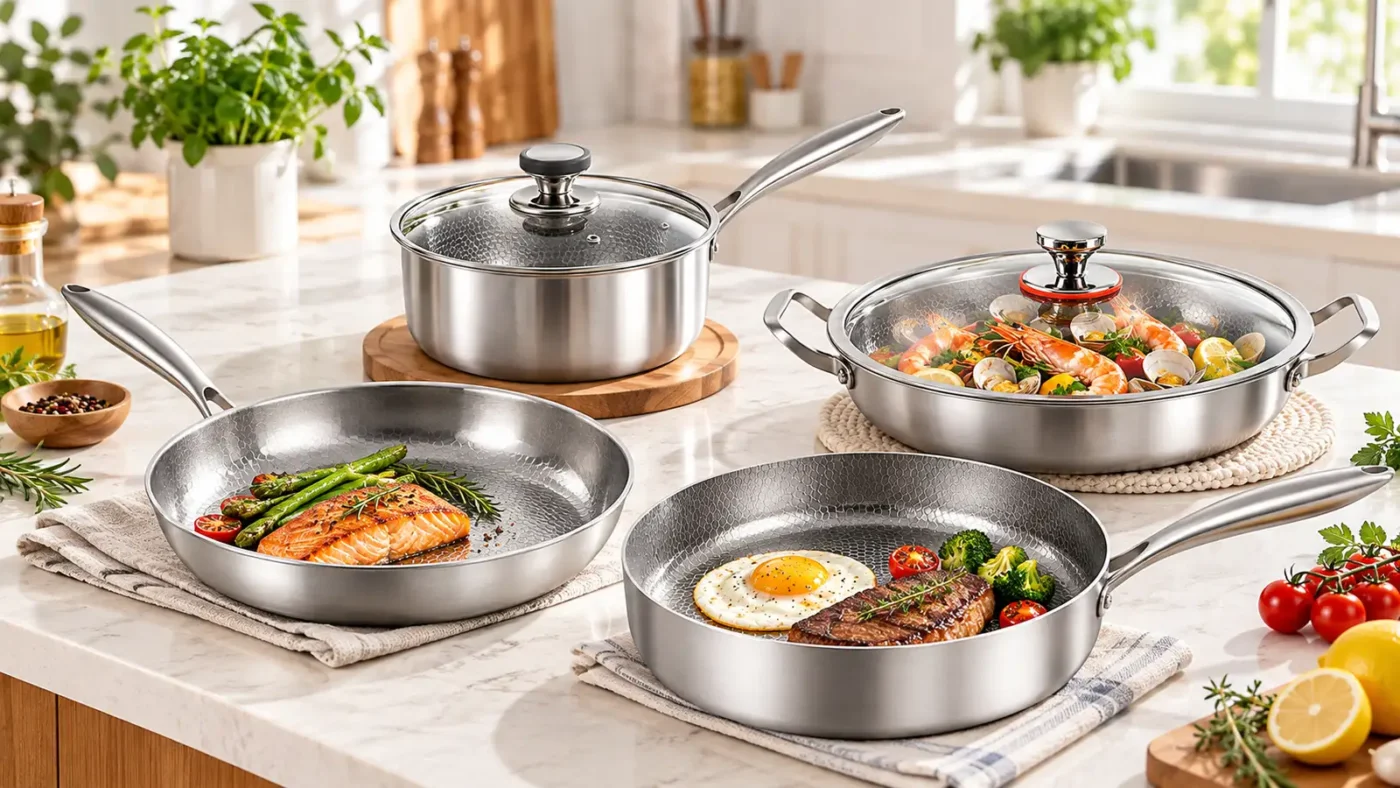
When considering how to choose titanium cookware, begin with the meals you cook most often. Match the pan shape and usable size to those meals, then check the cooking surface, stove compatibility, finished weight, and care requirements.
A pan used mainly for eggs and fish has different requirements from one used for soup or dishes with sauce. The material name alone does not tell you whether the cookware will suit either task.
Start with the job you need a pan to do. That makes it easier to compare individual products without expecting every piece of titanium cookware to behave the same way.
How to Choose Titanium Cookware by Pan Shape
Choose the shape around the way you cook: turning food, stirring ingredients, containing liquid, or handling a larger meal.
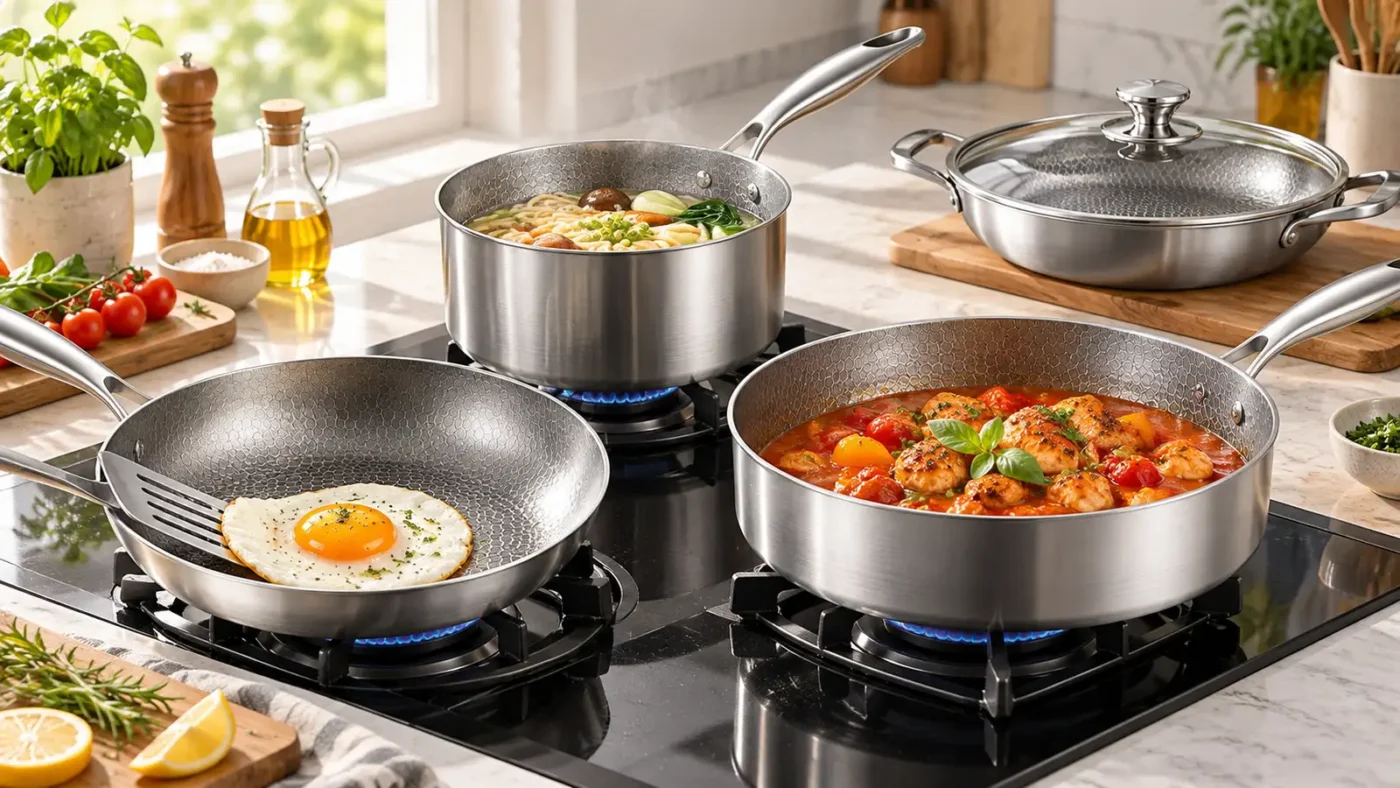
The following examples show how different shapes in the TiRoam range can serve those tasks. The diameters are current listed sizes, rather than a recommendation for a fixed number of people.
The range also includes the Dragon-Scale Textured frying pan and embossed Dragon-Scale frying pan; check each product page separately for its current options.
| Your usual cooking task | Useful shape | TiRoam example and listed diameters |
|---|---|---|
| Frying eggs, fish, meat, or vegetables | A conventional frying pan with gently sloped sides for access and turning | Pure Titanium Cooking Surface Frying Pan — 22, 26, or 30 cm |
| Sautéing ingredients and adding sauce or a little cooking liquid | A frying pan with straighter, higher sides | Titanium Frying Pan with Pure Titanium Cooking Surface — 20, 24, or 28 cm |
| Soup, noodles, oatmeal, and other liquid-focused cooking | A deeper saucepan | Pure Titanium Saucepan — 18, 20, or 22 cm |
| Larger portions or meals you prefer to lift with both hands | A wide pan with two side handles | Pure Titanium Dual-Handle Frying Pan — 26, 28, or 30 cm |
Some tasks overlap. A straight-sided frying pan can handle a sauce-based meal, but a deeper saucepan may be more practical when liquid forms most of the dish. Decide which task you repeat most often before choosing the shape.
How to Choose a Titanium Frying Pan Size
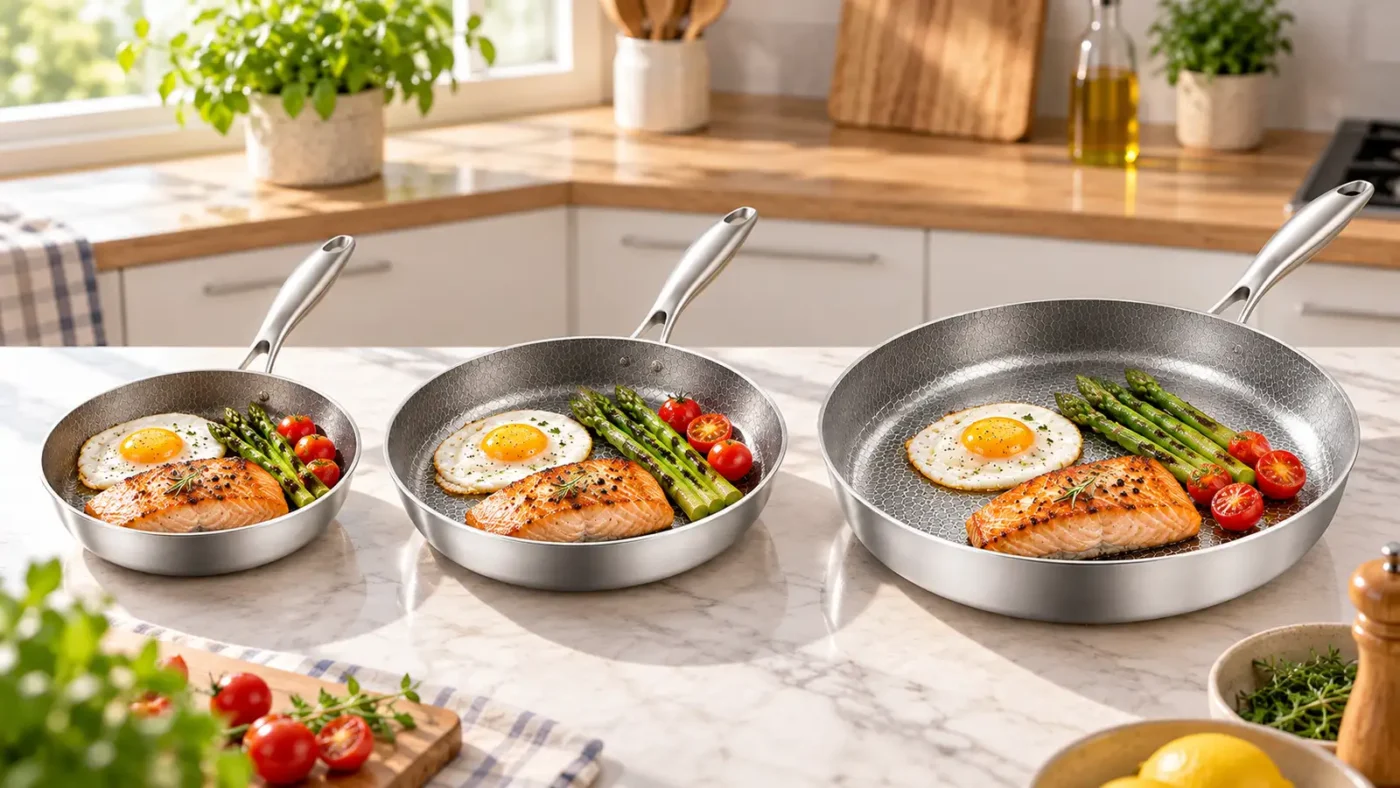
Compare usable cooking space with the portions you normally prepare. Rim diameter is only one measurement.
Sloped sides can leave a smaller flat cooking area than the rim measurement suggests. Check the base or cooking-area dimensions where available, along with the depth and overall length including handles.
For browning, consider whether your usual portions fit with room to turn them. If the pan feels crowded, you may need a larger usable area or smaller batches. For dishes with sauce, depth and room for stirring matter too.
Use a pan you already own as a reference. Measure it and identify what you want to change: more cooking space, greater depth, easier turning, or a more manageable size. That comparison is more useful than choosing by diameter alone.
Check the Cooking Surface and Body Separately
Confirm what touches the food and how the complete cookware body is constructed.
Some cookware uses titanium for its main body. Other products combine a titanium food-contact surface with additional metal layers. A description such as “pure titanium cooking surface” does not mean that the entire pan, handle, and lid are pure titanium.
For example, TiRoam’s straight-sided Titanium Frying Pan uses a TA1 commercially pure titanium cooking surface within a composite body. This description applies to that identified model and should not be extended to every product in the range.
For the construction differences, read Solid Titanium vs. Composite Titanium Cookware: Why Construction Matters.
Confirm Compatibility With Your Stove
Check compatibility for the exact cookware model and size you intend to buy.
Do not infer induction compatibility from a titanium cooking surface. Look for an explicit product specification, then check the stove’s requirements for pan-base size and placement.
Match the cookware base to the burner and consider whether its handles leave enough room for neighboring pans. A wide pan that suits your meals may still be awkward on a small cooking zone.
If oven use matters, check that separately, including any temperature limits for the handle and lid. Stovetop compatibility does not establish oven approval.
Compare Finished Weight and Handling
Use the published weight of the complete product you will handle, including the lid when relevant.
Titanium cookware is not automatically lightweight. Dimensions, thickness, other body materials, handles, and lids all affect the finished weight.
For example, TiRoam lists its 24 cm straight-sided Titanium Frying Pan at 1,250 g without the lid and 1,610 g with the lid. The difference matters if you often lift the pan during cooking or move it while covered.
Consider the weight of the food or liquid as well. A long handle can suit controlled turning and pouring, while two side handles allow a different lifting position. Think about moving the filled pan between the stove, counter, and sink.
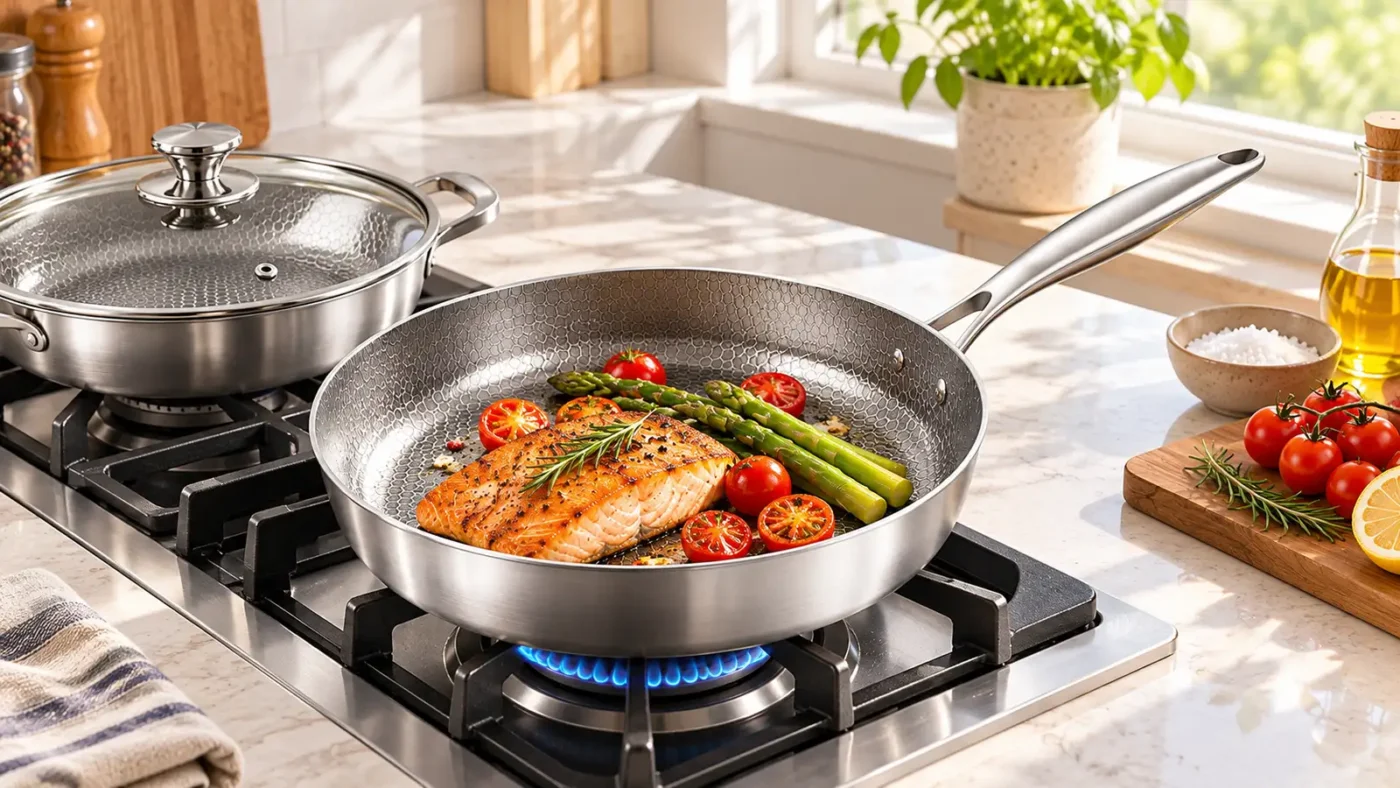
Consider Titanium Cookware Pros and Cons in Daily Use
An uncoated titanium cooking surface can suit someone who wants that food-contact material and is comfortable adjusting cooking technique.
It does not guarantee effortless food release. If your priority is cooking delicate foods with very little attention to heat, fat coverage, or turning time, evaluate that expectation before buying.
For buying expectations, read Does Titanium Cookware Stick? What to Expect Before You Buy.
If you are comfortable learning an uncoated pan, our guide to How to Cook on a Titanium Surface: Heat, Oil, and Timing explains the practical adjustments.
Choose Care Requirements You Can Maintain
Review cleaning instructions for the complete item, including its lid, handles, and finish.
Check whether hand washing fits your routine and whether you have room to wash and dry the chosen size. If dishwasher use is important, look for explicit approval for the complete product and its separate components.
TiRoam’s straight-sided Titanium Frying Pan care instructions advise allowing it to cool naturally, washing with warm water and mild dish soap using a soft sponge or cloth, and drying completely before storage.
For broader care guidance, see How to Clean Pure Titanium Kitchenware.
Start With the Pan You Will Use Most
Choose a first piece around a recurring meal or a clear gap in your current cookware.
If you mostly fry and turn individual portions, a conventional frying-pan shape may fit. If you often add sauce after browning, consider straighter sides. For soup or noodles, start with a deeper saucepan. A wider pan with two handles may suit meals you prefer to move with both hands.
You do not need to replace every pan at once. Compare the available shapes and current specifications in the TiRoam Titanium Cookware collection and choose the piece with a useful role in your kitchen.