
Cookware & Food Prep
How to Choose the Best Titanium Cutting Board for Your Kitchen
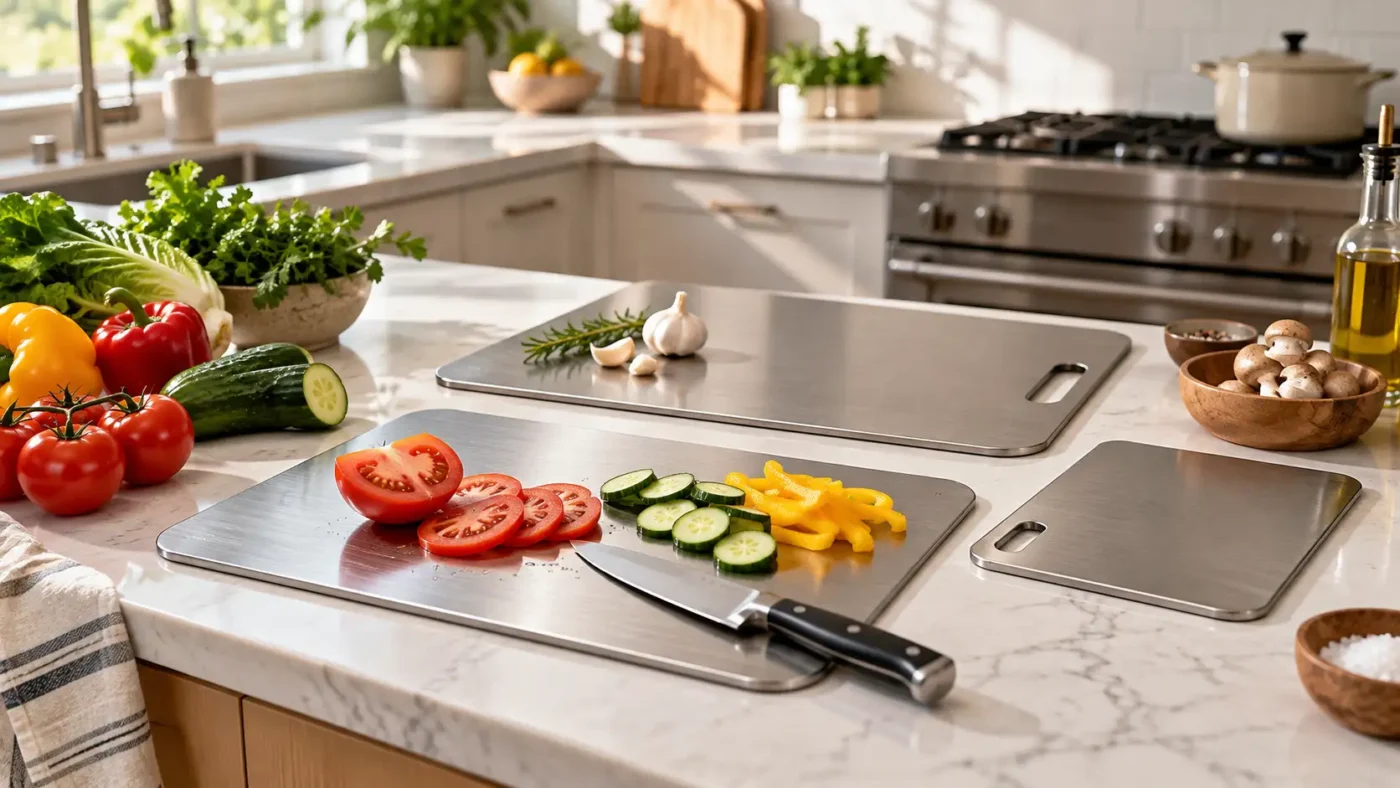
The best titanium cutting board for your kitchen fits the meals you prepare and the space where you cut, wash, and store it. Start with a clear material specification, then compare usable cutting area, surface design, handling, and care requirements. TiRoam boards, for example, come in a brushed finish and a textured finish.
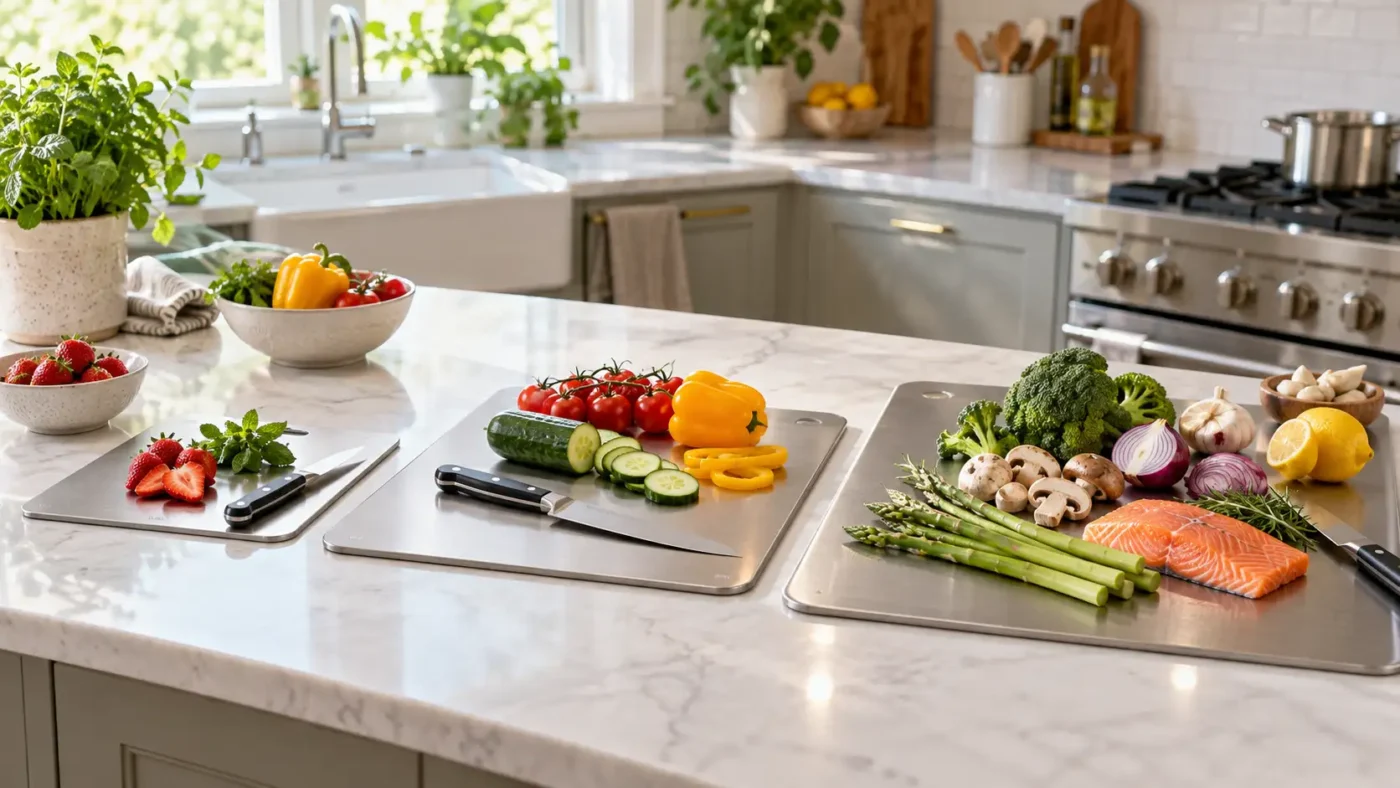
Think about a typical preparation task: slicing a few pieces of fruit requires less room than cutting a large ingredient and gathering several portions. A board should give you enough working space while remaining manageable at the sink.
Check the Material Before Comparing Features
Look for a description that identifies both the cutting surface and the board’s construction. The word “titanium” alone does not establish whether a board is solid titanium, titanium-coated, or a composite with a titanium working surface. If you are weighing titanium against a steel board, our guide to titanium vs. stainless steel cutting boards compares weight, care, and everyday handling.
TiRoam lists its Integrated-Handle Pure Titanium Cutting Board as pure titanium. When comparing products, look for similarly clear information about the material beneath the working surface.
Also distinguish composition from performance. A material specification can help establish what a board is made from; it does not prove that the board will resist every scratch or preserve knife sharpness.
For the broader decision, read the practical pros and cons of titanium cutting boards. If you are still comparing materials, use the cutting board material guide.
For an explanation of the terminology, read Pure Titanium, Solid Titanium, and Titanium-Coated: What the Labels Mean.
What Size Titanium Cutting Board Fits Your Kitchen?
Choose a size that accommodates your usual ingredients and can be comfortably washed and stored. Measure the available counter space, sink, drying area, and storage slot before buying. If you prefer a handle along the long edge, the Long-Side Handle board lists its exact dimensions on the product page.
On the counter, allow space beside the board for bowls and ingredients. At the sink, consider whether you can turn the board and reach both sides without awkward handling.
The following specifications apply to TiRoam’s Integrated-Handle model:
| Size | Overall dimensions | Approx. weight | Suggested use |
|---|---|---|---|
| Small | 29 × 20 cm / 11.4 × 7.9 in | 510 g / 18.0 oz | Fruit, herbs, snacks, and quick prep |
| Medium | 36 × 25 cm / 14.2 × 9.8 in | 800 g / 28.2 oz | Everyday vegetables, proteins, and meal prep |
| Large | 46 × 30 cm / 18.1 × 11.8 in | 1,230 g / 43.4 oz | Larger ingredients and family meals |
All three sizes are approximately 2 mm / 0.08 in thick. Dimensions and weights are approximate; check the product specifications for current details.
Medium offers a balance of working area and storage size for many everyday preparation tasks, provided it fits your counter and sink. Small suits shorter tasks and limited space. Large provides more room when you regularly prepare larger ingredients.
Check the usable cutting area as well as the overall dimensions. A perimeter groove and handle opening occupy part of the board’s footprint.
Should You Choose a Flat or Grooved Surface?
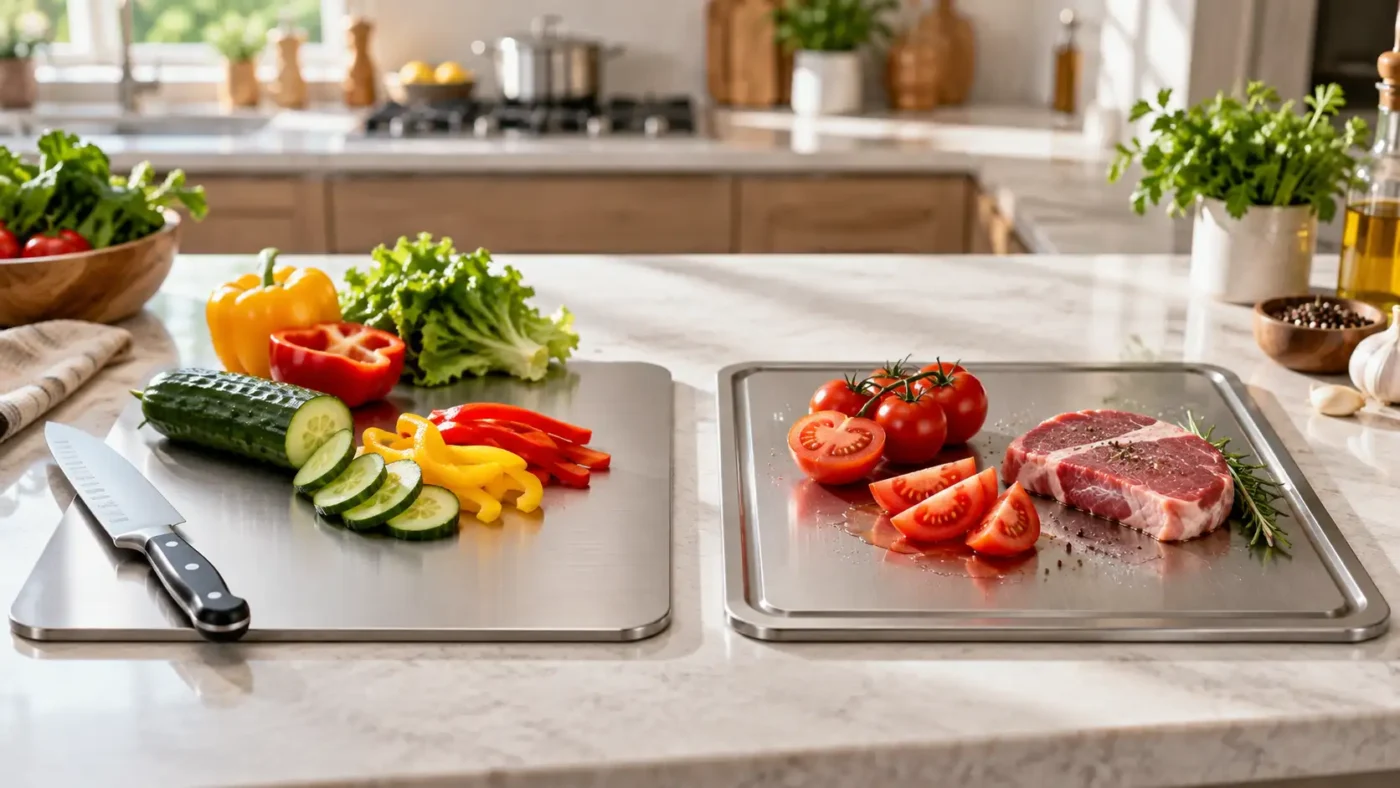
Choose a flat board for an uninterrupted working area, or a grooved board when collecting food juices would help your preparation routine.
A flat surface can suit herbs, bread, vegetables, and tasks where you frequently gather chopped ingredients. TiRoam’s Flat Pure Titanium Cutting Board follows this design.
A perimeter groove gives moisture somewhere to collect when cutting tomatoes, citrus, juicy fruit, meat, or fish. Its capacity is limited, so it can still overflow if enough liquid accumulates.
The groove also adds an area that needs careful washing. Base your choice on the ingredients you prepare most often rather than treating a groove as an automatic upgrade.
Compare handles separately. A juice groove describes the working surface; it does not establish whether a particular board has a handle.
Check Handling, Stability, and Surface Finish
Choose a board you can move securely and keep stable during cutting. Handling matters when lifting it from storage, carrying it to the sink, and turning it while wet.
An integrated handle provides a defined grip. Before choosing a larger size, consider its listed weight and whether the handle opening looks comfortable for your hand.
Check whether the product includes a base, feet, or another feature intended to limit movement. A handle does not establish that a board will remain steady on your countertop. Follow the model’s instructions for positioning it before cutting.
Look at close-up photographs of the edges and finish. TiRoam’s Integrated-Handle model has a brushed appearance and rounded corners. Fine knife marks can develop with use, so consider whether a changing surface appearance fits your expectations.
Thickness and weight are useful specifications, but neither establishes overall quality by itself.
Consider Knife Maintenance Before Buying
A titanium cutting board can contribute to knife-edge wear, so include knife maintenance in your buying decision. Do not rely on a promise that a metal surface will never dull knives.
Knife-edge wear cannot be predicted from the board material alone. Blade steel, edge geometry, cutting pressure, technique, and frequency of use all affect the result. If preserving a fine edge is your leading priority, consider whether an appropriate softer cutting surface would suit that knife better.
Follow both the knife’s and the board’s care guidance. Avoid heavy cleaver strikes on bones or frozen foods unless the tools are specifically intended for those tasks. Use a scraper to gather ingredients instead of dragging the sharpened edge sideways across the board.
Read Do Titanium Cutting Boards Dull Knives? What to Know Before Buying for more on knife maintenance and the limits of material-based claims.
Review Cleaning and Storage Requirements
Check the exact model’s cleaning instructions, including any attached components. Titanium construction alone does not establish dishwasher compatibility.
For TiRoam’s Integrated-Handle board, use warm water, mild dish soap, and a soft sponge. Wash both sides, clean the perimeter groove and handle area, rinse thoroughly, and dry before storage.
After preparing raw meat, poultry, or seafood, clean the board thoroughly before using it for ready-to-eat foods. A separate board for raw ingredients can also help organize preparation.
Avoid aggressive abrasives if preserving the original brushed appearance matters to you. For detailed methods, see How to Clean Pure Titanium Kitchenware.

Choosing the Best Titanium Cutting Board: Final Checklist
Before ordering the best titanium cutting board for your routine, confirm that the selected model and size meet the requirements you checked above.
- Confirm that the selected variant matches the dimensions and weight you reviewed.
- Make sure its usable cutting area accommodates your usual ingredients.
- Check that you can lift, rinse, dry, and store it comfortably.
- Review what is included and how the board should be stabilized.
- Confirm that its knife-use and cleaning instructions fit your routine.
Compare the specifications in the TiRoam Titanium Cutting Board Collection. Choose the board whose working space, handling, and maintenance requirements fit your everyday cooking.