Cookware & Food Prep
A Simple Weeknight Food Prep Routine With Less Cleanup
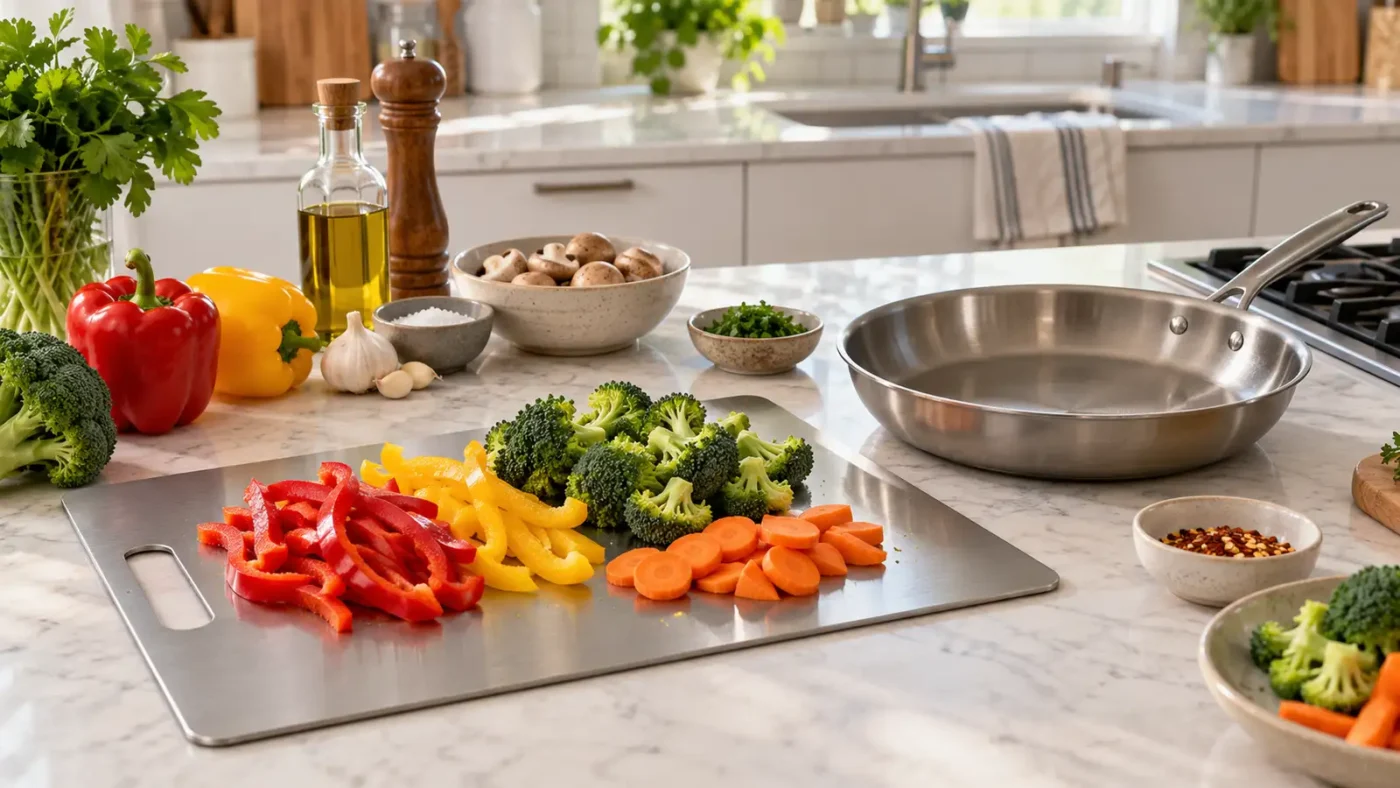
A practical weeknight food prep routine starts with the cooking order: identify the longest task, prepare ingredients before they are needed, and clear finished tools during suitable pauses. Reserve a clean serving space and have leftover containers ready before dinner finishes.
Less cleanup comes from avoiding unnecessary bowls, transfers, and duplicate tools. The routine should still include the equipment and food-handling steps your meal requires.
These five steps work with suitable kitchen tools you already own. Adjust them to the recipe rather than expecting every dinner to follow exactly the same sequence.
1. Plan Your Weeknight Food Prep Routine
Read the recipe and identify preparation, cooking, and storage tasks before taking out equipment. A short check can prevent discovering an unprepared ingredient while something is already frying.
Start with four questions:
- Which component takes longest to cook?
- What needs washing, cutting, or measuring?
- Which ingredients need separate preparation tools?
- Will you save a portion for tomorrow?
Take out equipment for those tasks. Rice and sautéed vegetables may need a saucepan and a frying pan. A ready-to-eat salad served with raw chicken requires separate preparation arrangements.
Check the usable counter space too. Leave room for the board, ingredients, and a clean place to put cooked food. If the board is too small for the task, preparation may spread across extra plates and surfaces.
For help matching a board to your kitchen, read How to Choose the Best Titanium Cutting Board for Your Kitchen.
2. Prepare Ingredients in Cooking Order
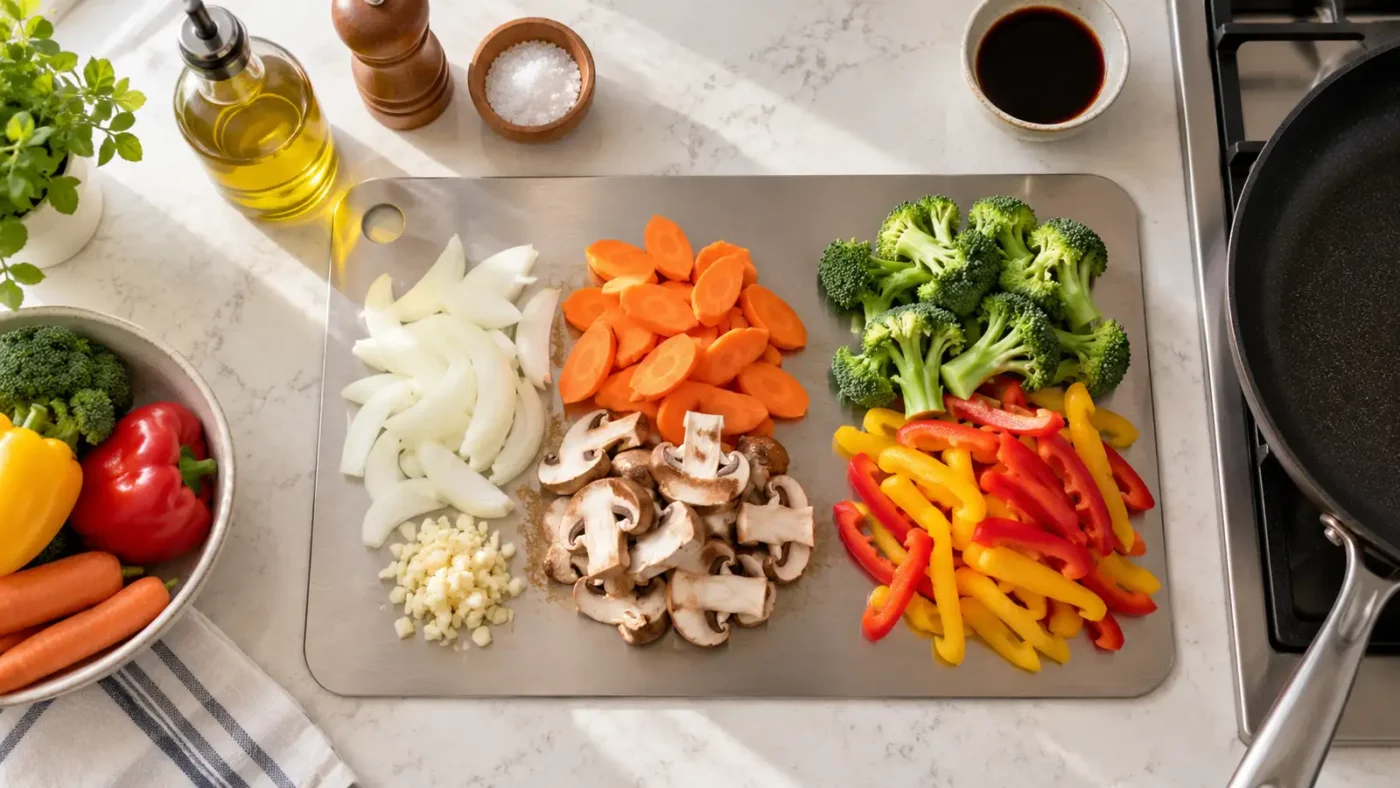
Have everything needed for a fast cooking stage ready before that stage begins. For slower recipes, prepare later ingredients during periods when the earlier component needs less attention.
A stir-fry may require vegetables, sauce, and seasonings to be ready before the pan is heated. A meal with simmering rice may allow time to prepare vegetables while the rice cooks.
Group compatible ingredients that enter the pan together in one clean bowl. Keep ingredients added at different stages separate, such as a garnish used after cooking. This reduces dishes without losing track of the recipe.
Keep raw meat, poultry, and seafood separate from produce and ready-to-eat food. Use a separate cutting board for raw animal ingredients and another for produce or foods eaten without further cooking.
Wash hands, tools, and work surfaces after handling raw ingredients. A quick rinse alone does not replace thorough cleaning.
3. Give Each Pan a Clear Job
Use the cookware that lets you complete the recipe properly, even when that means using more than one vessel. Reducing dishes is useful only if the cooking arrangement still works.
One pan can sometimes handle several stages. For example, cooked vegetables can be transferred to their clean serving dish while another component finishes in the pan.
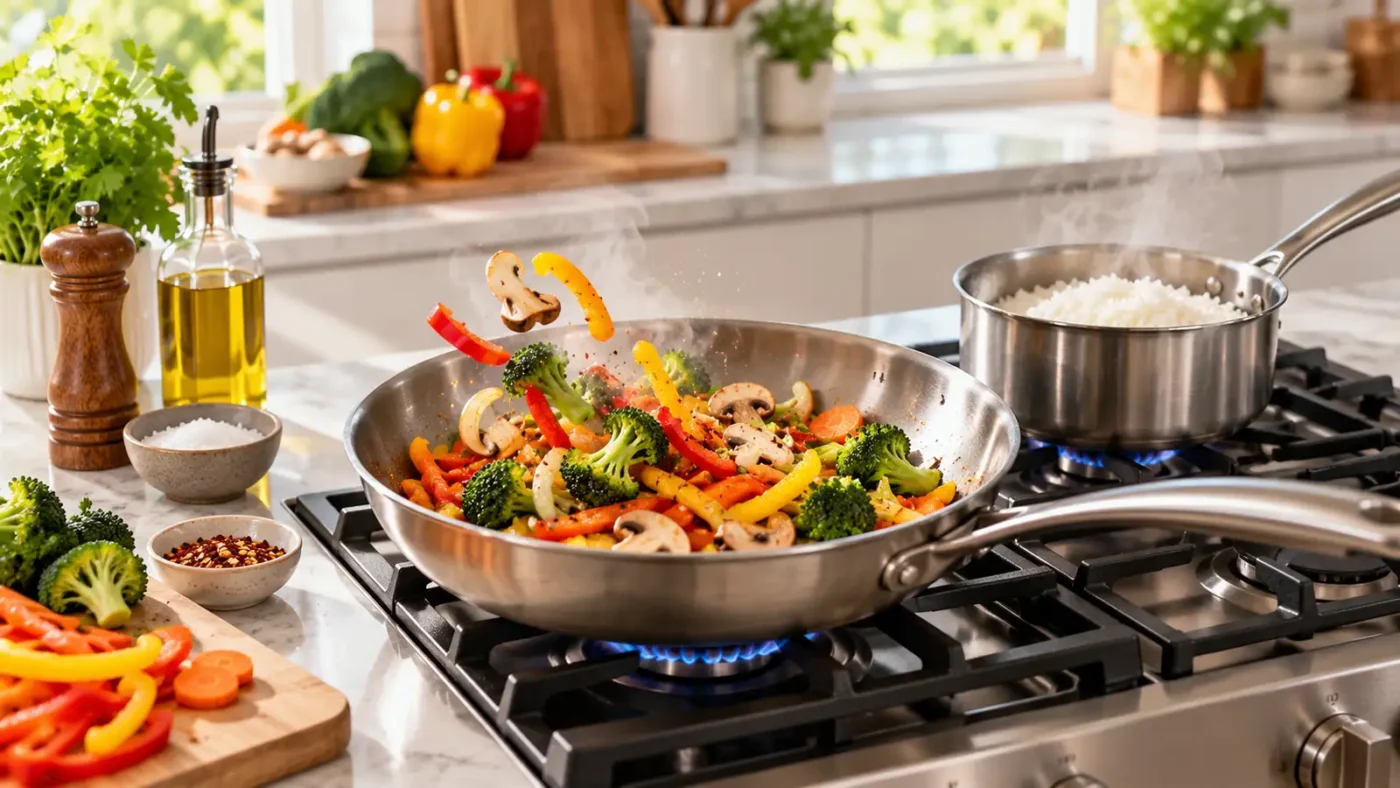
Other tasks need separate cookware. Rice may cook in a saucepan while vegetables sauté in a frying pan. That separation lets each component follow its own cooking method. TiRoam’s titanium saucepan with a pure titanium cooking surface is listed for boiling, simmering, soups, noodles, and sauces.
When browning ingredients, avoid filling the pan so tightly that released moisture collects faster than it can evaporate. Cooking in batches may be more useful than forcing the entire meal into one crowded pan.
Before adding another vessel, identify its purpose: a different cooking method, extra working space, or a component with a different finishing time.
If you use an uncoated titanium cooking surface, see How to Cook on a Titanium Surface: Heat, Oil, and Timing for the cooking technique. This routine focuses on organizing the work around that technique.
4. Clear Finished Tools During Suitable Pauses
Use cooking pauses for small cleanup tasks that will not distract you from the food. Choose a finished bowl, unused ingredient, or cleared section of the counter rather than starting a large washing session.
During an appropriate simmer or oven stage, you may be able to:
- Put away seasonings and unused ingredients.
- Collect scraps and discard packaging.
- Wash a finished preparation bowl or knife.
- Clean the preparation surface.
- Clear space for plates and serving utensils.
Keep tools you still need accessible. Putting away the spatula before the final cooking stage creates more work rather than less.
Stay focused during frying, stirring, or other active cooking. Do not leave active cooking unattended to tackle the dishes. Wash your hands after handling waste before returning to food or clean utensils.
Hot cookware can wait until it has cooled enough for cleaning. For care methods suitable for titanium surfaces and attached components, read How to Clean Pure Titanium Kitchenware.
5. Serve in a Clean Area and Store Leftovers Promptly
Have clean plates, serving utensils, and suitable leftover containers ready before the meal finishes. This avoids rearranging a cluttered counter while carrying hot cookware.
Use clean equipment for cooked food. A plate that held raw meat must be thoroughly washed before being used for the finished meal.
If you are saving tomorrow’s lunch, set aside the portion with a clean utensil. Divide larger amounts into shallow containers so they can cool more quickly.
Refrigerate perishable leftovers promptly and within two hours, or within one hour when exposed to temperatures above 90°F / 32°C. Do not leave them on the counter until completely cold.
Choose containers that accommodate the portion without needing several small boxes. Check the closure and intended use separately: a reusable container is not automatically leakproof, insulated, or microwave-safe.
For material and reheating considerations, read Titanium vs Glass Food Containers: How Does Stainless Steel Compare?.
Example: Vegetables, Rice, and Tomorrow’s Lunch
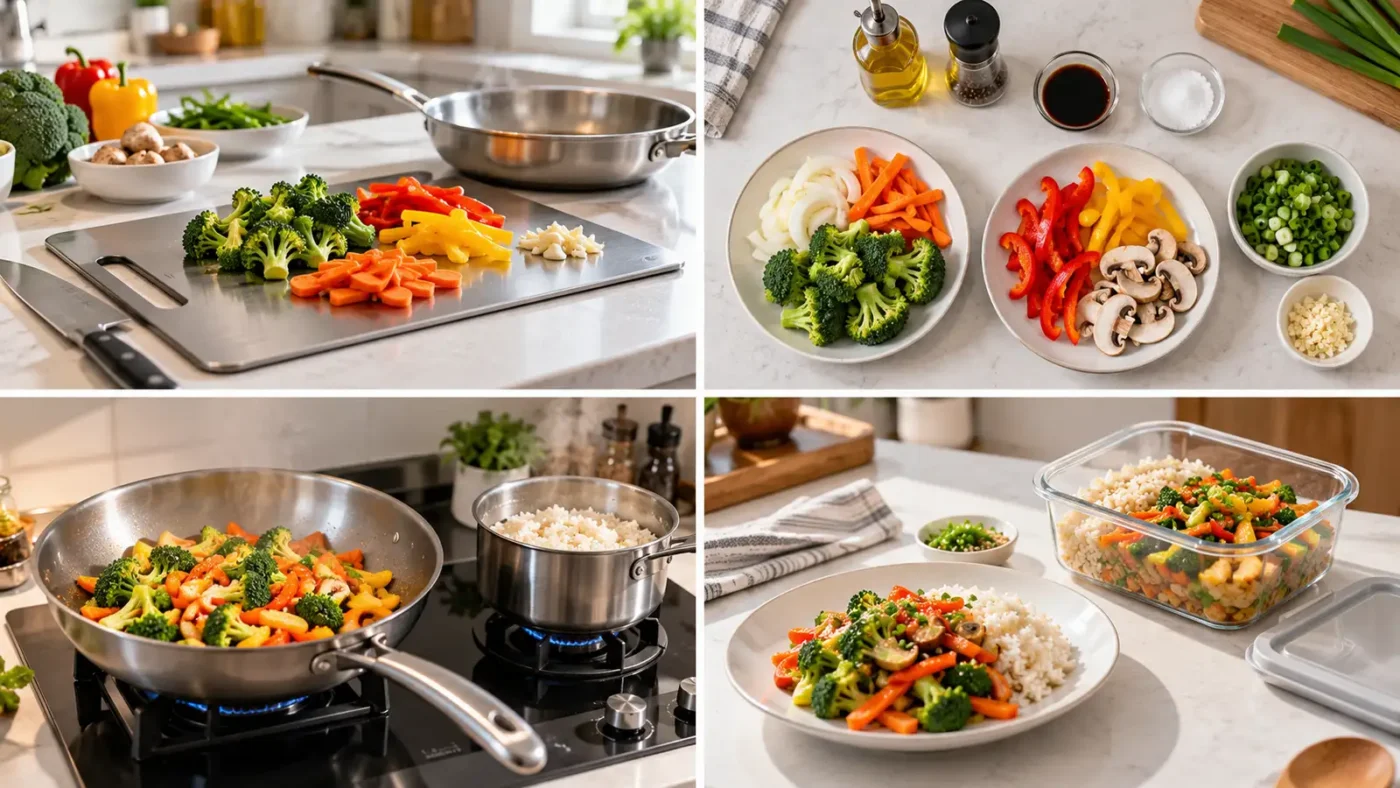
Start the component with the longer cooking time, then organize the remaining preparation around it. For a vegetable-and-rice dinner, the work could look like this:
| Point in the meal | Practical next task |
|---|---|
| Before cooking | Check the rice instructions, vegetable recipe, and portion needed for lunch |
| Rice begins cooking | Wash and cut vegetables if the rice stage allows sufficient attention for preparation |
| Before heating the frying pan | Arrange vegetables by addition order and prepare seasonings or sauce |
| Vegetables are cooking | Focus on stirring and turning; leave washing for a suitable pause |
| Finished preparation tools are no longer needed | Clear the board and bowls, and set out clean plates and a shallow container |
| Dinner is ready | Serve the meal, set aside the saved portion, and refrigerate it promptly |
This example uses two cooking vessels, but each has a distinct purpose. The useful measure is whether the arrangement reduces avoidable work while keeping the meal manageable.
Use the sequence as a starting point rather than a fixed timetable. The recipe, ingredients, and attention each cooking stage requires determine what you can do alongside it.