
Cookware & Food Prep
Does Titanium Cookware Stick? What to Expect Before You Buy
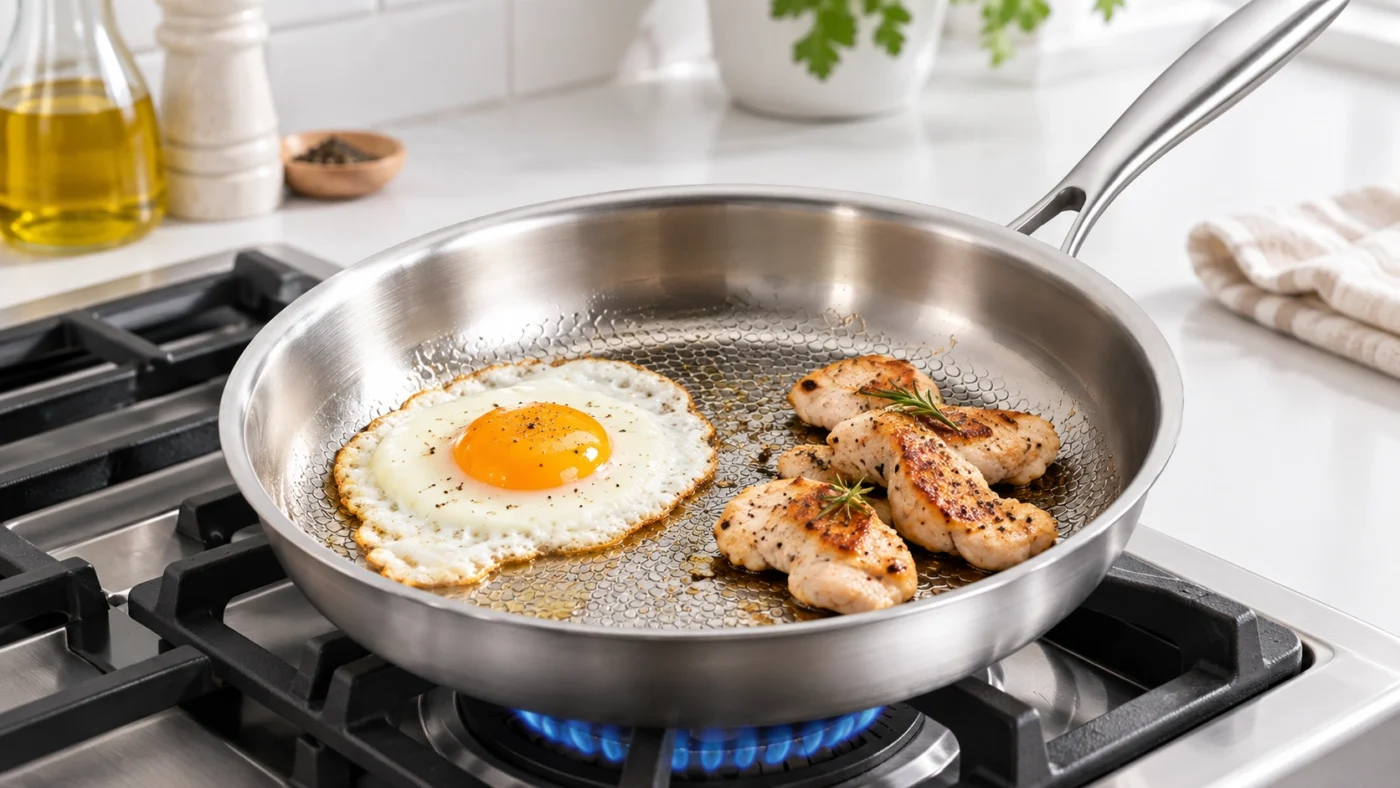
Does titanium cookware stick? Yes, it can. An uncoated pure titanium cooking surface is not a nonstick coating. Food release depends on the cookware, the ingredient, and the cooking conditions.
That does not make titanium cookware unsuitable for everyday cooking. It means the buying decision should begin with realistic expectations: whether you want an uncoated cooking surface and are comfortable with the attention it requires.
Is Pure Titanium Naturally Nonstick?
No. Pure titanium describes a material, not nonstick performance.
A titanium metal cooking surface differs from a coating designed to reduce food adhesion. Delicate foods such as eggs and fish can still stick or tear when the cooking conditions do not suit them.
The word “titanium” can also describe different products. Some cookware uses titanium metal at the food-contact surface; other products use titanium terminology for a coating or surface treatment. Those descriptions should not be treated as equivalent.
Our guide to Pure Titanium, Solid Titanium, and Titanium-Coated explains how to distinguish them.
Why Does Food Stick to Titanium Cookware?
Food can stick when temperature, cooking-fat coverage, surface moisture, or turning time is poorly matched to the ingredient. These factors interact, so changing just one may not solve the problem.
- Heat: Excessive heat can burn food onto the surface. Insufficient heat can also interfere with browning. The appropriate temperature depends on the food.
- Cooking fat: Oil or butter can help create a lubricating layer between the food and the cooking surface. Coverage matters, and adding more fat does not automatically correct an overheated surface.
- Moisture: Surface water can cool the cooking area locally and affect browning. Food with a wet surface behaves differently in the pan from food with a drier exterior.
- Timing: Some foods become easier to move after their surface has set or browned. Turning too early can cause tearing, but waiting longer will not rescue food that is already burning.
For practical cooking steps, see How to Cook on a Titanium Surface: Heat, Oil, and Timing.
Does Pan Construction Affect Sticking?
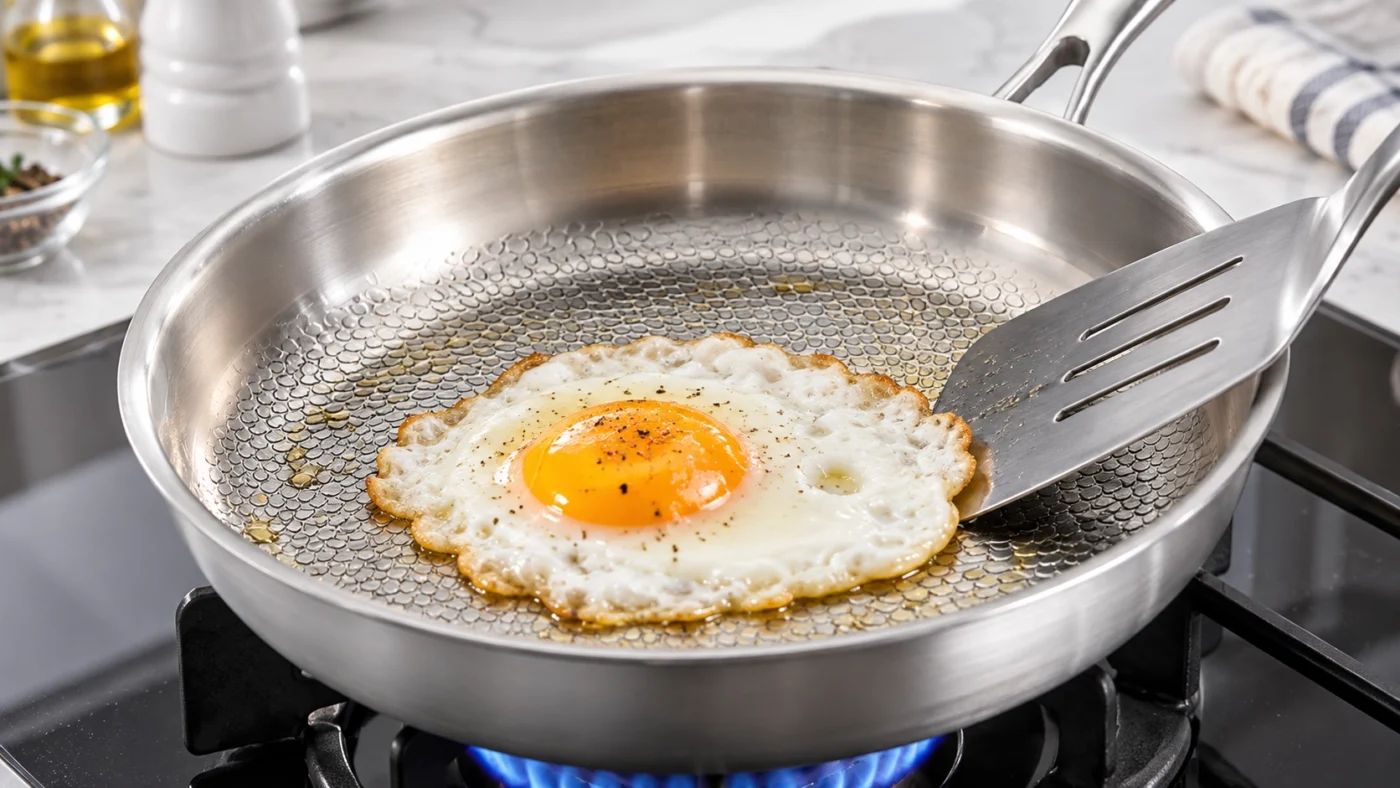
Yes. Construction affects heat distribution and response, which can influence food release. It does not make the surface inherently nonstick.
A thin, single-material titanium vessel and a composite frying pan with a titanium cooking surface can behave differently because their cookware bodies are different.
TiRoam’s Titanium Frying Pan uses a TA1 commercially pure titanium food-contact surface within a composite body. When evaluating its cooking behavior, consider the complete pan rather than attributing every result to the surface metal.
For the detailed construction explanation, read Solid Titanium vs. Composite Titanium Cookware.
Does Titanium Cookware Stick With Different Foods?
Expect food release to vary by ingredient. A successful demonstration with one food does not establish how the pan will perform with another.
| Eggs | Can adhere or break during turning. Do not assume they will always slide freely with minimal attention. |
| Lean fish | Delicate pieces may tear if they adhere to the surface. Release and handling both matter. |
| Meat | May initially adhere during searing and release more readily as browning develops. This is not guaranteed under every condition. |
| Vegetables | Moisture content and cooking temperature can affect browning and movement across the surface. Different vegetables may behave differently. |
If you regularly cook a particular food, look for a demonstration using the exact cookware model. The heat source, cooking fat, and method should be clear enough to understand how the result was achieved.
One successful egg demonstration does not prove oil-free cooking or effortless release in every kitchen.
Does Titanium Cookware Need Oil?
For many foods, expect to use some cooking fat on an uncoated titanium surface. There is no single amount that suits every meal.
Eggs, lean fish, vegetables, and fatty meat create different conditions. “Pure titanium” does not mean oil-free cooking.
If reducing added fat is important to you, evaluate the exact pan with the meals you normally prepare rather than relying on a broad material claim.
Is Titanium Cookware Easier to Clean?
Not automatically. Food that burns or dries onto an uncoated titanium surface can still require soaking or additional cleaning.
If food has already burned onto the pan, use the burnt-food removal guide for the cleaning steps.
Food release during cooking and ease of cleaning afterward are related, but they are separate questions. A piece of meat may lift from the pan while leaving browned residue behind.
Follow the care instructions for the specific cookware. Its finish, handle, and other components may affect which cleaning tools and methods are appropriate. Dishwasher compatibility should also be confirmed for the complete product.
For routine care, see How to Clean Pure Titanium Kitchenware.
Is an Uncoated Titanium Pan Right for You?
It can be a good fit if you want a titanium food-contact surface and are comfortable adjusting your cooking technique. Familiarity with other uncoated cookware may help you establish realistic expectations.
It may be less suitable if your highest priority is effortless release of delicate foods with very little attention. In that case, verify the performance you need with the exact cookware and foods you intend to use.
Before buying, identify your most frequent meals and the feature that matters most to you. An occasional successful demonstration is less useful than clear information about the cooking conditions required for those meals.
You can review the construction and specifications of the TiRoam Titanium Frying Pan or compare available models in the TiRoam Titanium Cookware collection.